Japanese-style bathroom
Relaxation and harmony
Key points at a glance:
- A Japanese bathroom is all about relaxation: The Japanese bathroom combines functionality with tranquility, transforming the space into a place of rejuvenation.
- Opt for natural materials: wood, natural stone, soft colors, and clean lines create that quintessential Japanese sense of well-being.
- A modern take on wellness: freestanding bathtubs, walk-in showers, and shower toilets combine comfort, aesthetics, and innovative technology.
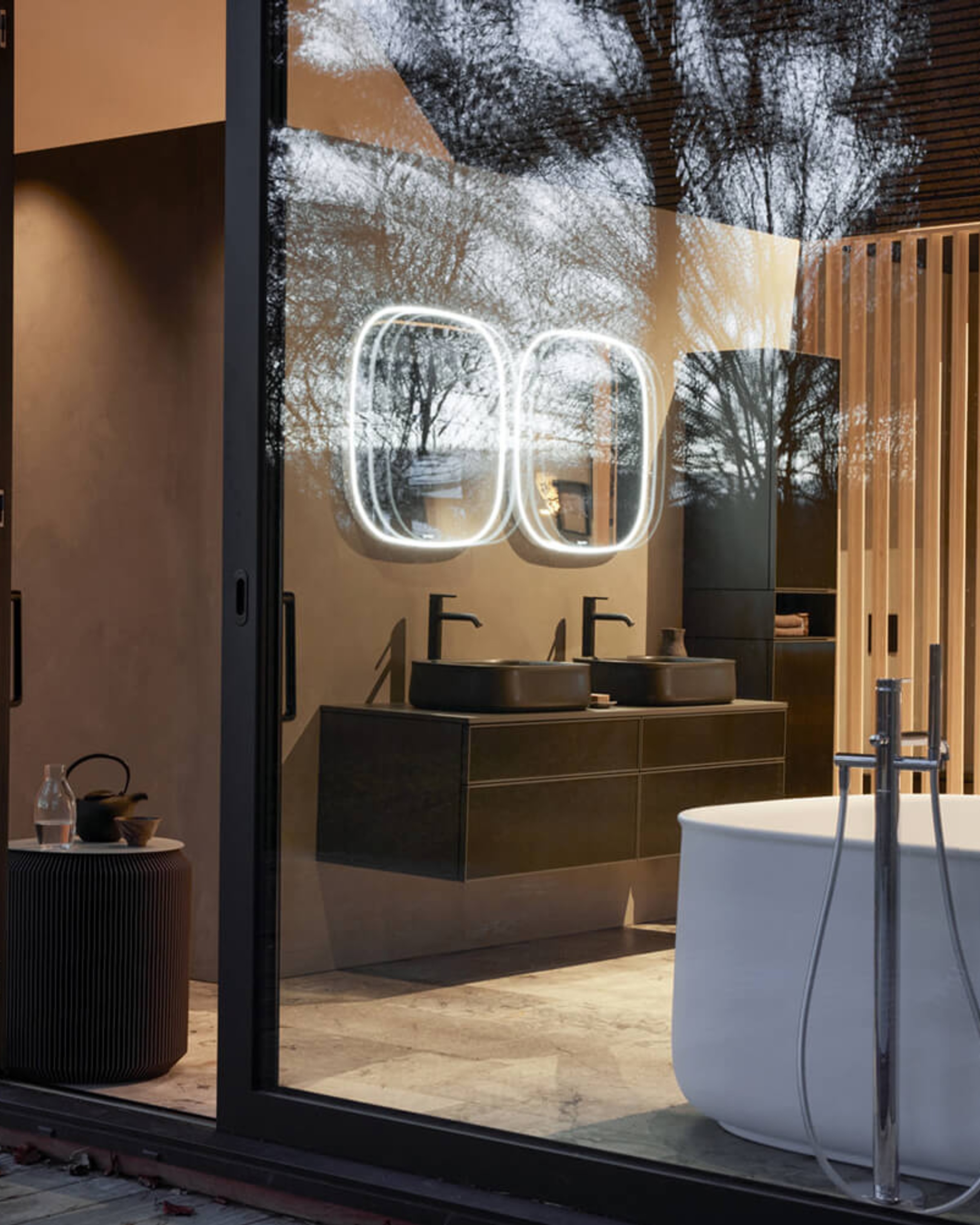
The traditional bath
Relaxation has always been a priority in traditional Japanese bathrooms. In addition to their functional purpose, these spaces were also designed to promote rejuvenation. At the heart of this is the classic Japanese bathtub. Its sole purpose is relaxation—the actual cleansing takes place beforehand in the shower.
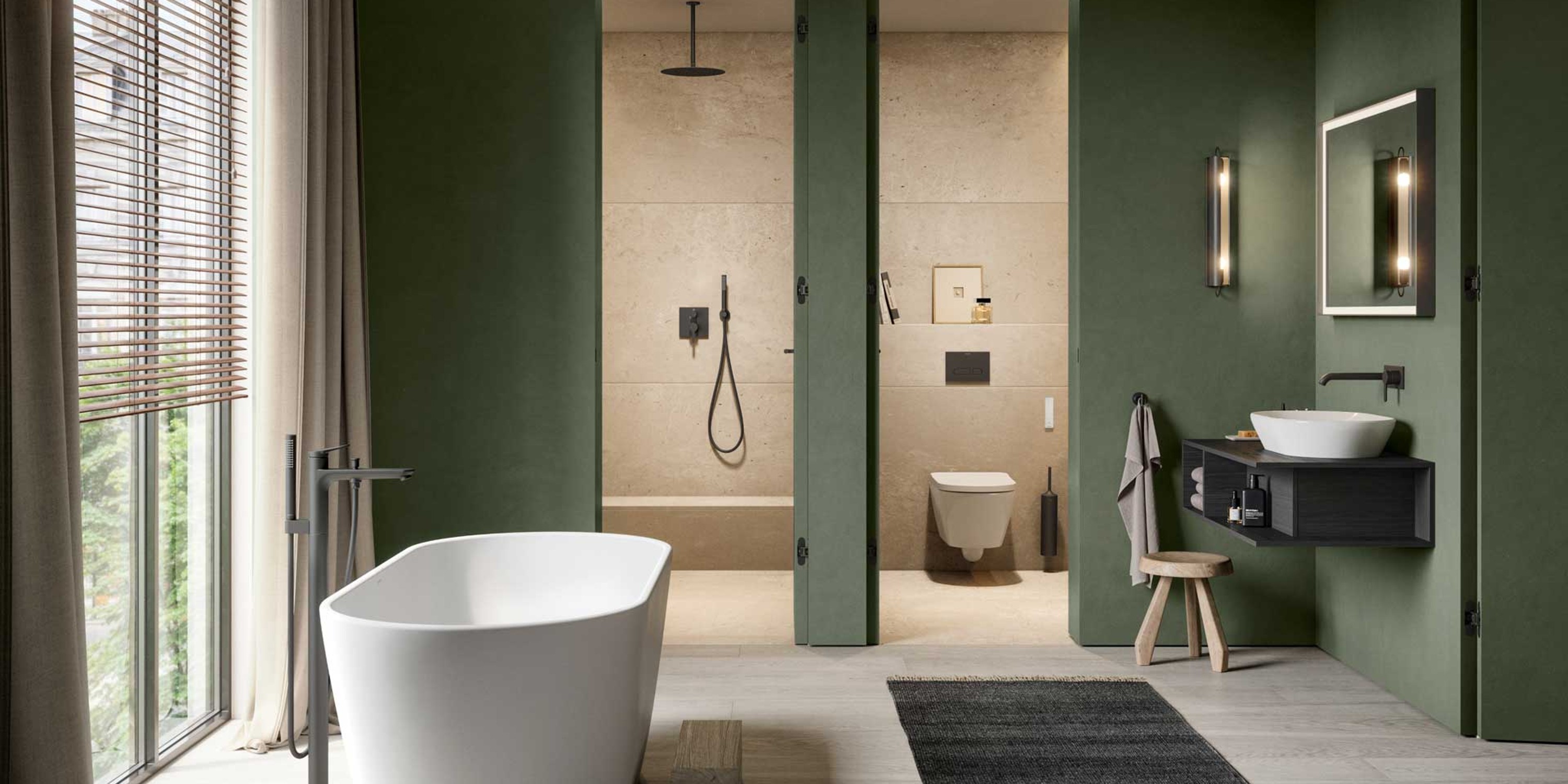
This is reflected in the layout. First, there is an entryway with a sink, bathroom cabinets, and plenty of space to get dressed and undressed. Behind it is a full bathroom. There is no separate shower stall in a Japanese-style bathroom; instead, the shower and bathtub are located in the same room. After a thorough wash in the shower, you can then enjoy a relaxing hot bath.
The toilet is located in a completely separate room with its own sink. This way, the Japanese-style bath can be used by several people at the same time while still offering a space for peace and relaxation.
By the way: Many elements of the Japanese bathroom can also be found in Scandinavian bathrooms. So it’s no surprise that a unique hybrid style has emerged—Japandi.
Designing a Japanese-style bathroom
Of course, it’s not always possible to build a traditional Japanese bathroom. Unless you’re building a new house based on your own designs, you probably won’t find a layout that combines an entryway with a wet room and a separate toilet. Nevertheless, it is possible to design a Japanese-style bathroom:
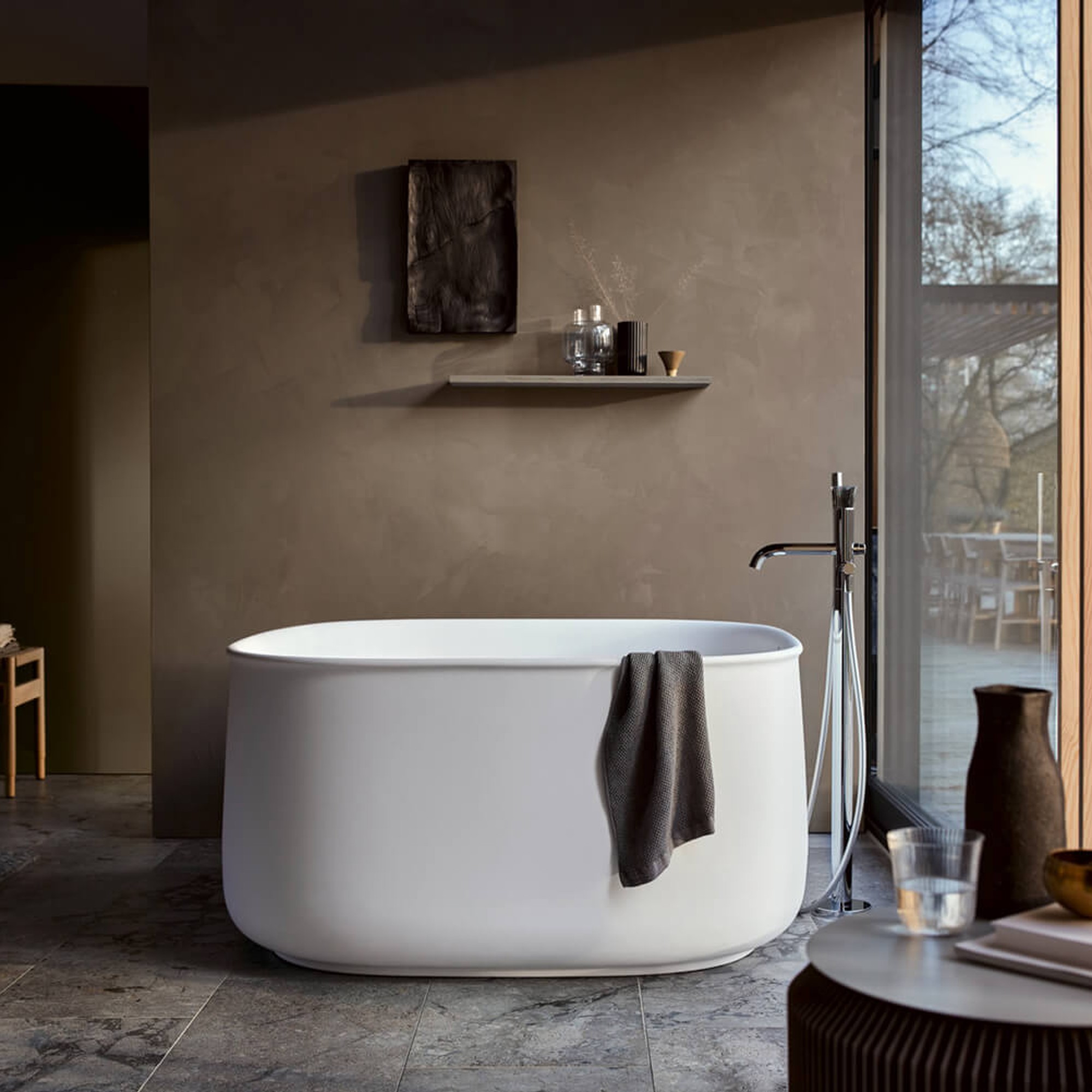
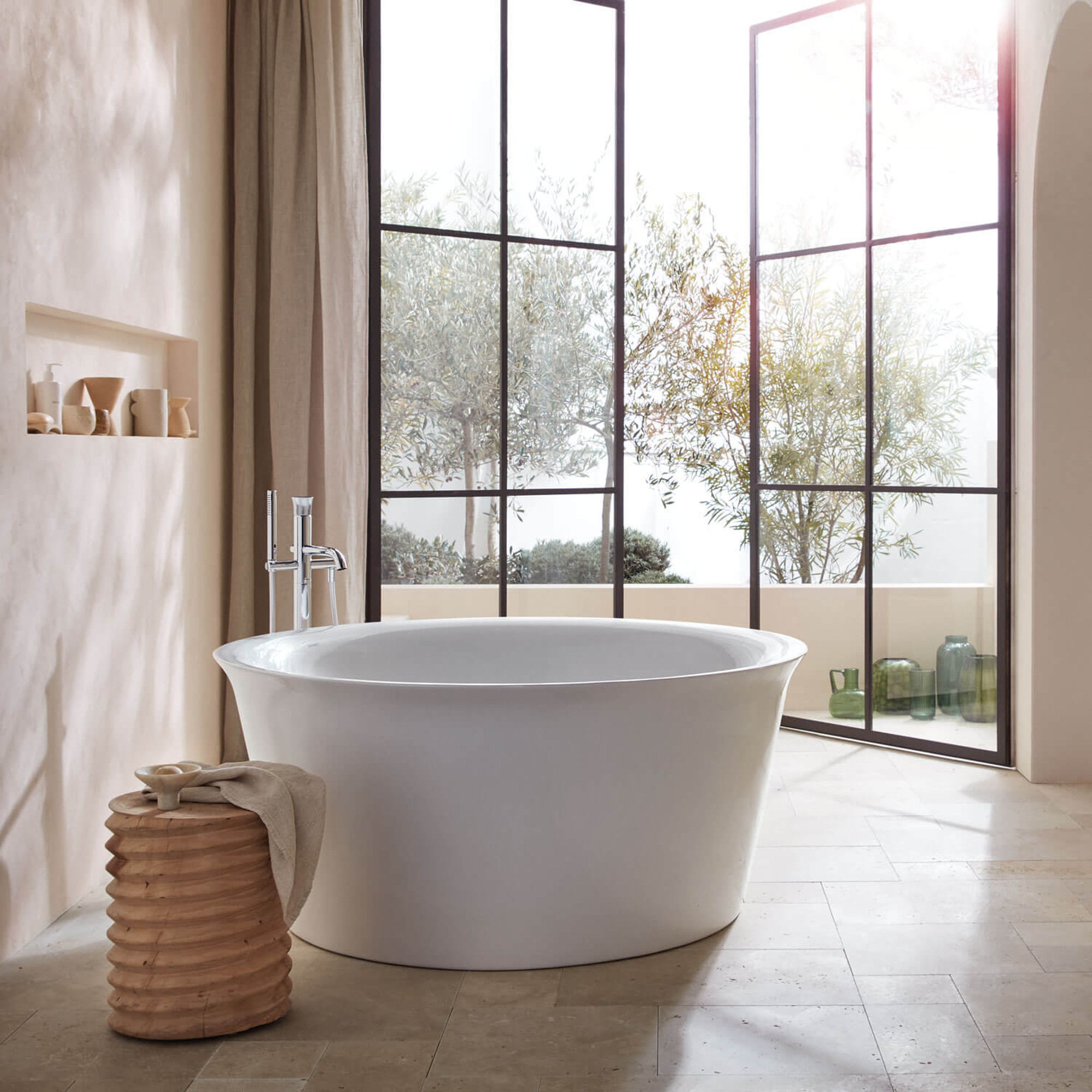
The bathtub takes center stage
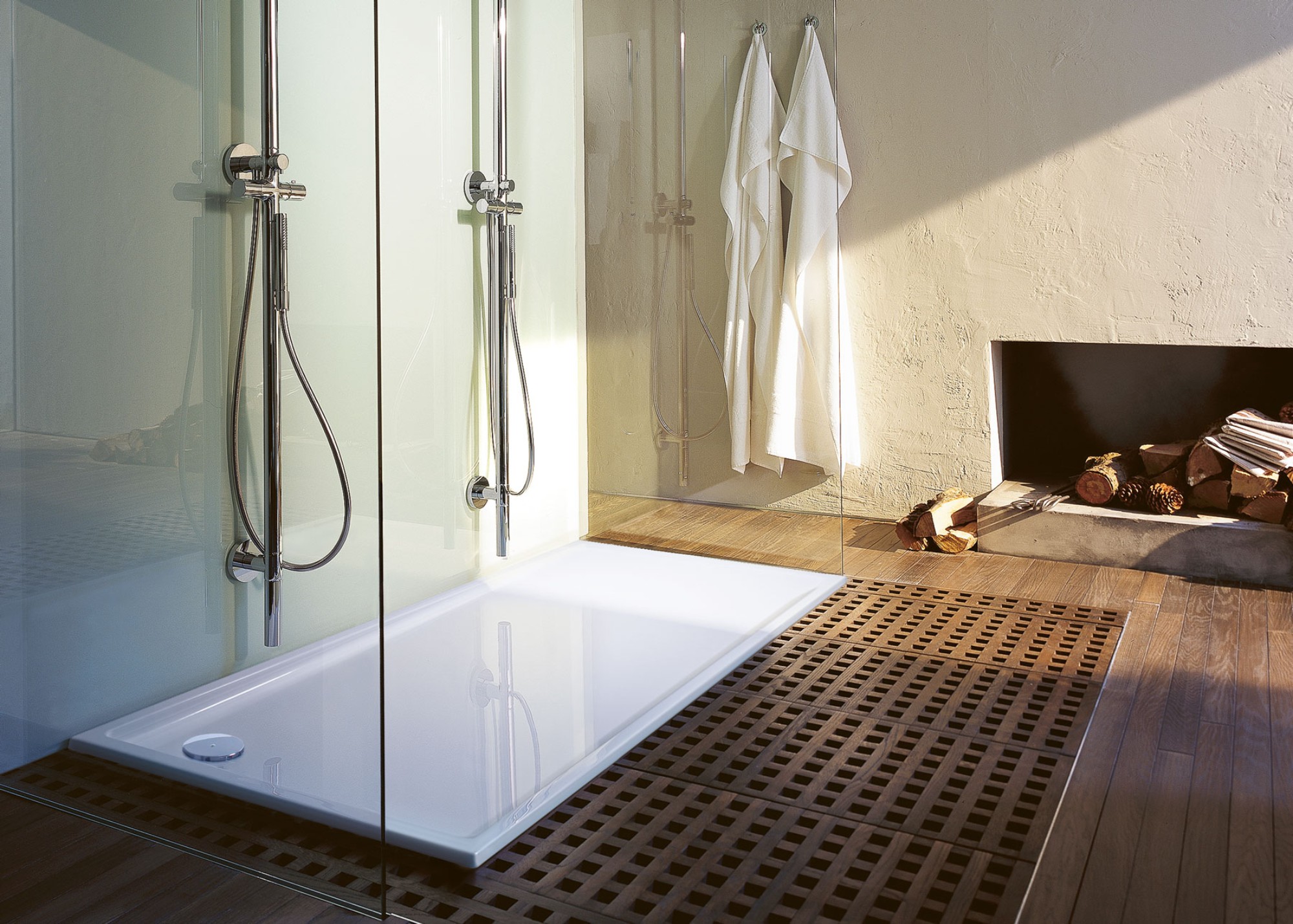
Walk-in shower
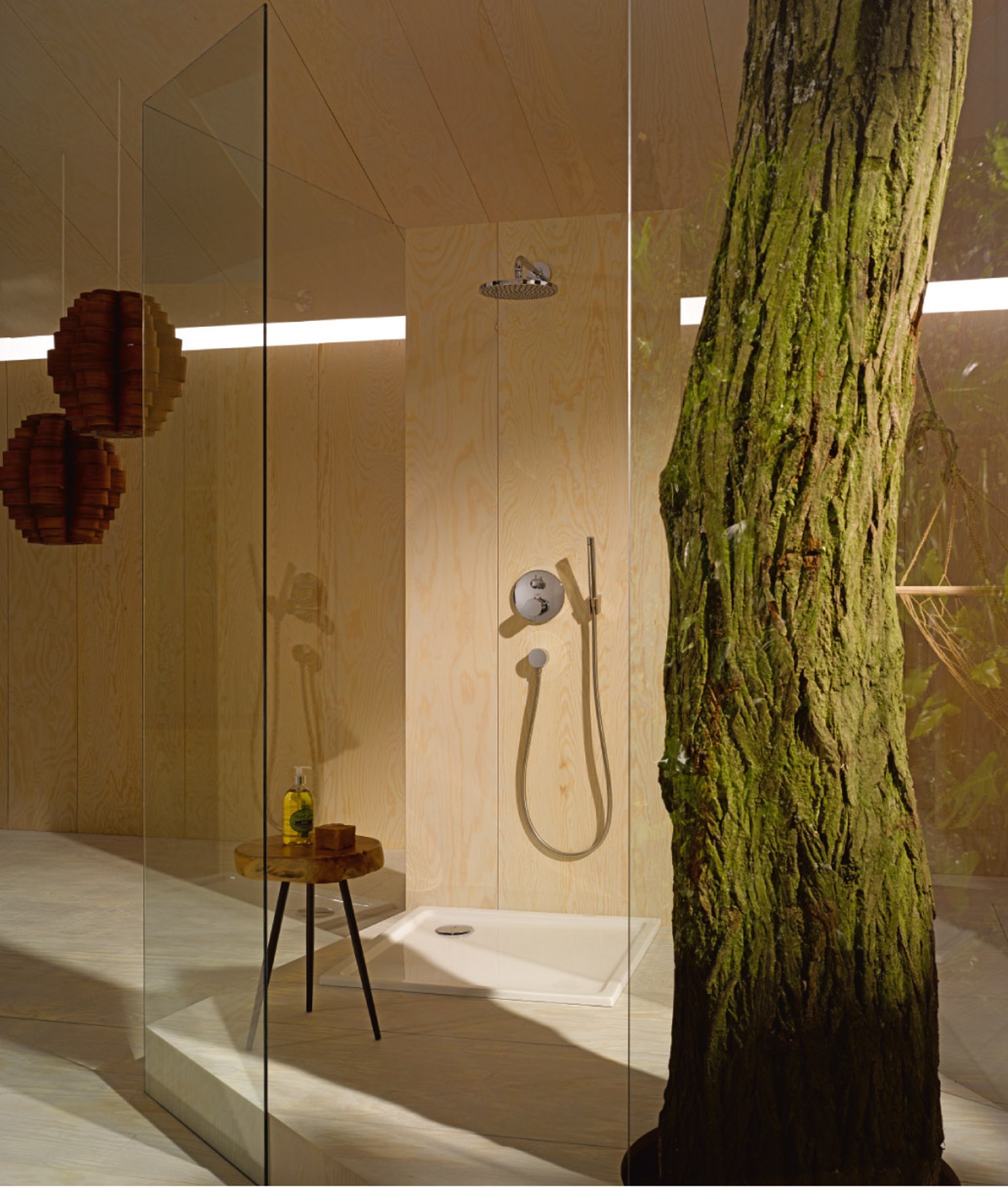
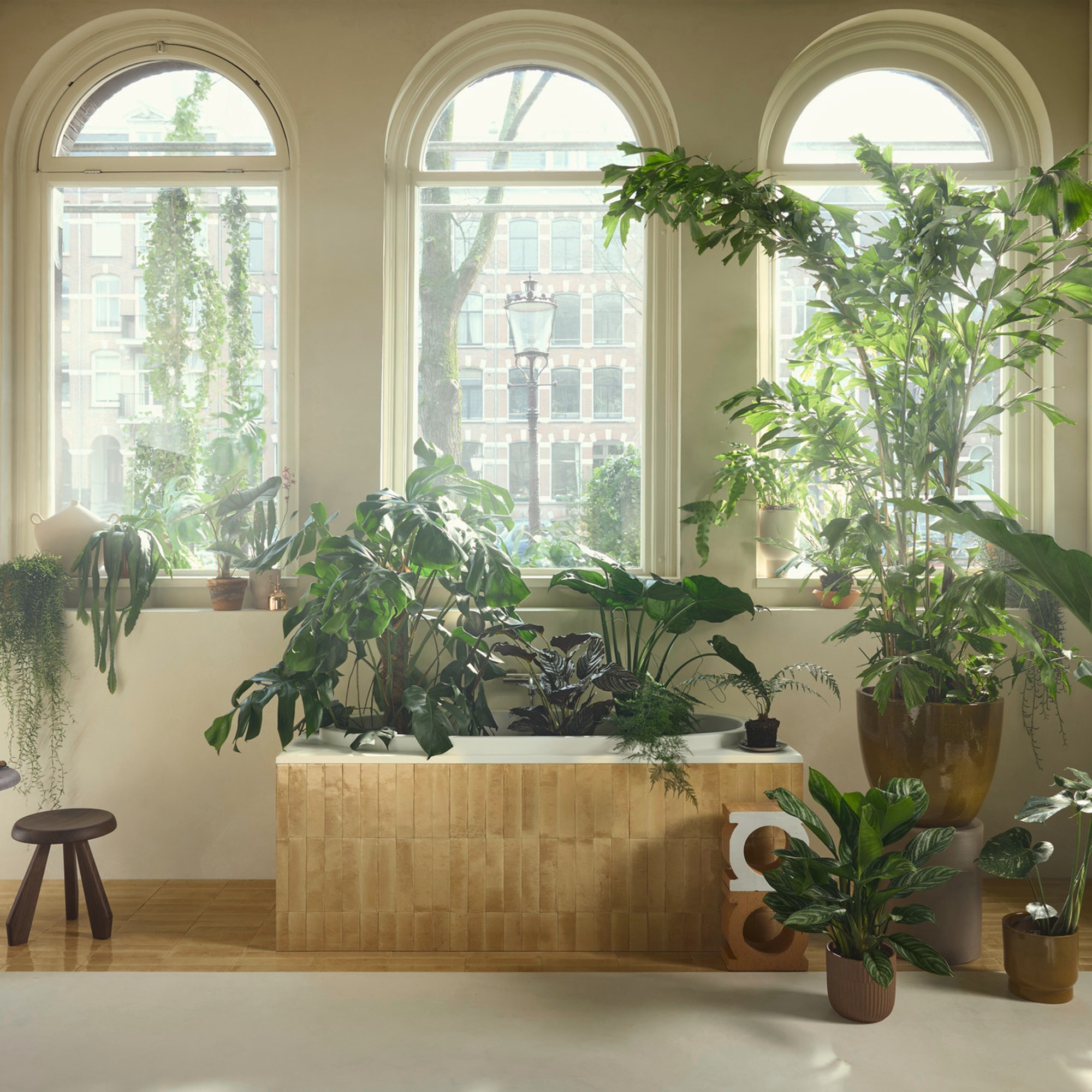
Wood and natural materials
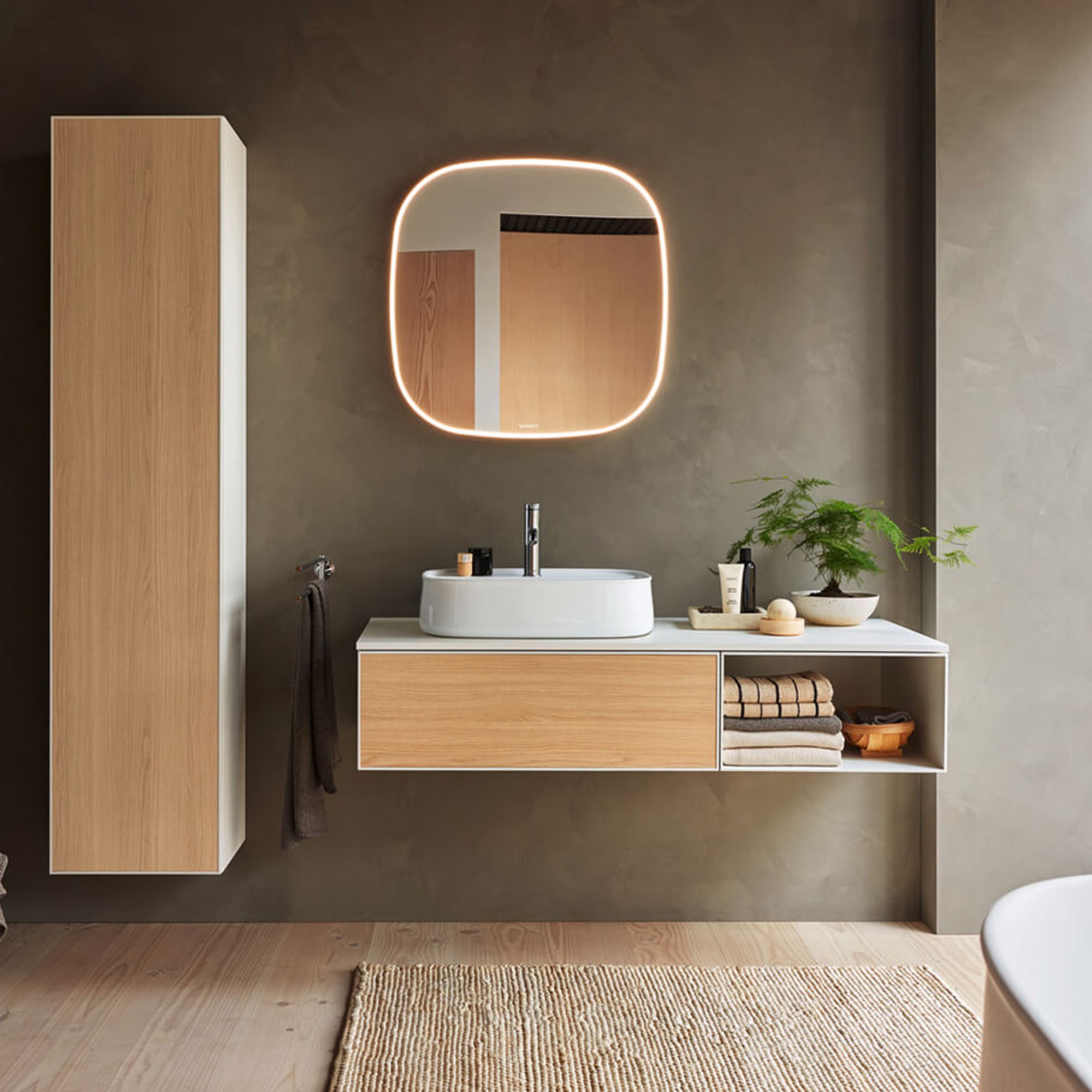
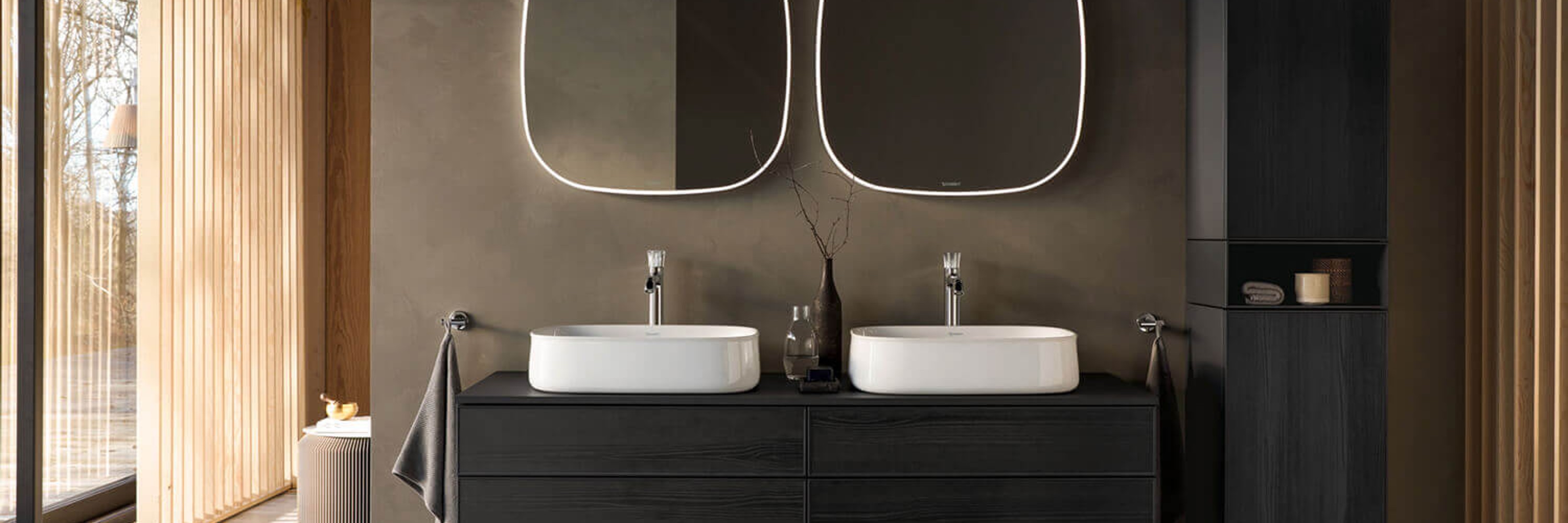
Shapes and colors
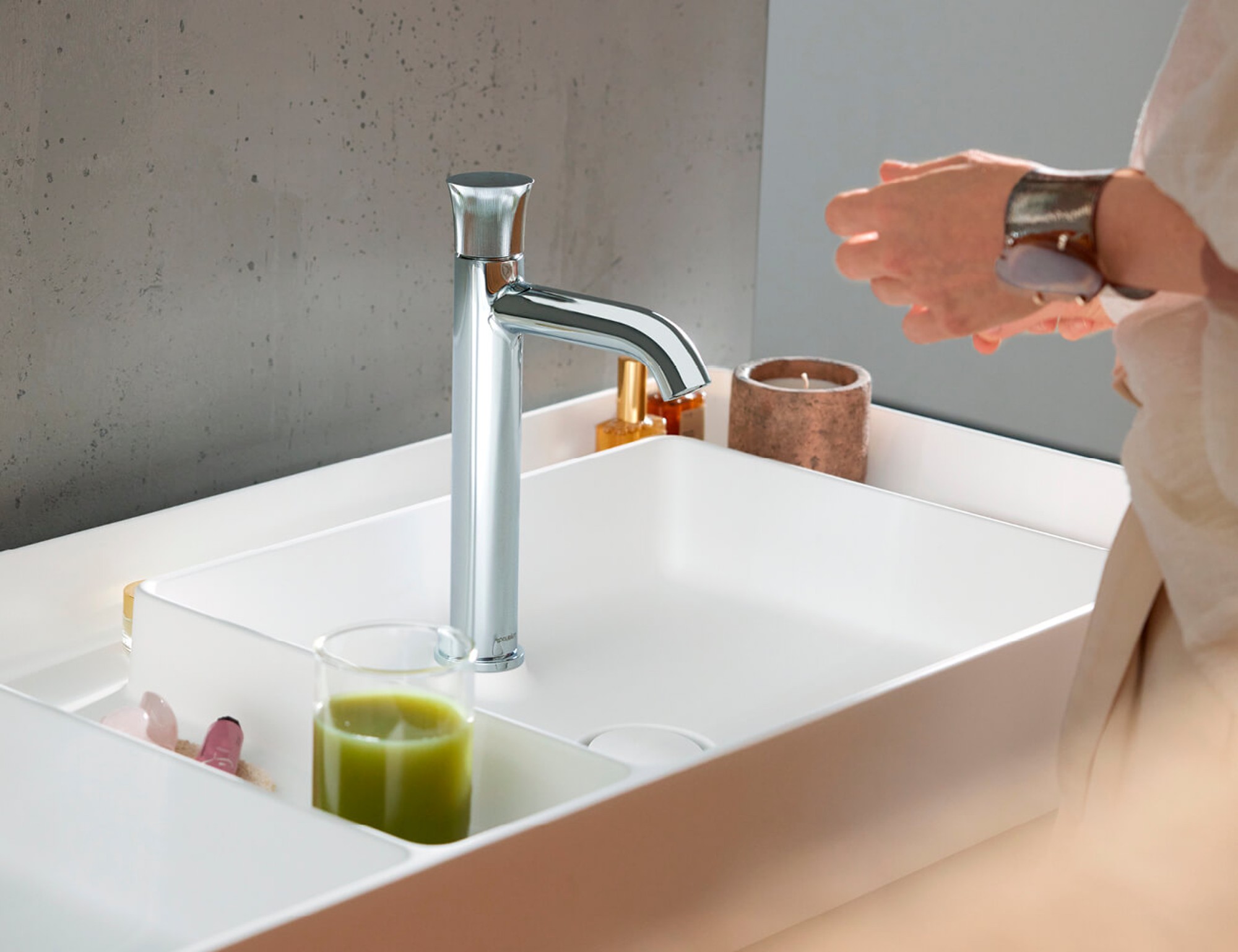
Less is more
Technical components: Shower toilets and more
Internationally, the Japanese bathroom is known less for the traditional bathing experience and more for modern technology. And in fact, state-of-the-art technology and classic bathroom traditions can be perfectly combined.
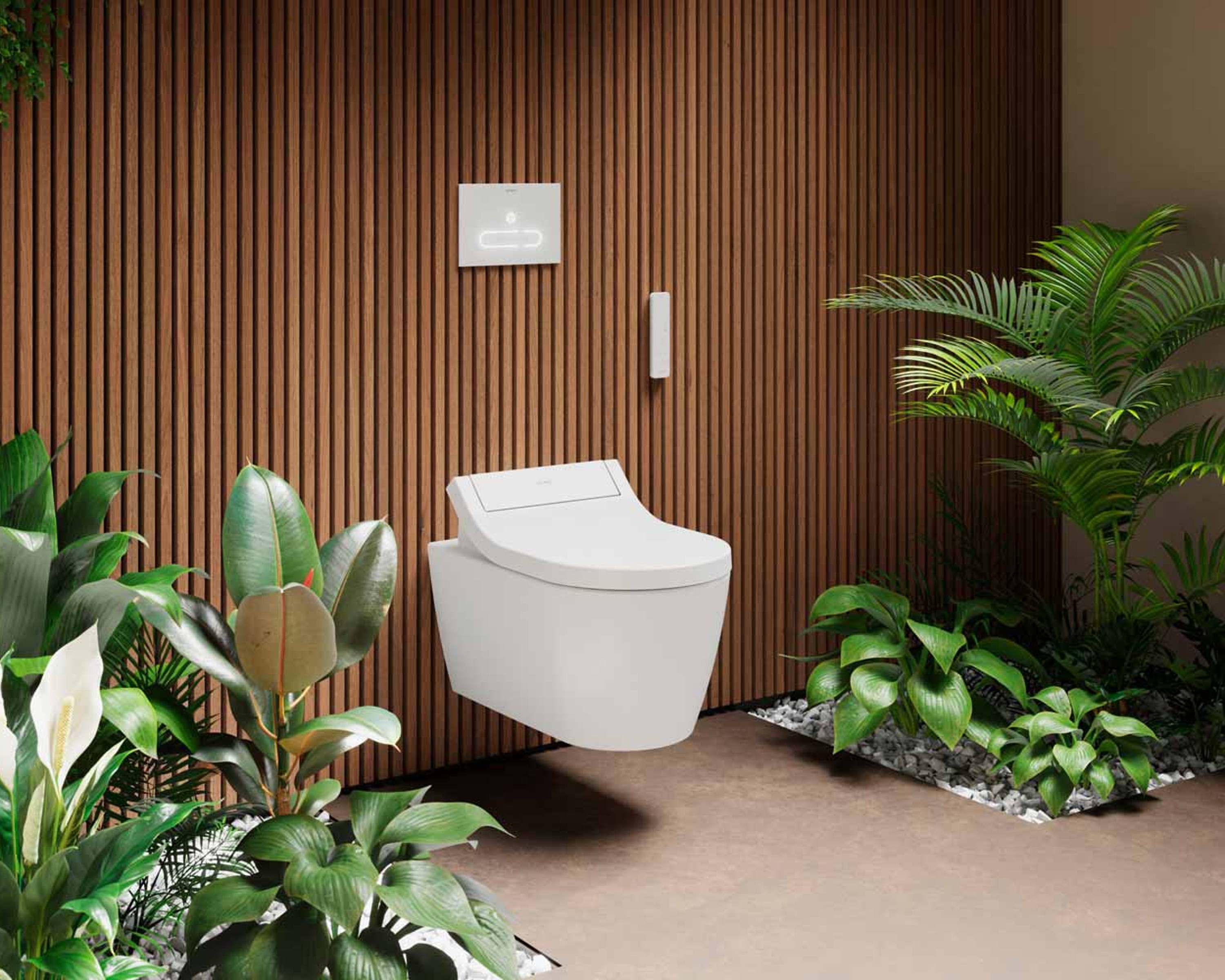
Shower toilet
Few things are as closely associated with the Japanese bathroom as the shower toilet. And indeed, in Japan, it is often a true marvel of technology. Western bathrooms, while a bit less elaborate, are no less comfortable or practical.
While in Japanese bathrooms, the shower toilet saves water thanks to an integrated sink and reuses the wash water for flushing, here it is primarily sophisticated technology such as Duravit Rimless® that delivers the savings. In any case, comfort is combined with practicality here as well.
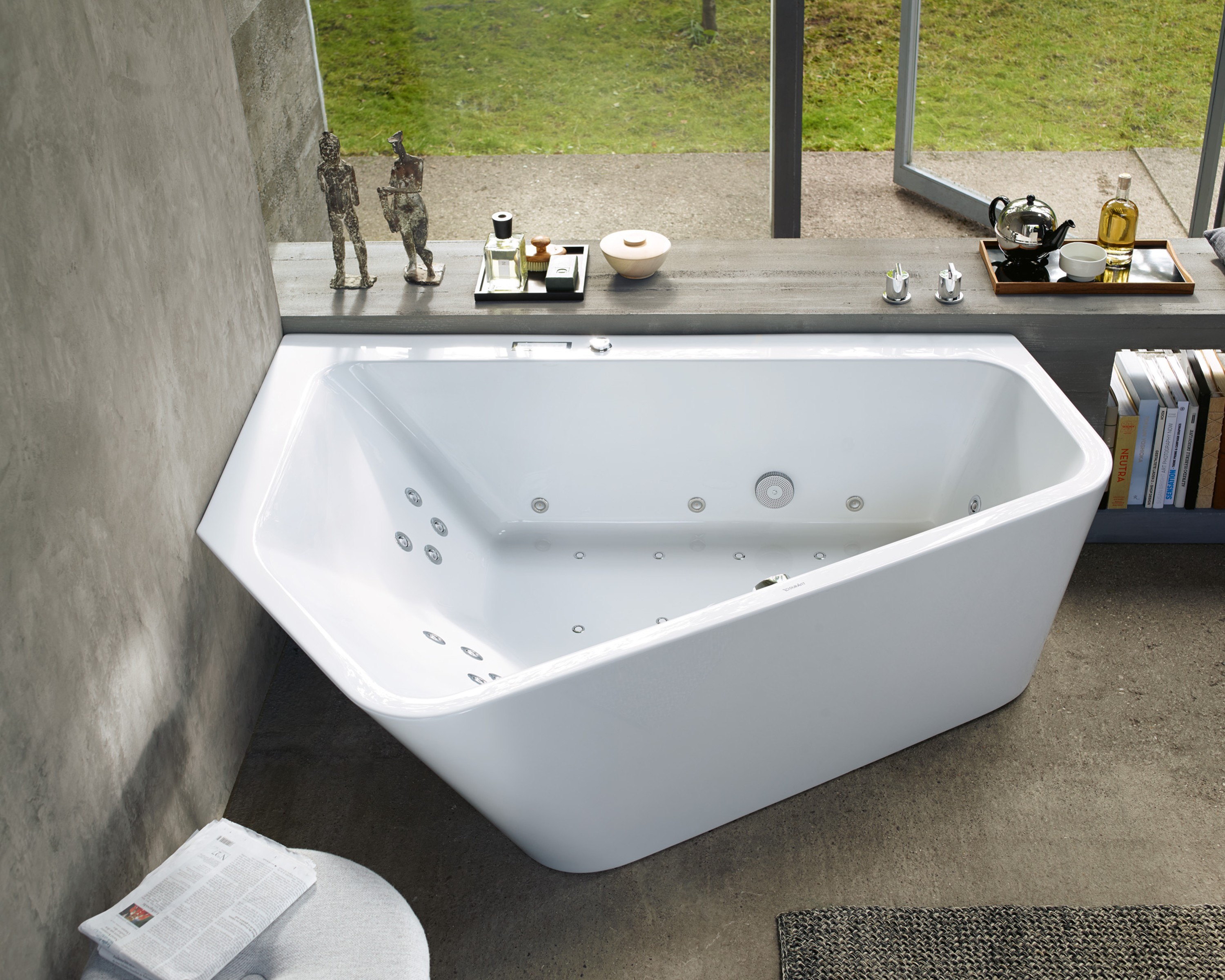
Whirlpool bathtub
While whirlpoolbathtubs are not typically a standard feature of Japanese bathrooms, technically sophisticated bathtubs are certainly used. And what could better capture the essence of a relaxing bathing experience than a built-in massage function?
By the way: The bathing experience in a Japanese “shower capsule” is even more sophisticated.
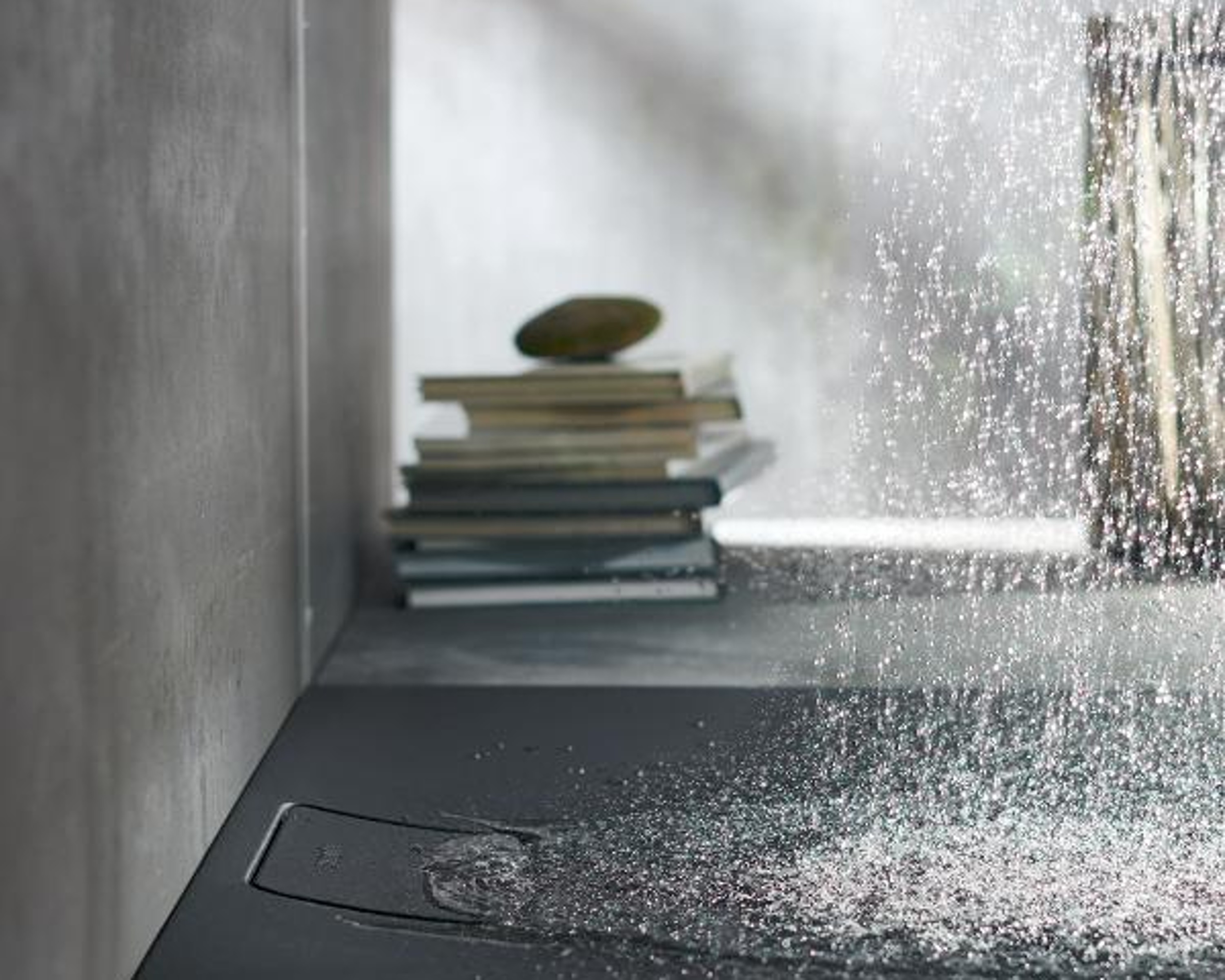
Rain shower
Here, too, the focus is less on recreating a Japanese bathroom down to the last detail and more on capturing the sense of relaxation that a bathroom can provide. A rain shower helps you slow down and instantly creates a sense of well-being.
Matching Duravit collections
The ideal of harmony and precision that characterizes Japanese design is also reflected in the Duravit collections. The following collections deliberately incorporate traditional elements and integrate them seamlessly into the context of the modern bathroom:
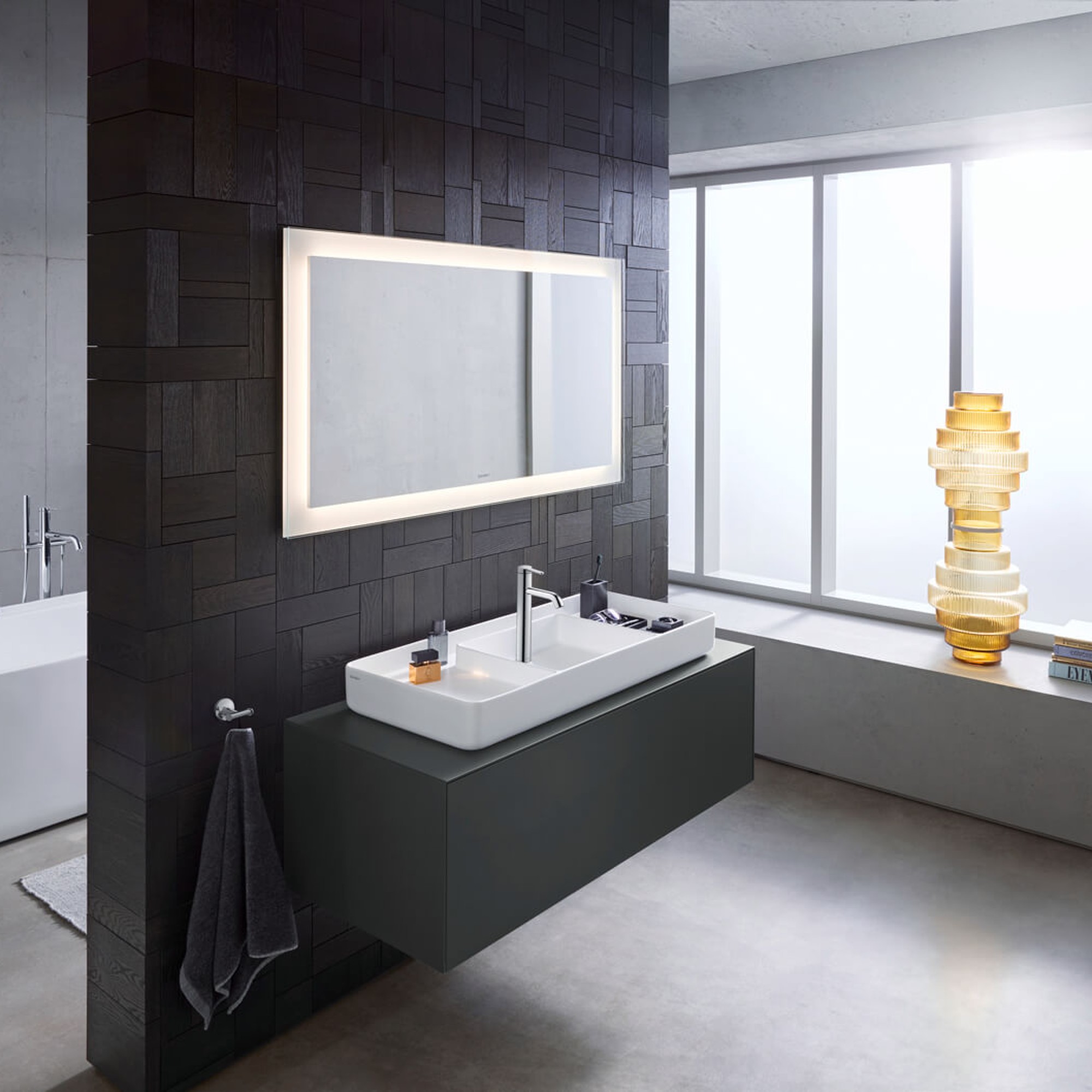
Bento Starck Box

Zencha