Wood in the bathroom
Natural and durable
Key points at a glance:
- Choose the right types of wood: Moisture-resistant woods such as teak, oak, or birch are particularly well-suited for use in the bathroom.
- Protecting wood properly: Oiling, varnishing, and proper ventilation and heating ensure that wood in the bathroom remains durable and resilient.
- Incorporating wood thoughtfully into your design: Wooden furniture, paneling, or accessories create a warm, natural atmosphere and complement many different design styles.
What kind of wood should I use in the bathroom?
As a living material, wood reacts to environmental factors. In the bathroom, these factors are primarily moisture and heat. Therefore, it is important to ensure that the type of wood is suitable for the environment, while of course also taking design considerations into account. Below is an overview of woods that are particularly well-suited for this purpose.
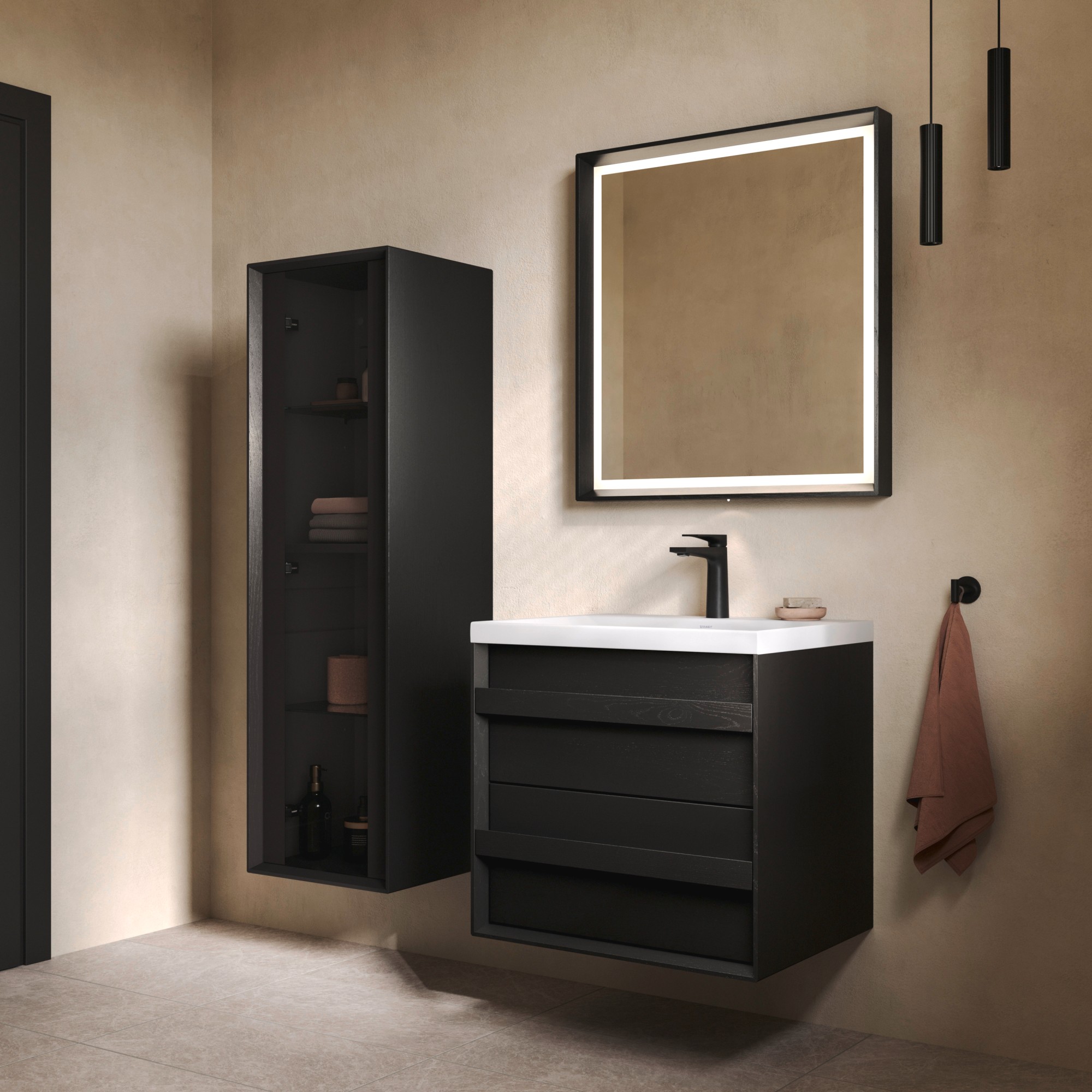
Dark woods
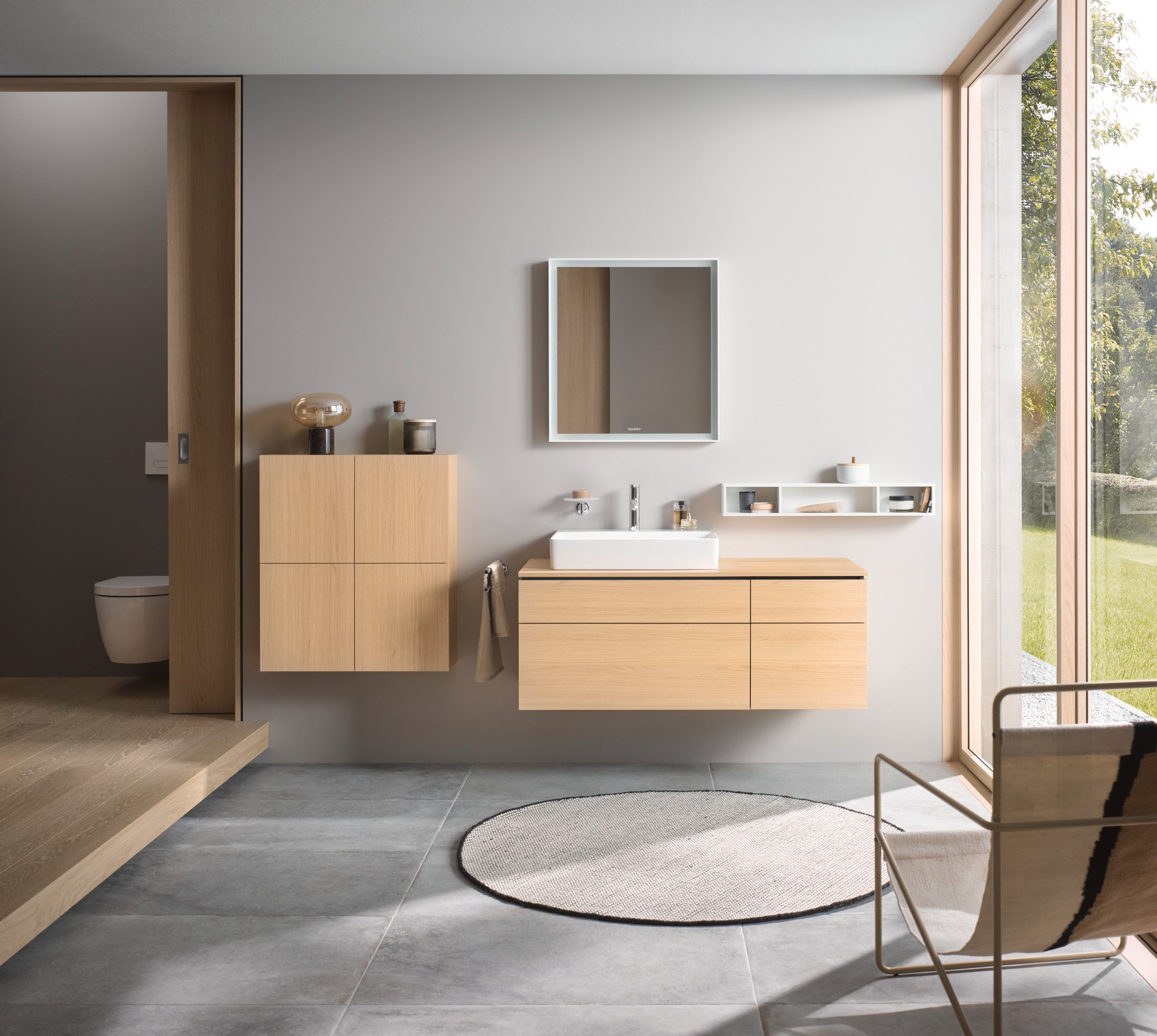
Light-colored woods
Care and durability of wood
While untreated wood in the bathroom can cause problems, with the right design and maintenance measures, the material is durable and can withstand humidity without issue. Here are some things to keep in mind:
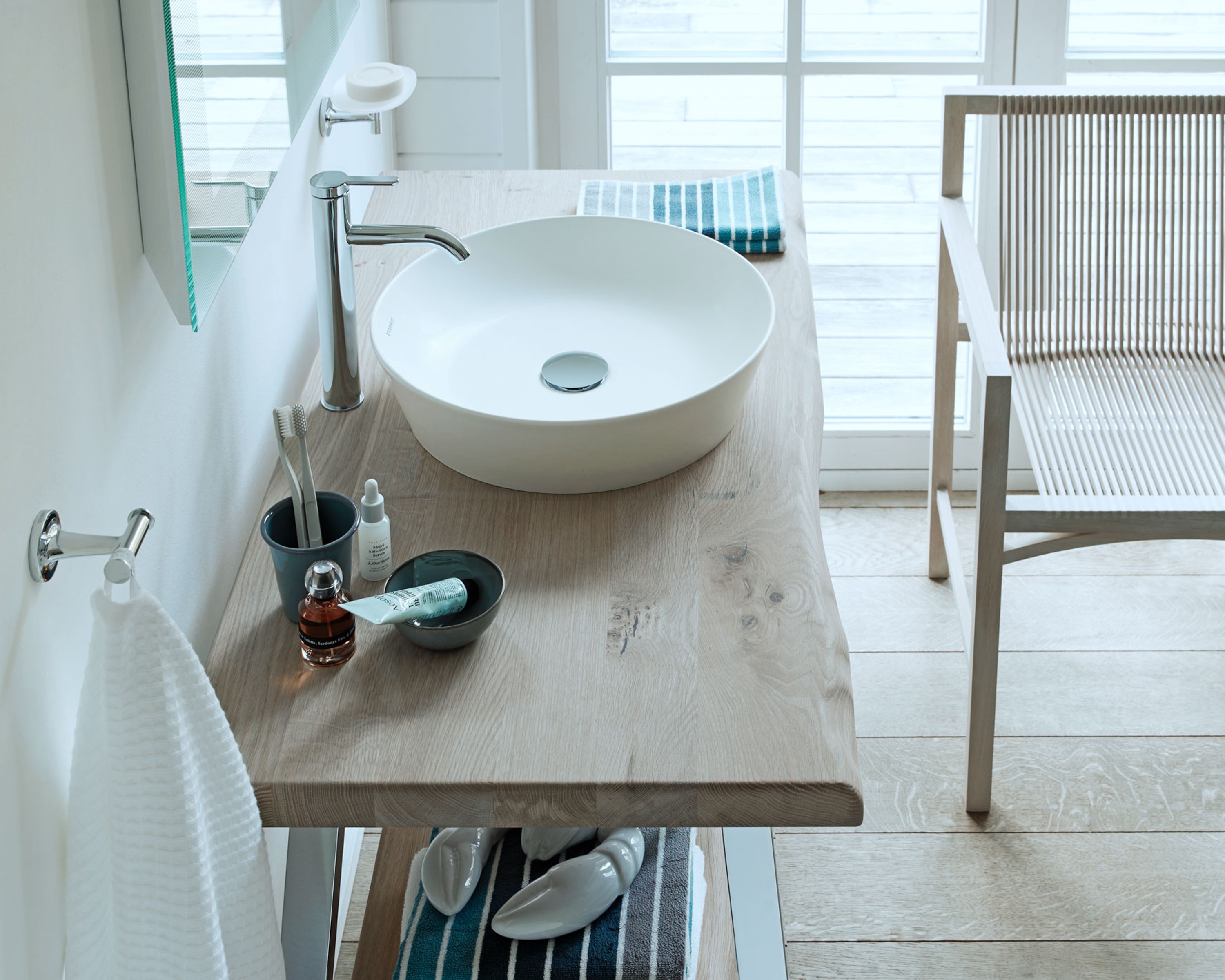
Oil or varnish
First of all, you should oil or varnish untreated wood in the bathroom. Both options are suitable, but you shouldn't switch between them.
Hard wax oil can be used to seal the wood in the bathroom. This process must be repeated about two to three times a year to maintain the protection. The more oil that is used, the less moisture the wood absorbs and releases.
If, on the other hand, varnish is used, the wood will no longer absorb moisture. It is therefore particularly well-suited for making wood in the bathroom waterproof. However, even small cracks must be repaired immediately, as moisture can otherwise become trapped in the wood.
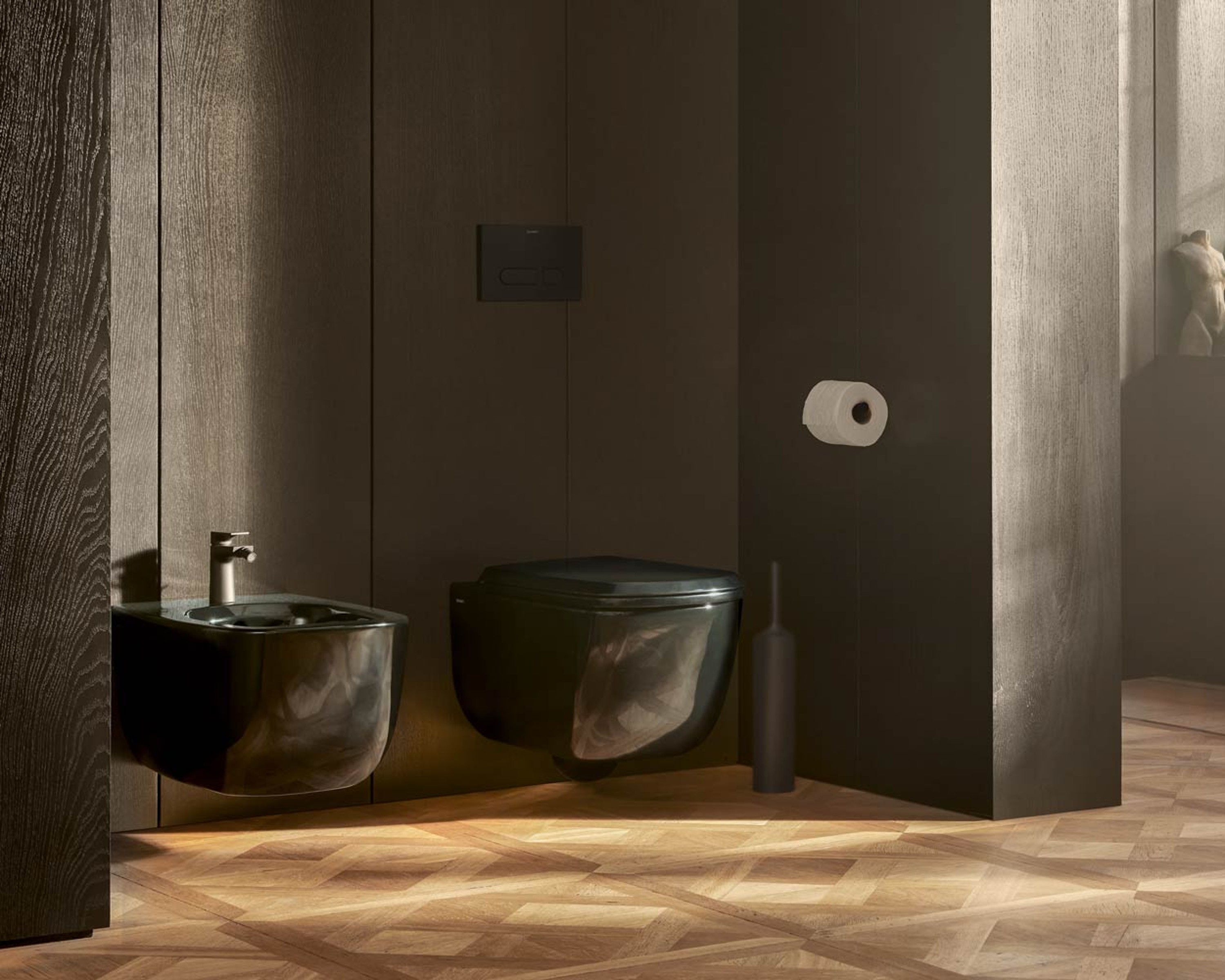
Substructure (for walls and floors)
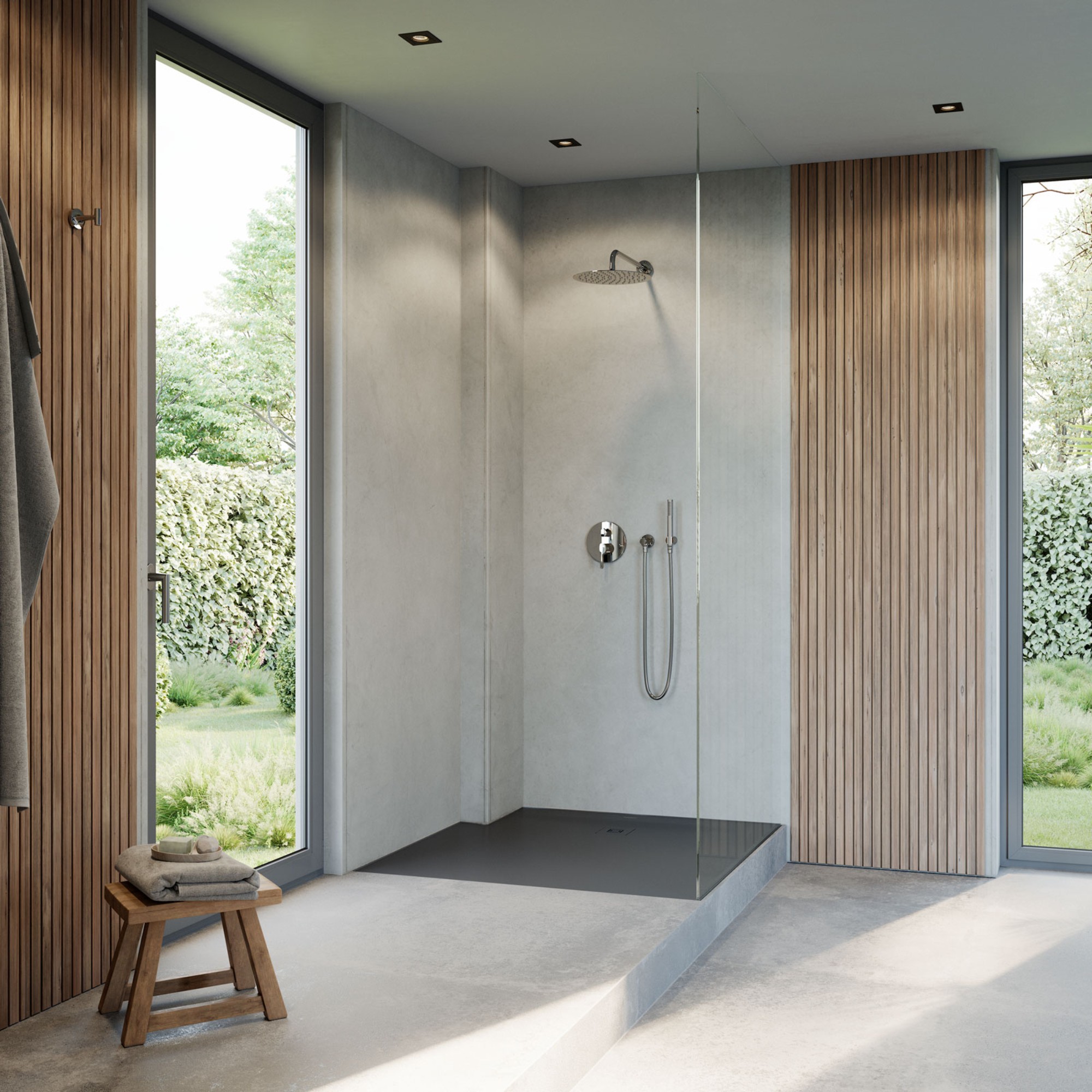
If you’re using not only wooden bathroom furniture but also wood paneling or wood-look tiles in your bathroom, you must ensure that the wood isn’t simply installed directly on the concrete. It’s important to have a suitable subfloor with a vapor barrier. This prevents moisture from accumulating under or behind the wood and helps avoid mold in the bathroom.
Proper ventilation and heating
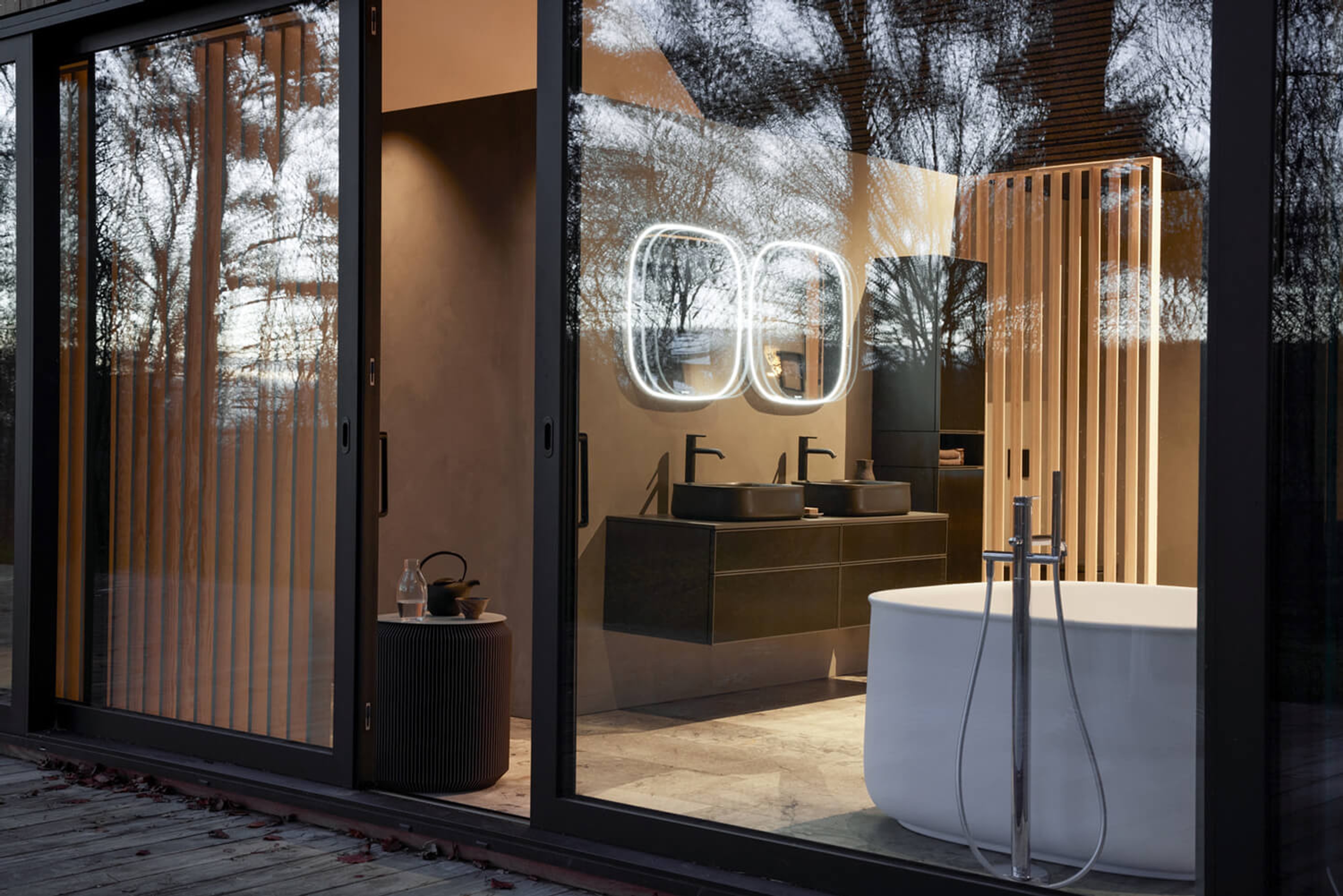
To protect the wood in your bathroom, proper ventilation and heating are especially important. Warm, humid air, in particular, should not be allowed to linger in the room for too long. By the way, this also applies to bathrooms without wood. So be sure to ventilate regularly to give the wood in your bathroom enough air to breathe.
Design ideas
Furnishing a bathroom with wood is no problem as long as it’s properly maintained. But how can you make the most of this natural material?

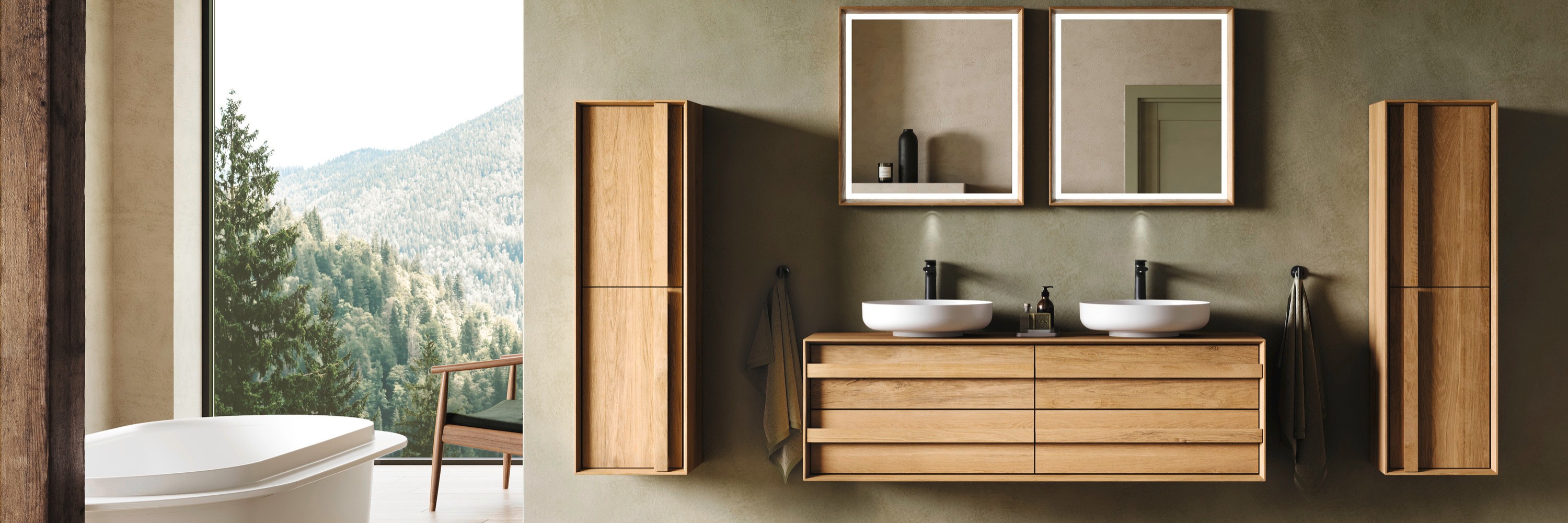
Bathroom furniture
Wood paneling
Accessories
Wood-look elements
Design styles featuring wood in the bathroom
Some design styles also make particularly heavy use of wood in the bathroom:
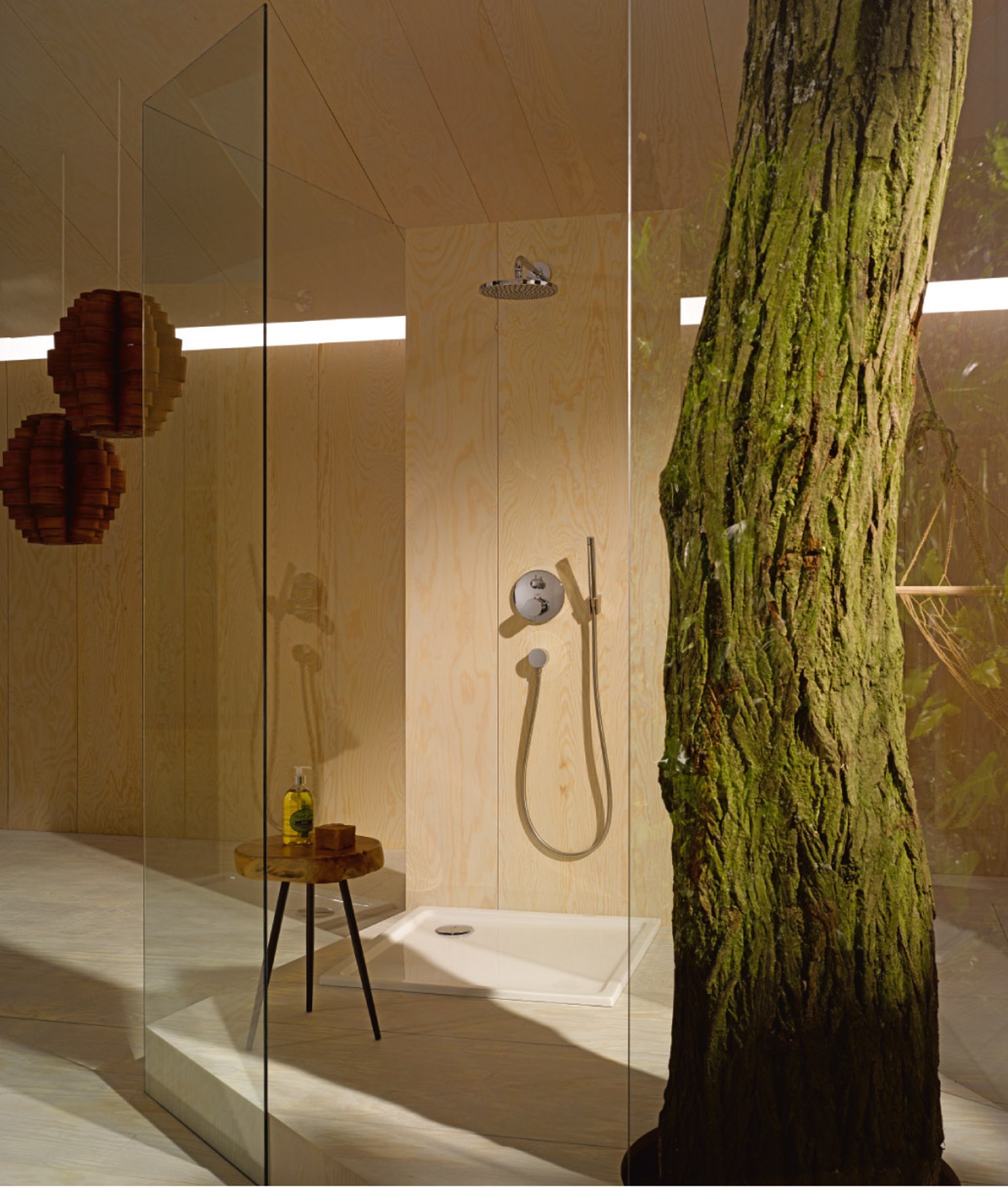
Natural bathroom
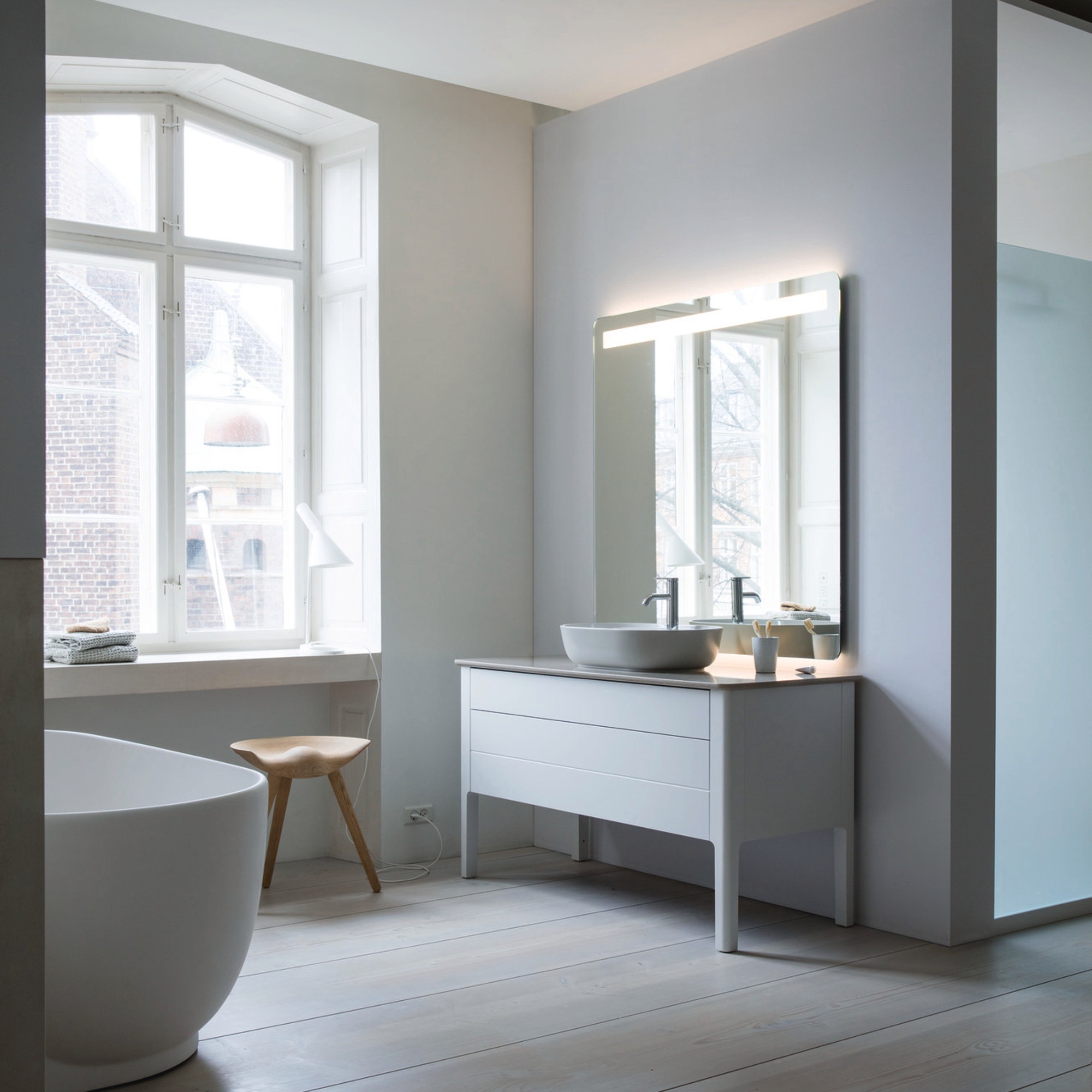
Scandinavian bathroom

Japanese bathroom

Country style