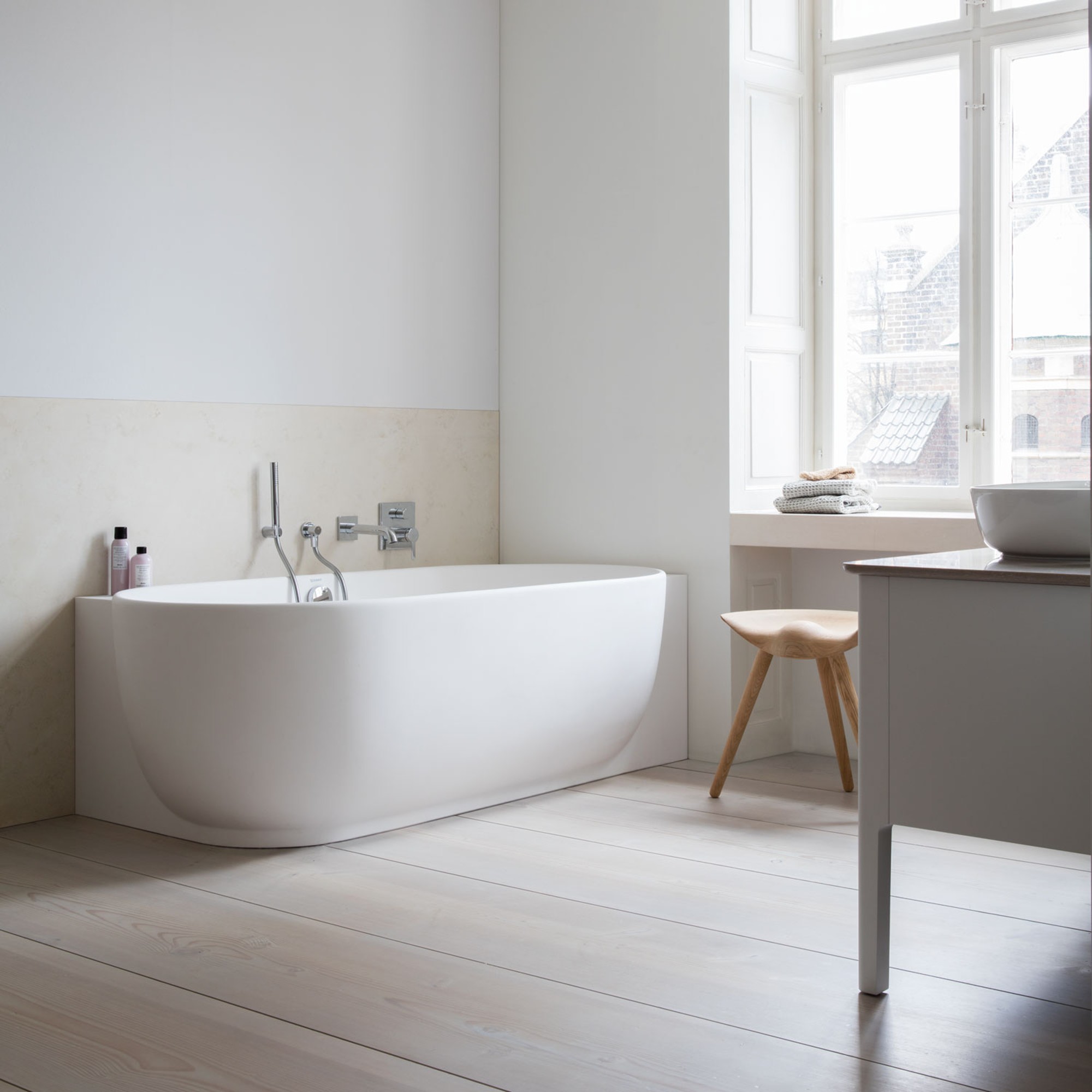
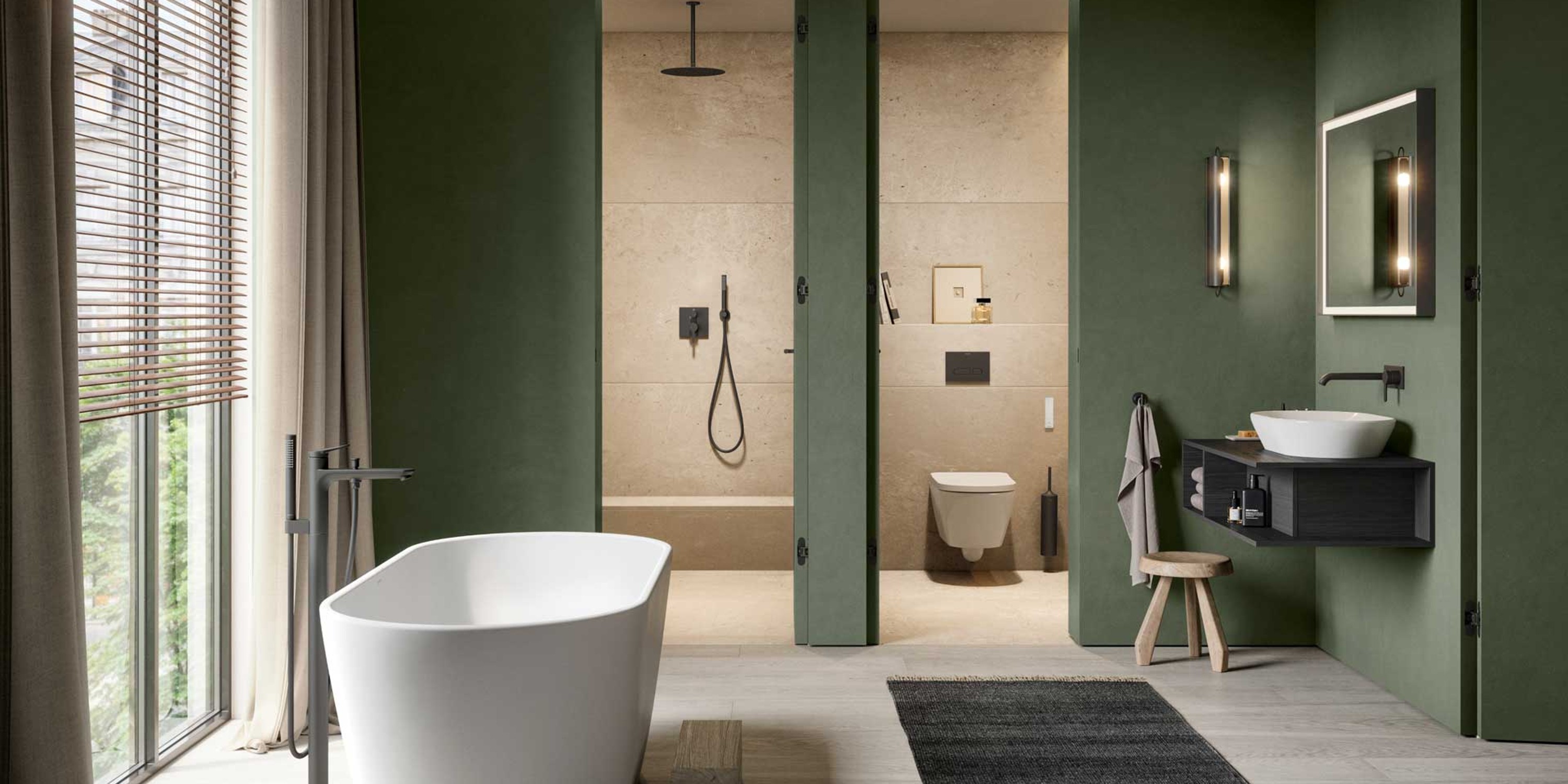
Scandinavian-style bathroom with a freestanding bathtub from Duravit's Luv series

The Scandinavian bathroom

Relax in Nordic style

Scandinavian interior design ideas have had a major international influence, and they don’t stop at the bathroom. That’s because the Scandinavian style fits perfectly into modern design trends: While the term “hygge” is often thrown around, the minimalist “lagom” style found in Swedish bathrooms is almost even more prevalent. Find out here how you can give your bathroom a Scandinavian look.

Key points at a glance:

  • Opt for minimalism and natural elements: light colors, wood, and clean lines create the characteristic tranquility of a Scandinavian bathroom.
  • Combining functionality with comfort: The Nordic style blends practical furnishings with a cozy atmosphere and clean lines.
  • Working with light and openness: Natural light, open showers, and understated furniture make the bathroom feel welcoming and spacious.
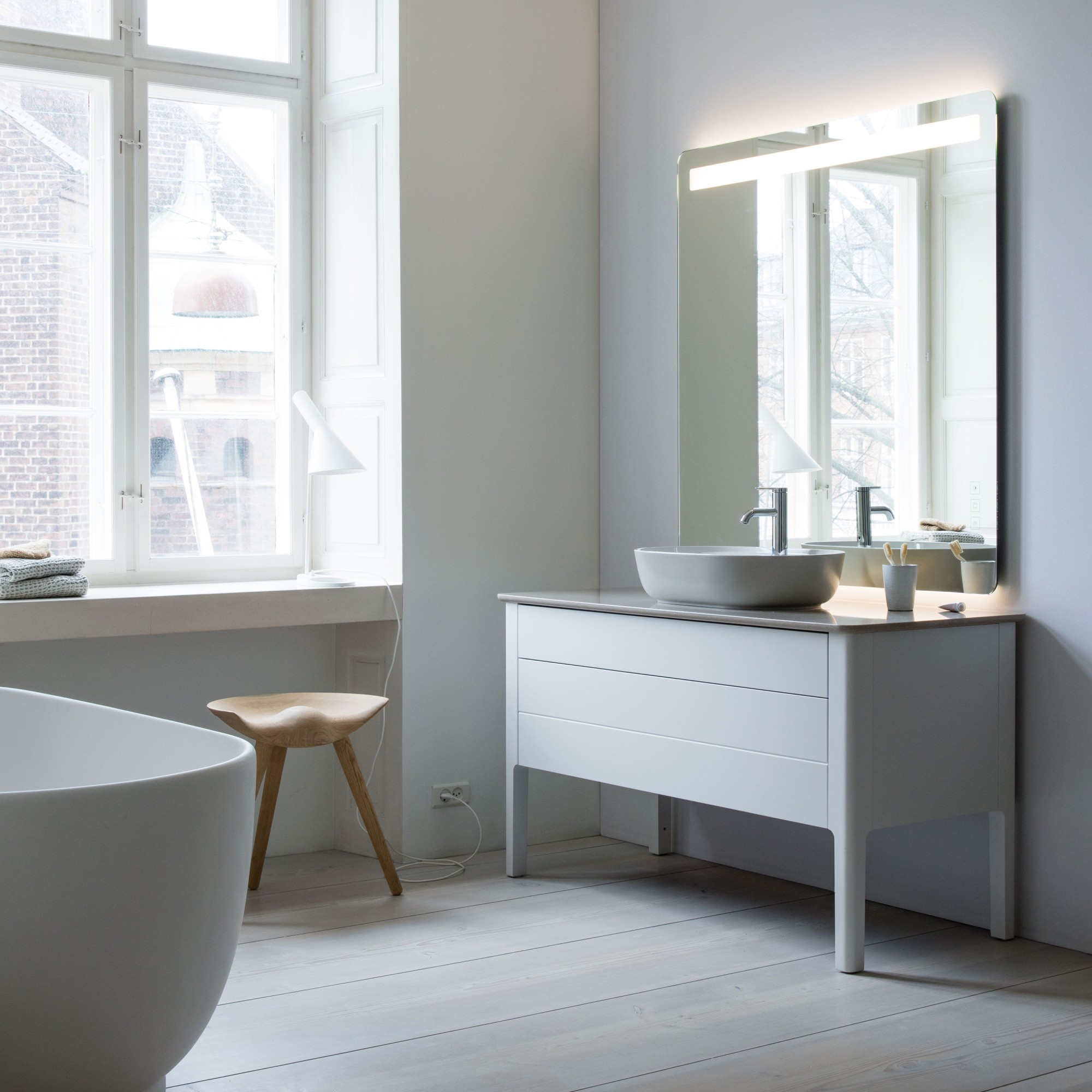
Scandinavian-style bathroom with a sink area and bathtub from Duravit's Luv series

A design philosophy between Hygge and Lagom

Because of its association with hygge, cozy bathrooms are particularly often linked to the Nordic style. However, there is at least as much emphasis on a stylish, minimalist approach. Central to this is the concept of lagom.

This Swedish term, which cannot be directly translated, roughly means “just the right amount”—neither too much nor too little of anything. In the context of Scandinavian bathrooms, this means that perfection is achieved through moderation.

This style fits right in with minimalist design concepts without sacrificing comfort. The focus is particularly on naturalness and tranquility.

Materials, colors, and shapes for a Scandinavian bathroom

The Scandinavian look is characterized by a natural, understated style, which is also reflected in the basic elements of the interior design.
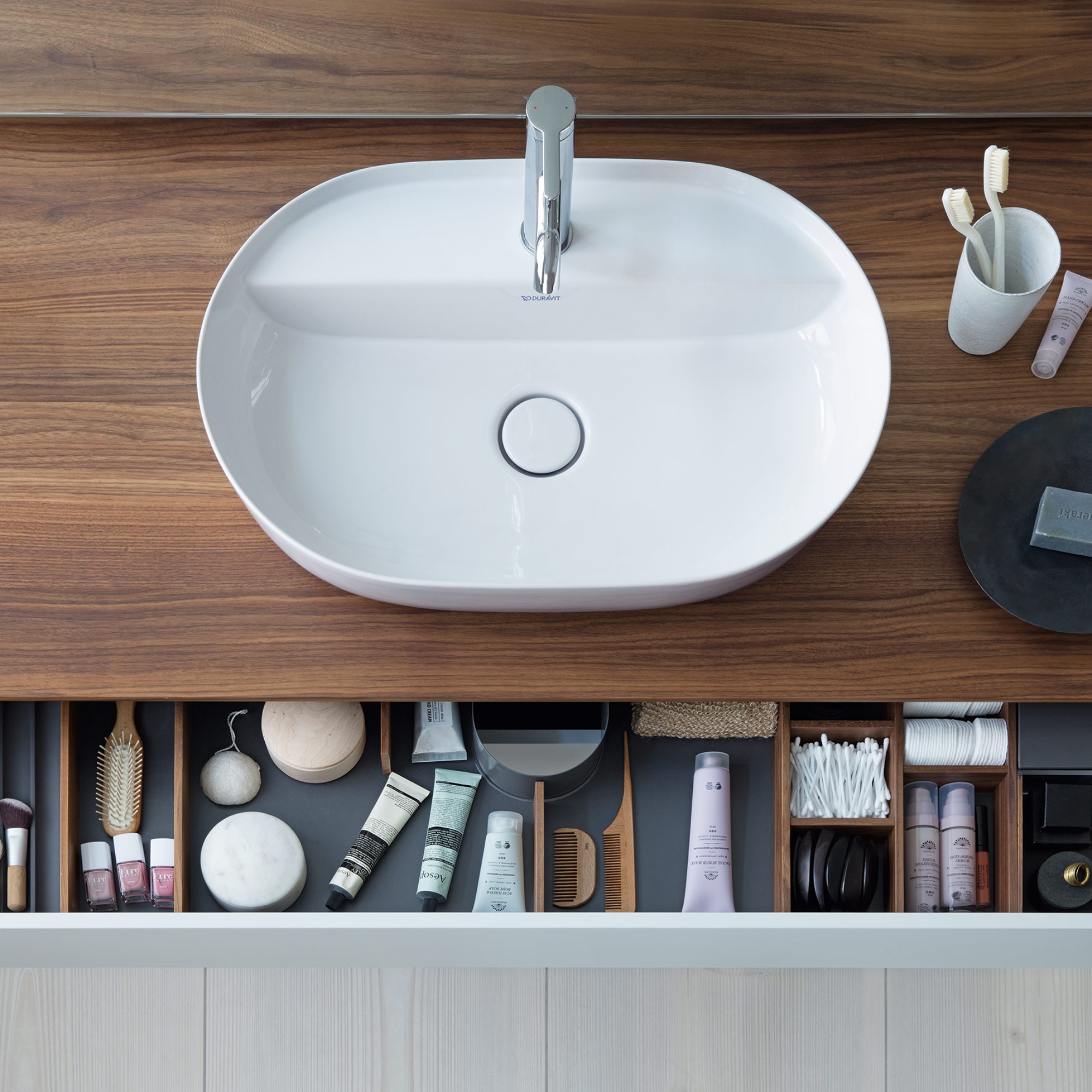
Luv sink on a wooden countertop, bird's-eye view

Wood and ceramics

In Scandinavian bathrooms, a natural aesthetic is primarily achieved through the use of wood. Light-colored woods such as oak and birch—which is abundant in Scandinavian forests—are the preferred choices. Birch, in particular, is ideal for adding tasteful accents. Classic light-colored ceramic tiles, with a matte finish if desired, create a harmonious, understated overall look.

Duravit Luv Bathtub

Matching colors

Brightness is also a key consideration when choosing colors. White, beige, and lighter shades of gray dominate the Scandinavian bathroom. Pastel colors or black can be used sparingly to add accents—but the design should never be garish.

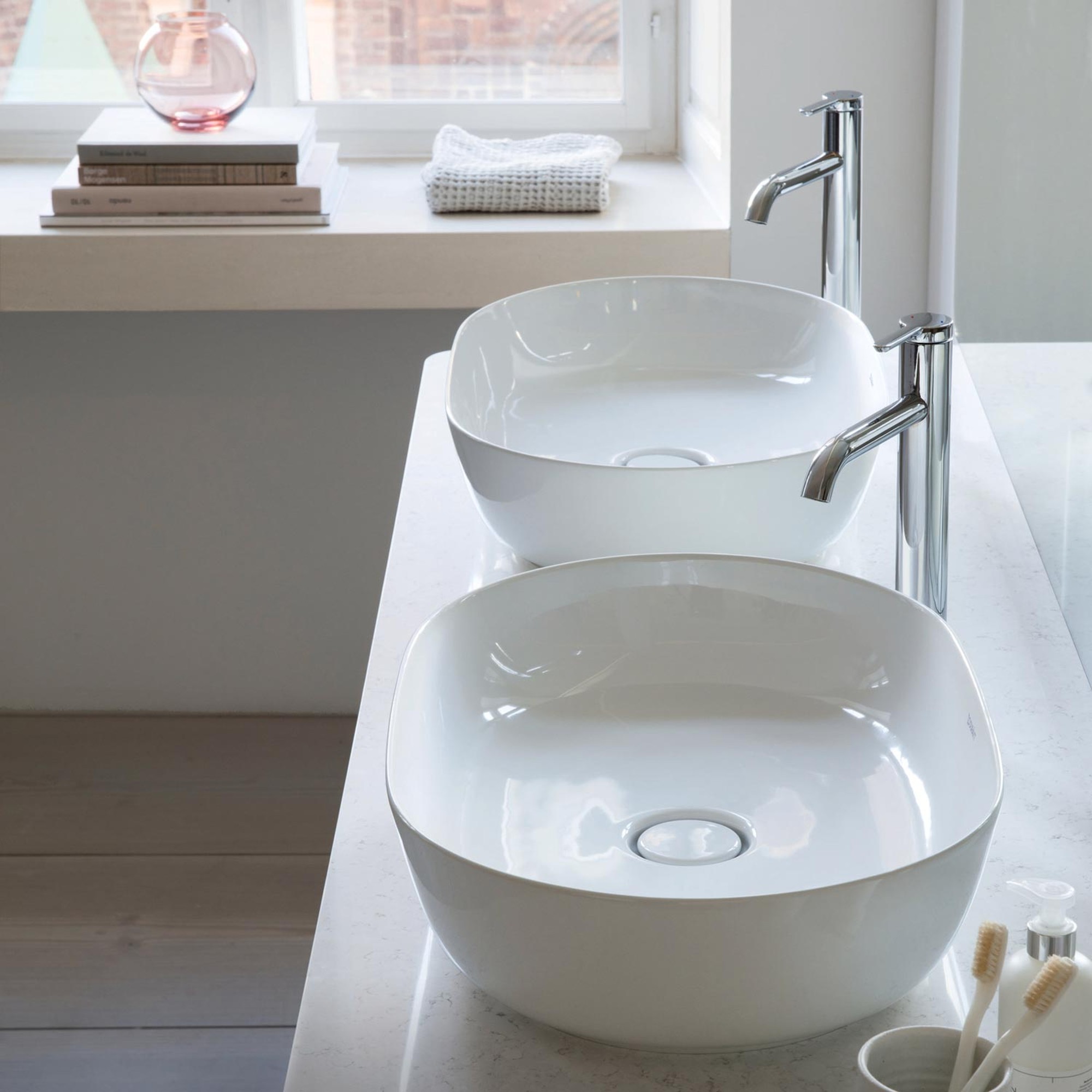
Sink area with two Duravit Luv countertop sinks

Design language

In keeping with the simple, uncluttered design philosophy, clean lines are preferred in Scandinavian bathrooms. However, the design doesn’t have to be too angular; soft curves complement the relaxed atmosphere you’re aiming for. The sinks from the Vitrium series are ideal for this.

Designing a Scandinavian-style bathroom

If you want to decorate your bathroom in the Scandinavian style, you usually don’t need much. To avoid a cluttered or overwhelming look, less is always more in the Scandinavian style. Decorative items with no practical purpose are almost entirely avoided. However, comfort and coziness still play a major role alongside functionality.
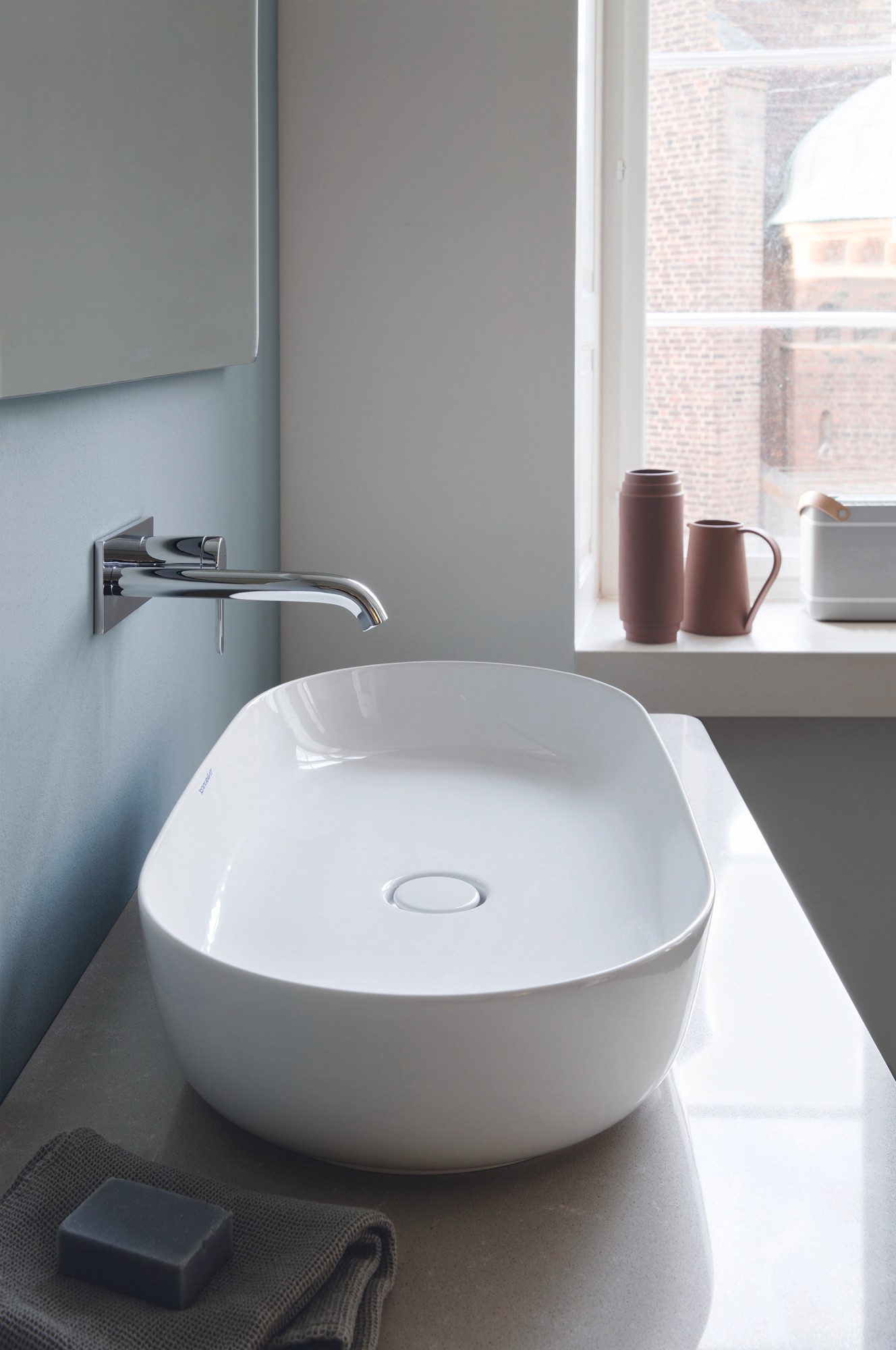
Duravit Luv Countertop Sink

Sink area

You won’t find any opulent sink areas in a Nordic-style bathroom. Simple yet practical wall-mounted sinks are a common sight. But countertop sinks and washbowls mounted on a wooden console also perfectly capture the natural, serene character of the style.

Sink area with mirror, vanity unit, and countertop sink from the Duravit Luv series

Furniture

Bathroom furniture in Scandinavian-style bathrooms is traditionally made of light wood. However, this doesn’t mean that a Nordic bathroom is necessarily all-natural. Decorative finishes or painted surfaces in light colors also blend effortlessly into the overall look.

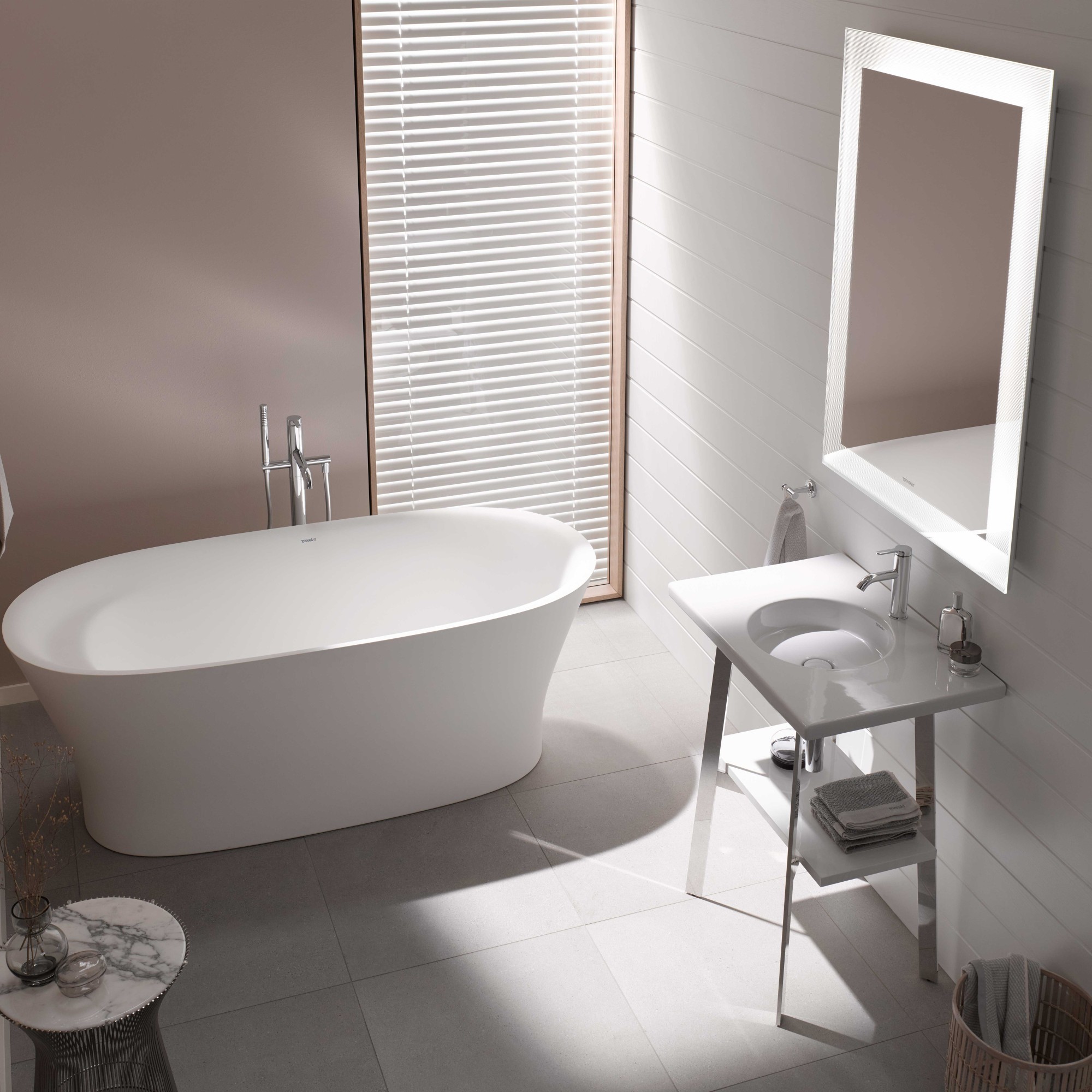
Bathroom with a Duravit bathtub and sink area, with natural light streaming in through a large window

Light

Light plays a particularly important role in Scandinavian bathroom design. Ideally, there should be plenty of natural light to highlight the brightness of the space. However, in a bathroom without windows or with little natural light, lighting fixtures can also help. Dimmable mirror cabinets, in particular, create a warm, inviting atmosphere.

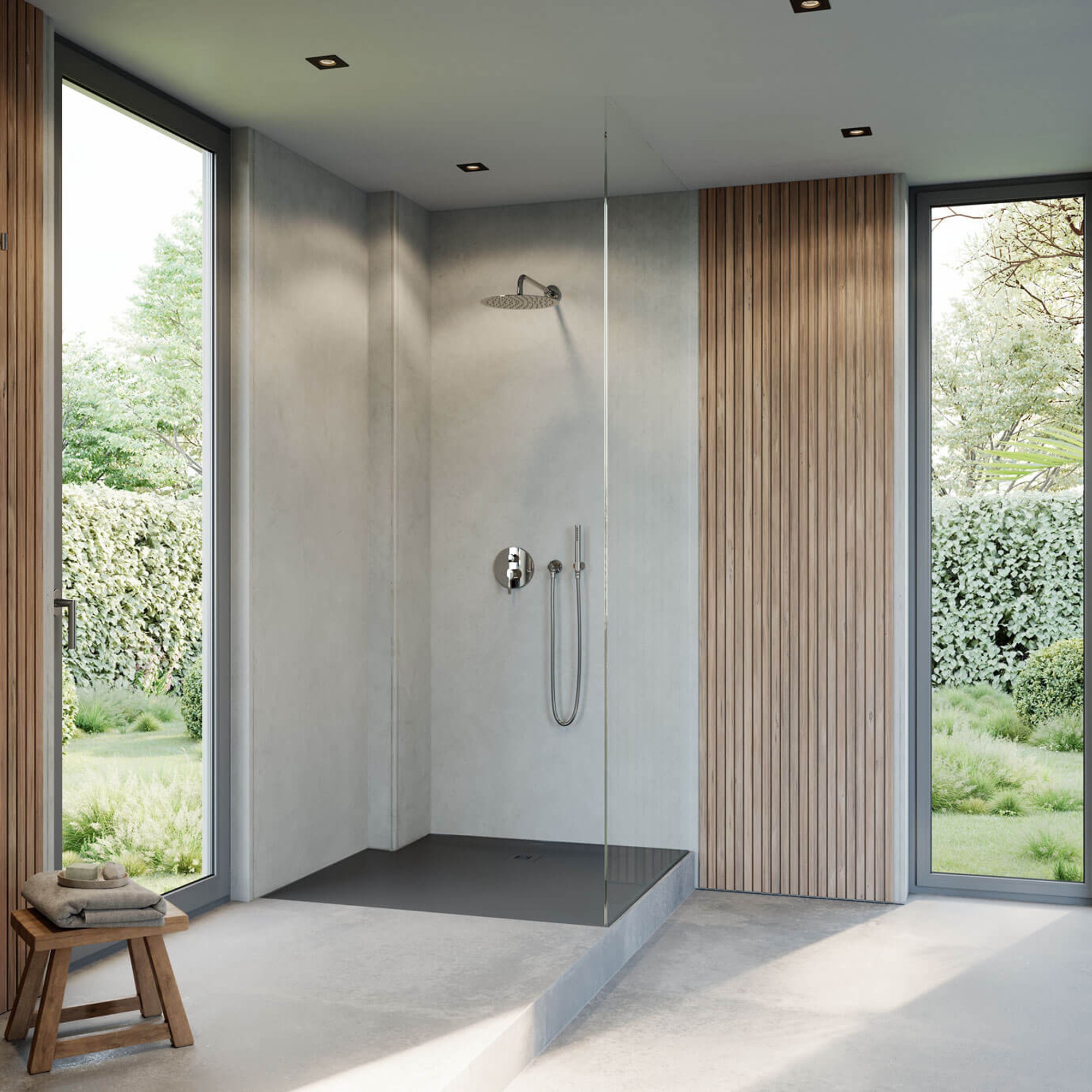
Walk-in shower in a spacious bathroom with floor-to-ceiling windows

Shower

To further emphasize the bright, open feel of a Scandinavian bathroom, the shower area should also be as open as possible. It’s best to choose a walk-in, floor-level shower with a glass partition. This keeps the shower bright and flooded with light.

Tips for implementation

The minimalist design approach of the Scandinavian-style bathroom also makes it easier to furnish the space. After all, you can achieve excellent results with just a few simple touches. The following tips can help:
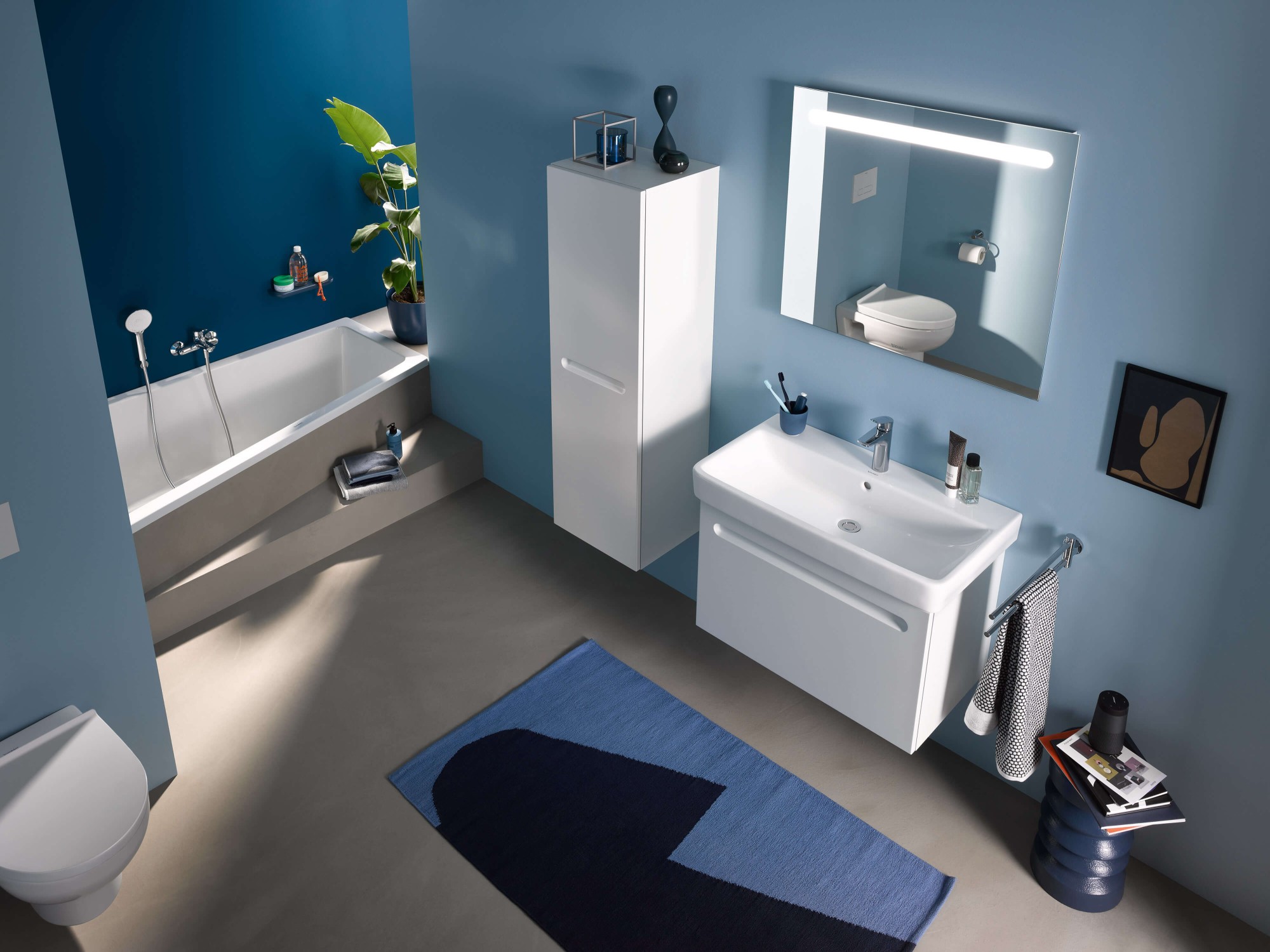
Small bathroom with a sink area and a Duravit Cape Cod bathtub

Designing a small bathroom in a Nordic style
Minimalism works well in small bathrooms. Scandinavian bathroom furniture and one or two subtle accents are all you need here. Elements that incorporate the distinctive look of birch bark, in particular, can quickly create the right atmosphere.

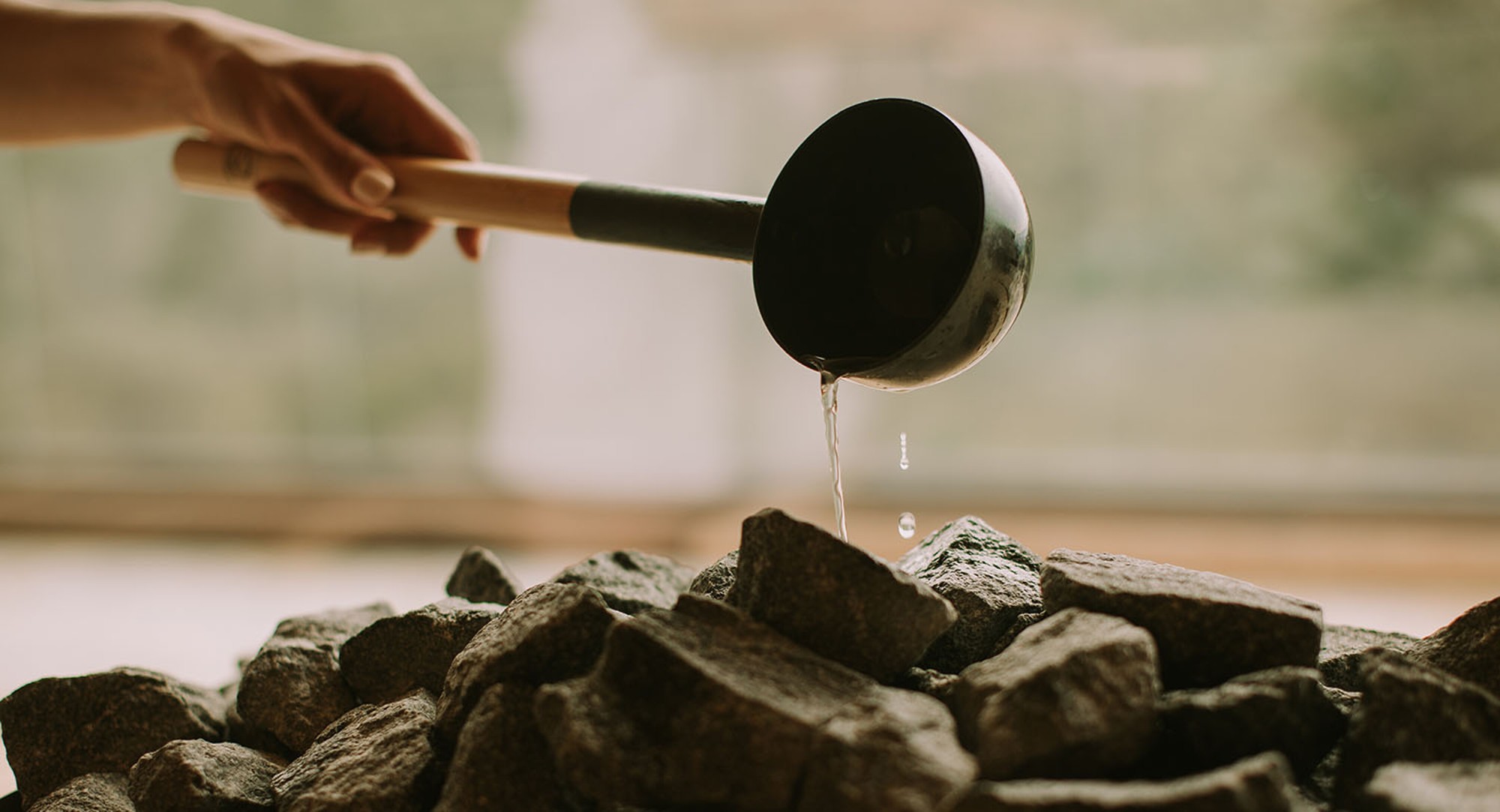
Close-up view of an infusion

Sauna in the bathroom

The sauna is undoubtedly a true classic of Nordic bathroom culture. And, of course, the relaxing aspect of Nordic interior design ideas and a sauna in the bathroom go hand in hand. While this does require some space, it takes up significantly less room than is often assumed. In fact, these wellness oases can easily be incorporated into even a standard bathroom.

Duravit White Tulip bathtub in front of floor-to-ceiling windows

Creating a Scandinavian-style bathroom

The influence of Scandinavian bathrooms is unmistakable in modern bathroom design. This is one reason why elements of Nordic style blend so well with modern design.

But the Scandinavian bathroom is just as well-suited to being combined with other traditional styles. The Japanese bathroom, for example, also emphasizes tranquility and naturalness. Despite the cultural differences, the fusion of these styles has even given rise to a distinct, new design trend—Japandi.