Japandi bathroom
A fusion of Zen and hygge
Key points at a glance:
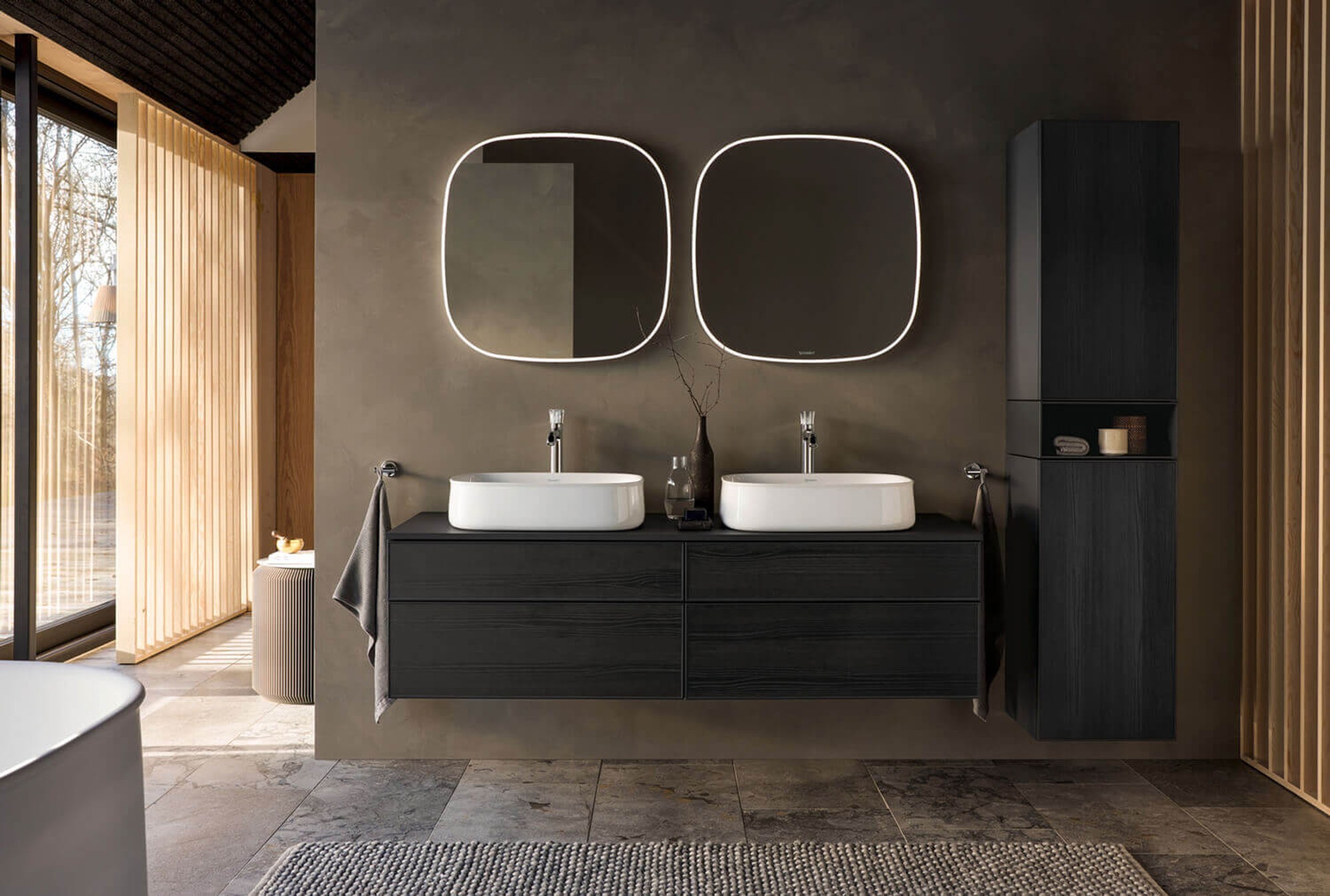
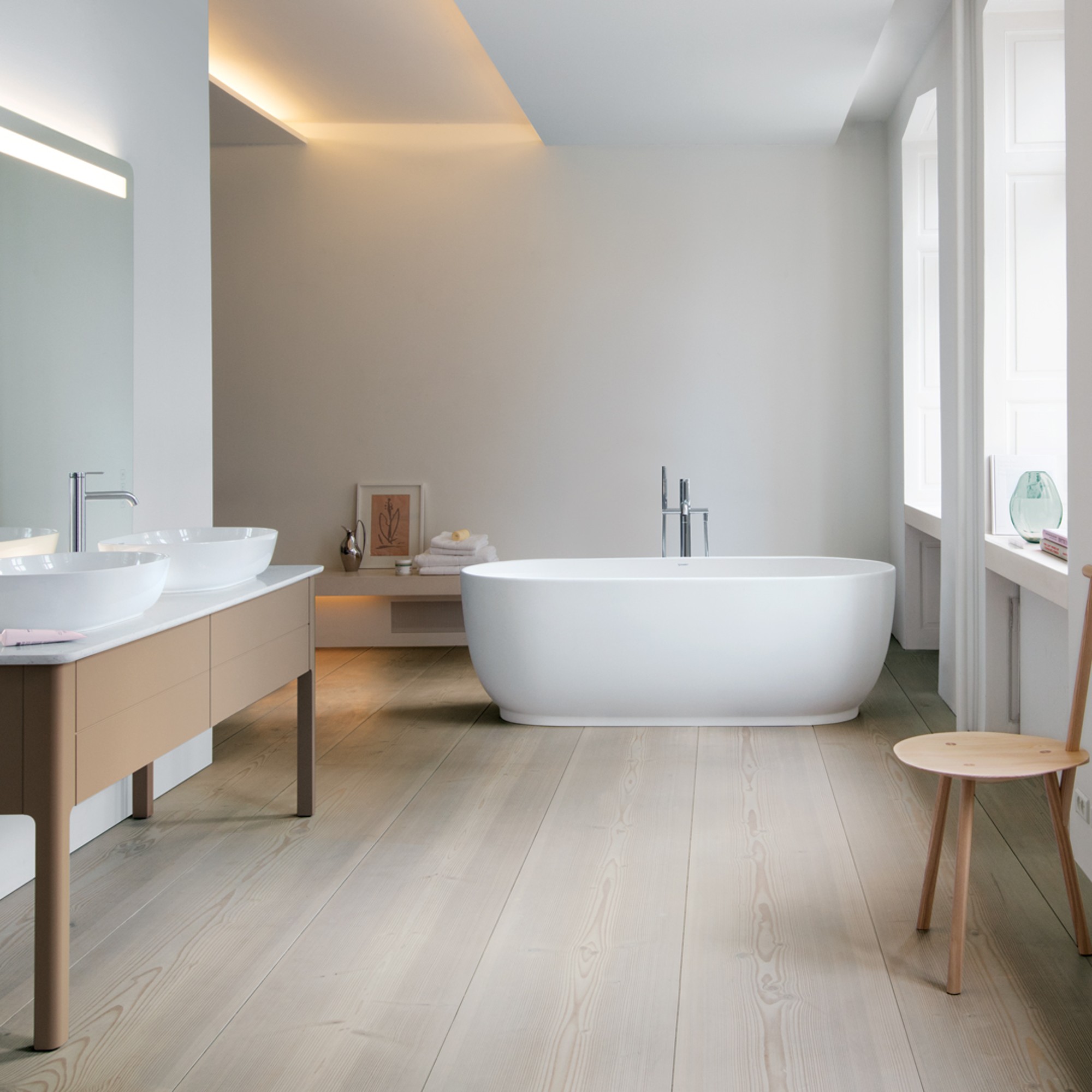
- The Japandi concept: Japandi combines Japanese minimalism with Scandinavian coziness, creating a harmonious, relaxing atmosphere in the bathroom.
- Materials and colors: Natural materials such as wood, soft colors, and clean, rounded shapes define the Japandi style and create a timeless elegance.
- Less is more: High-quality materials, understated accessories, and a bright, open layout are the hallmarks of the Japandi bathroom.
What is Japandi?
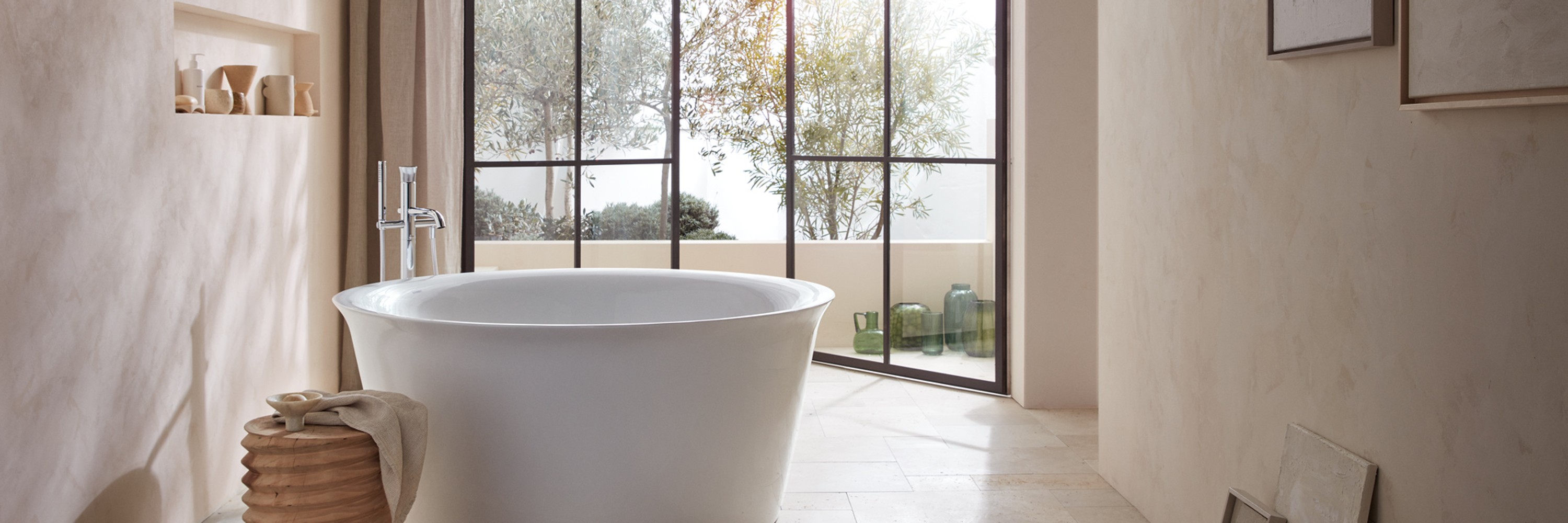
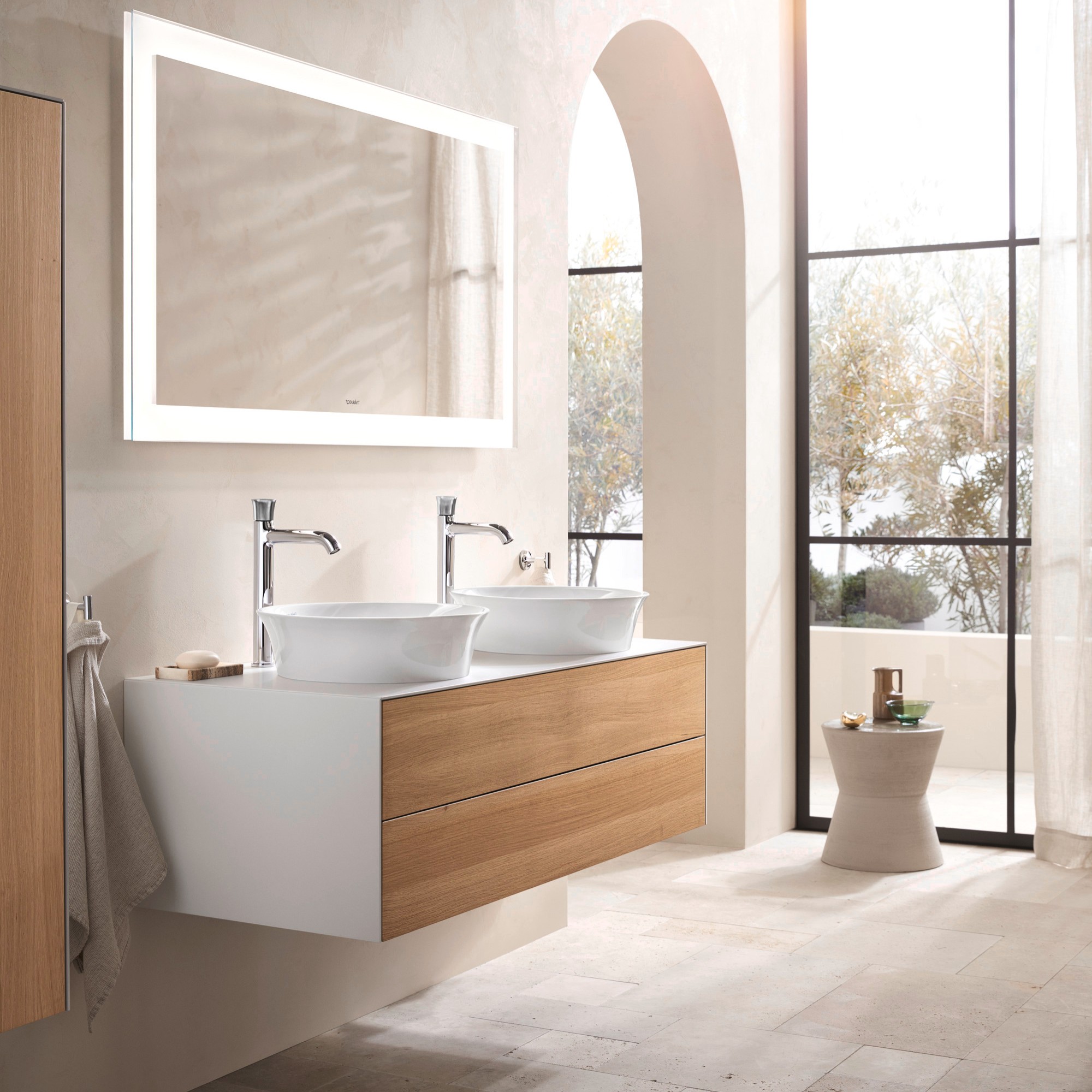
Japandi is a fusion of two distinct interior design styles. As it applies to the bathroom, it refers to the blending of Japanese and Scandinavian bathroom design. The focus is less on specific design elements—such as the typical freestanding bathtub found in Japanese bathrooms—and more on an overarching design and furnishing philosophy.
The result is equally minimalist, warm, and authentic. The Japandi style combines the clean lines of the Japanese bathroom with the cozy comfort of the Scandinavian bathroom. As in both design styles, the focus is on quality over quantity and tranquility achieved through simplicity.
Materials, colors, and shapes for the Japandi bathroom
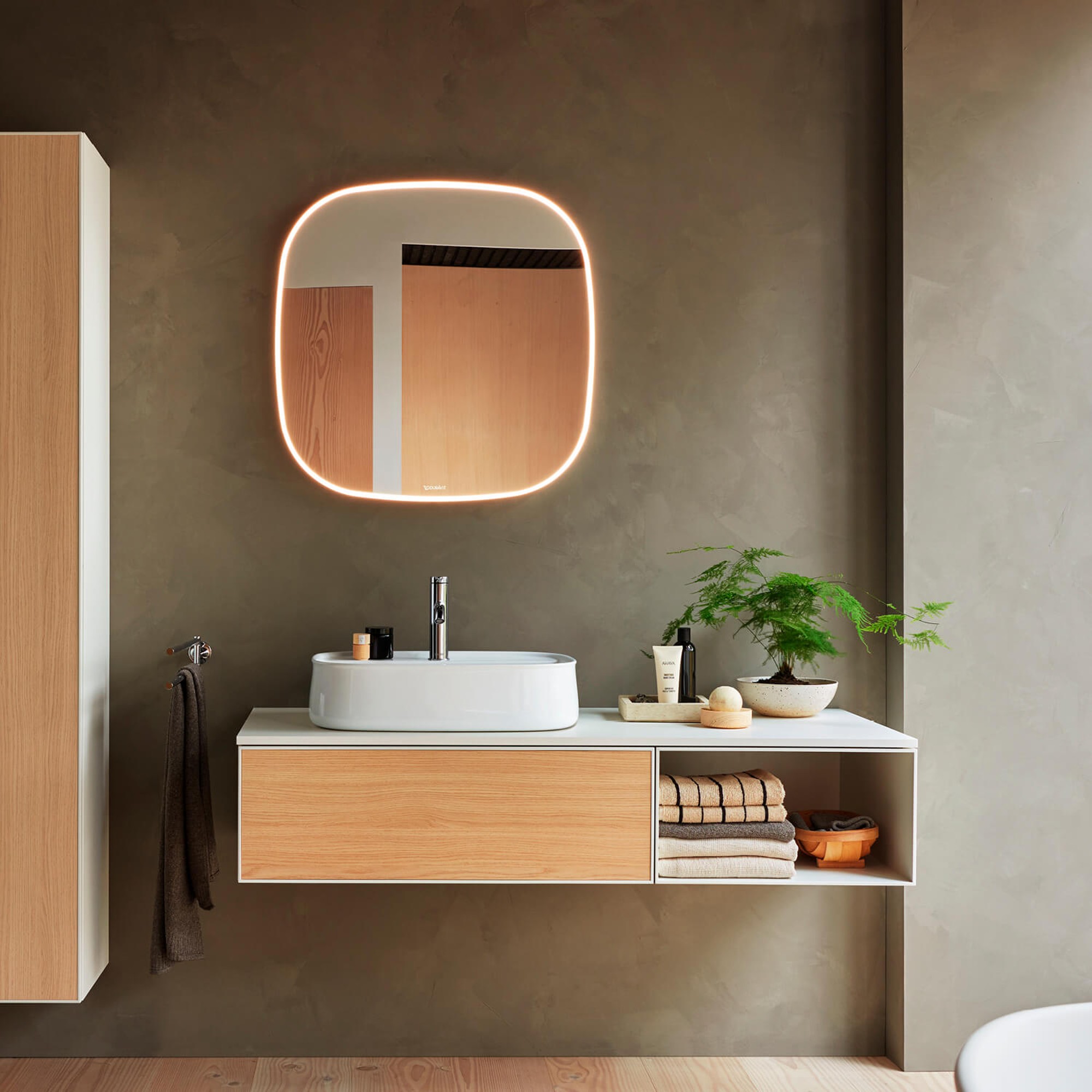
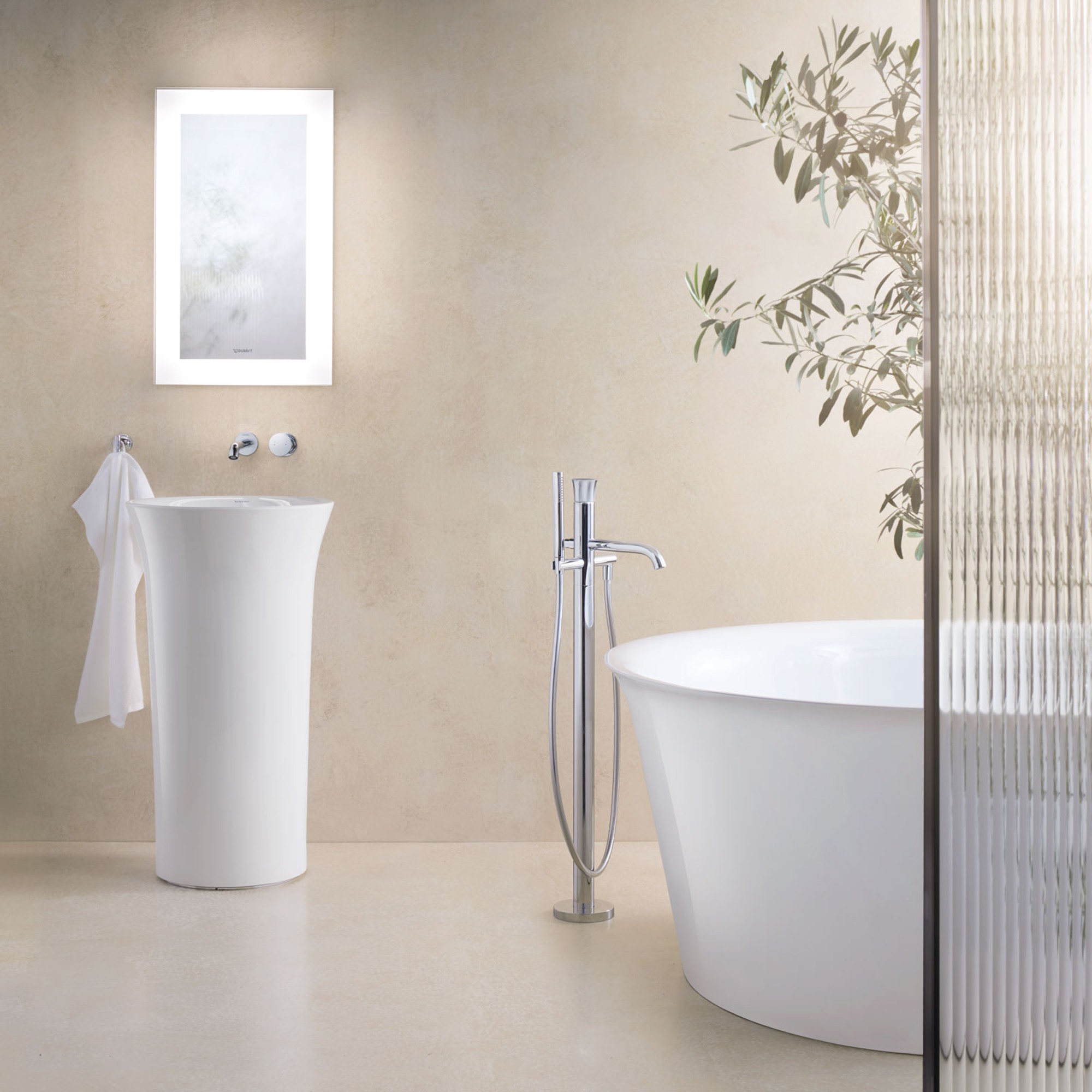
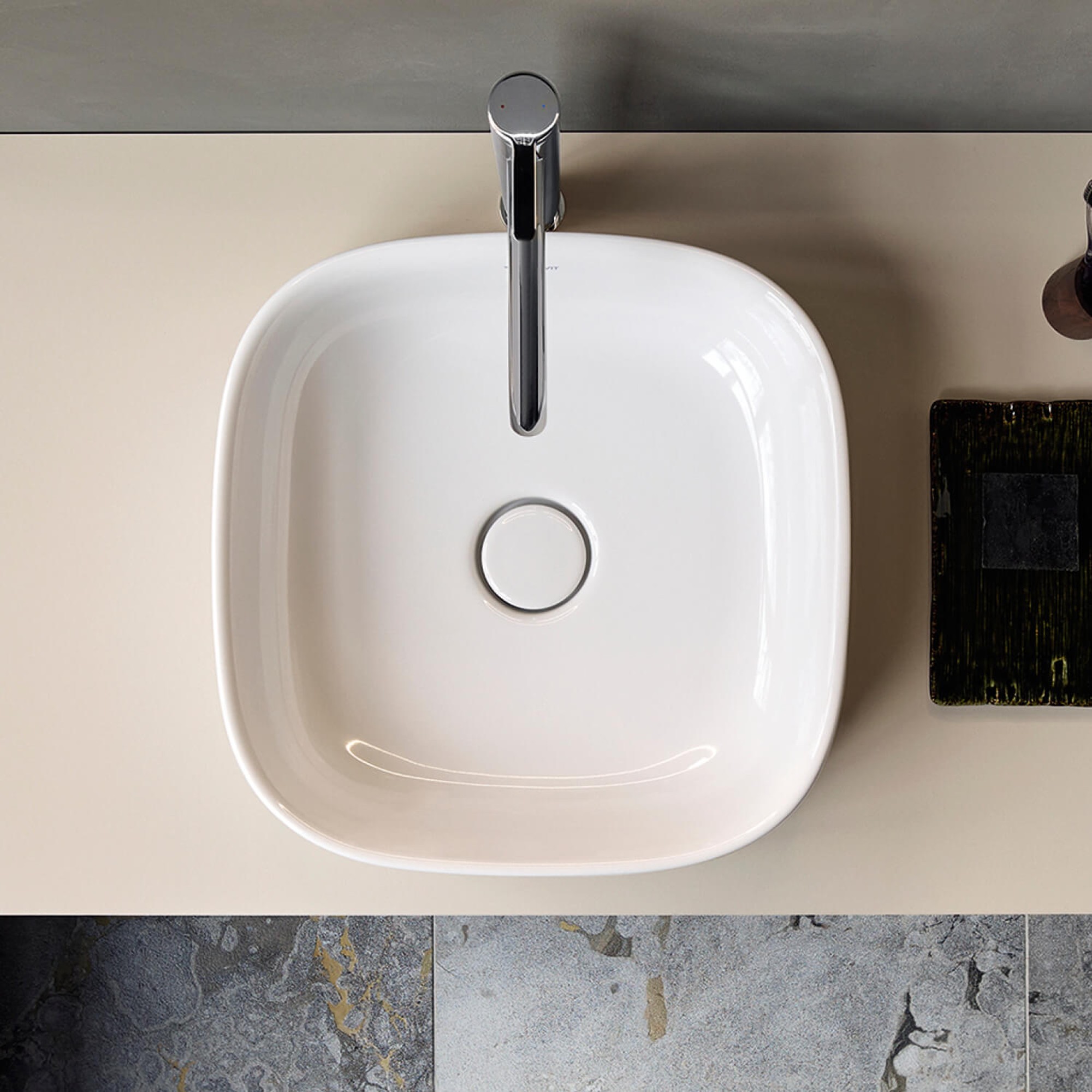
The choice of materials, colors, and shapes for the Japandi bathroom highlights the stylistic similarities between the two original styles. Both are rooted in naturalness and restraint, qualities that are also reflected in the Japandi bathroom.
Materials
Colors
Shapes
Interior design and decorating tips
With its understated, minimalist approach, Japandi is particularly well-suited as an interior design style for modern bathrooms.
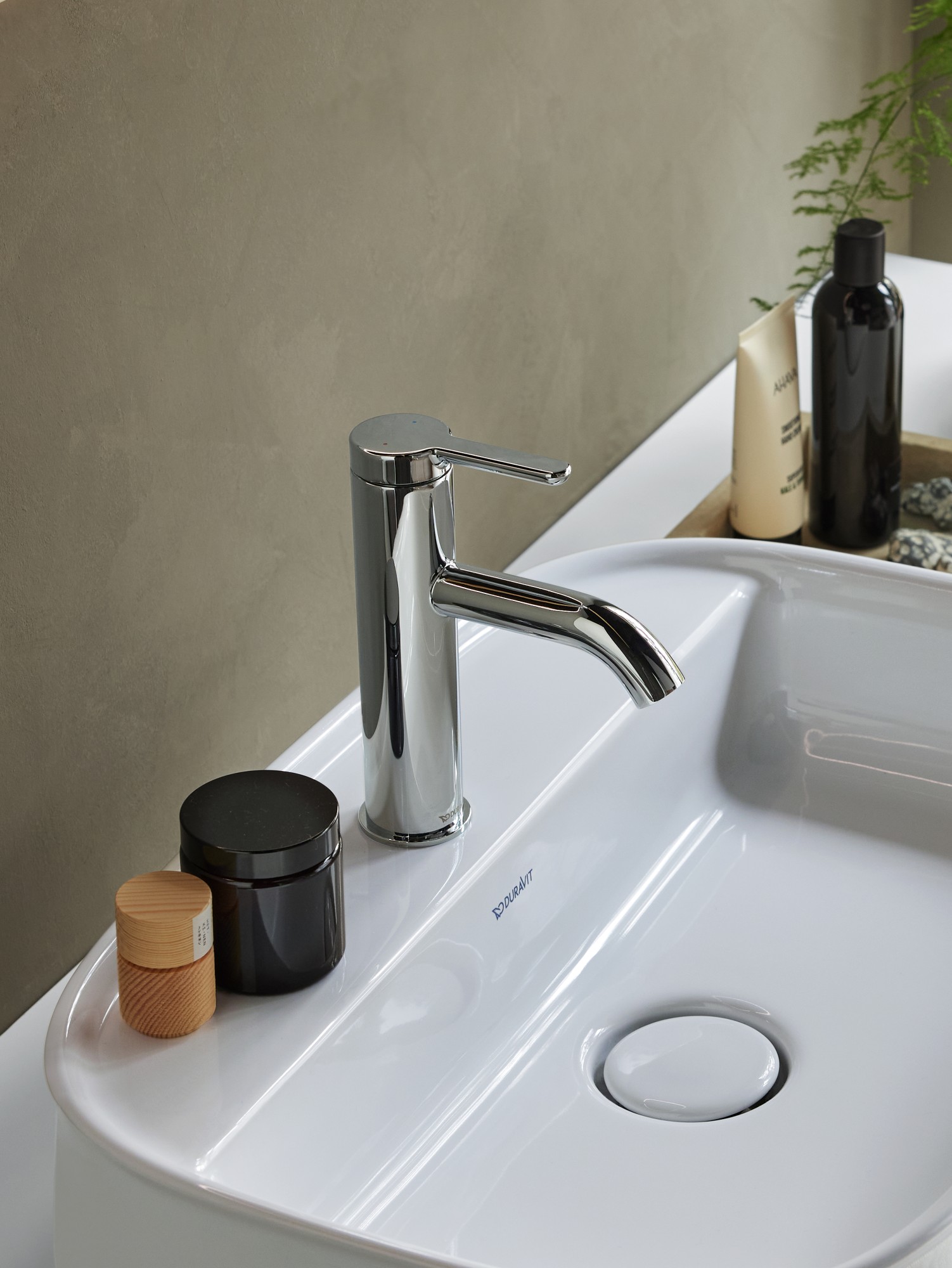
Faucets
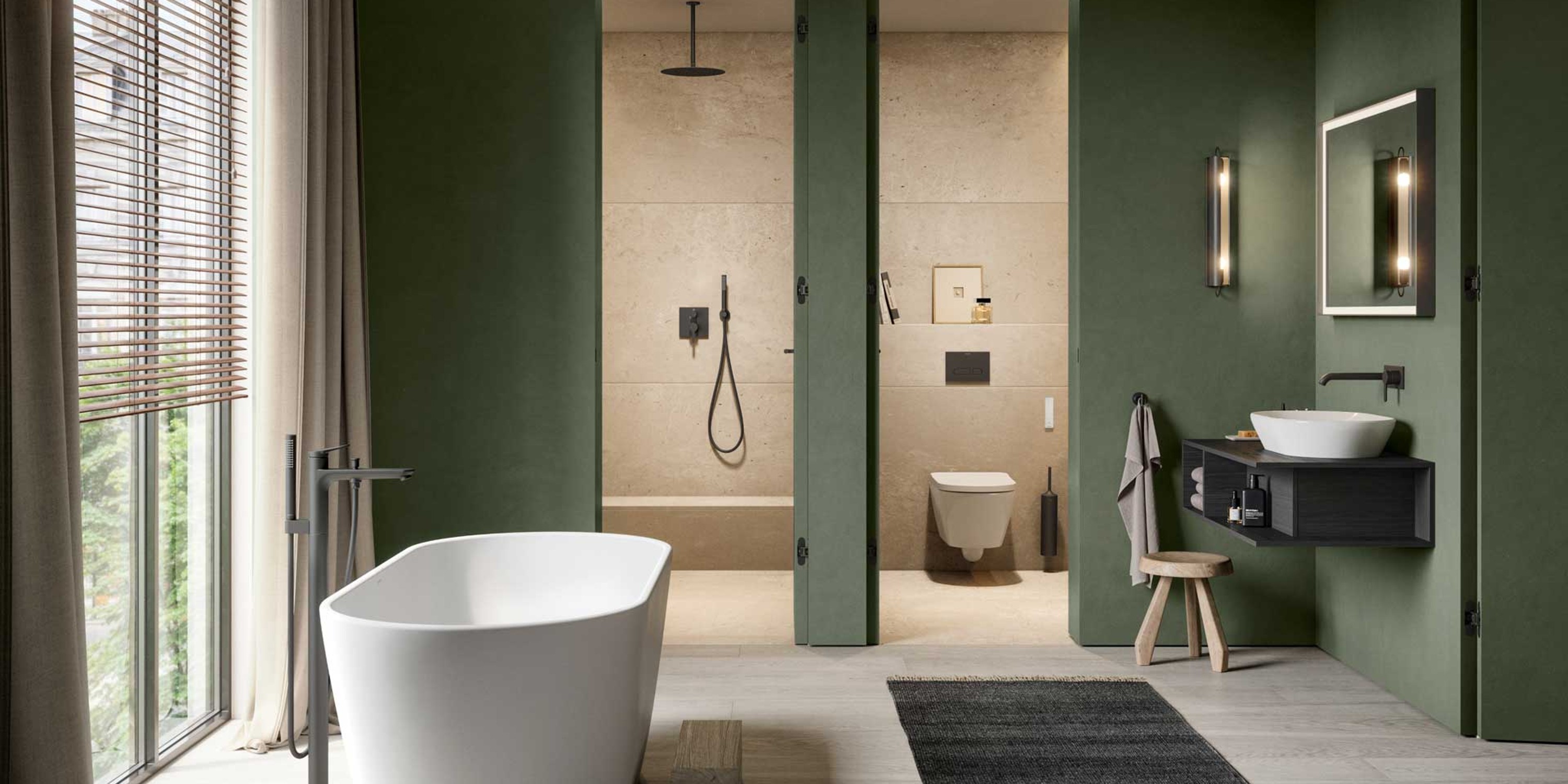
When it comes to bathroomfaucets, opt for more delicate designs. Black faucets or brushed brass can provide an interesting contrast. Even classic stainless steel faucets blend well into a Japandi-style bathroom thanks to their understated charm.

Light
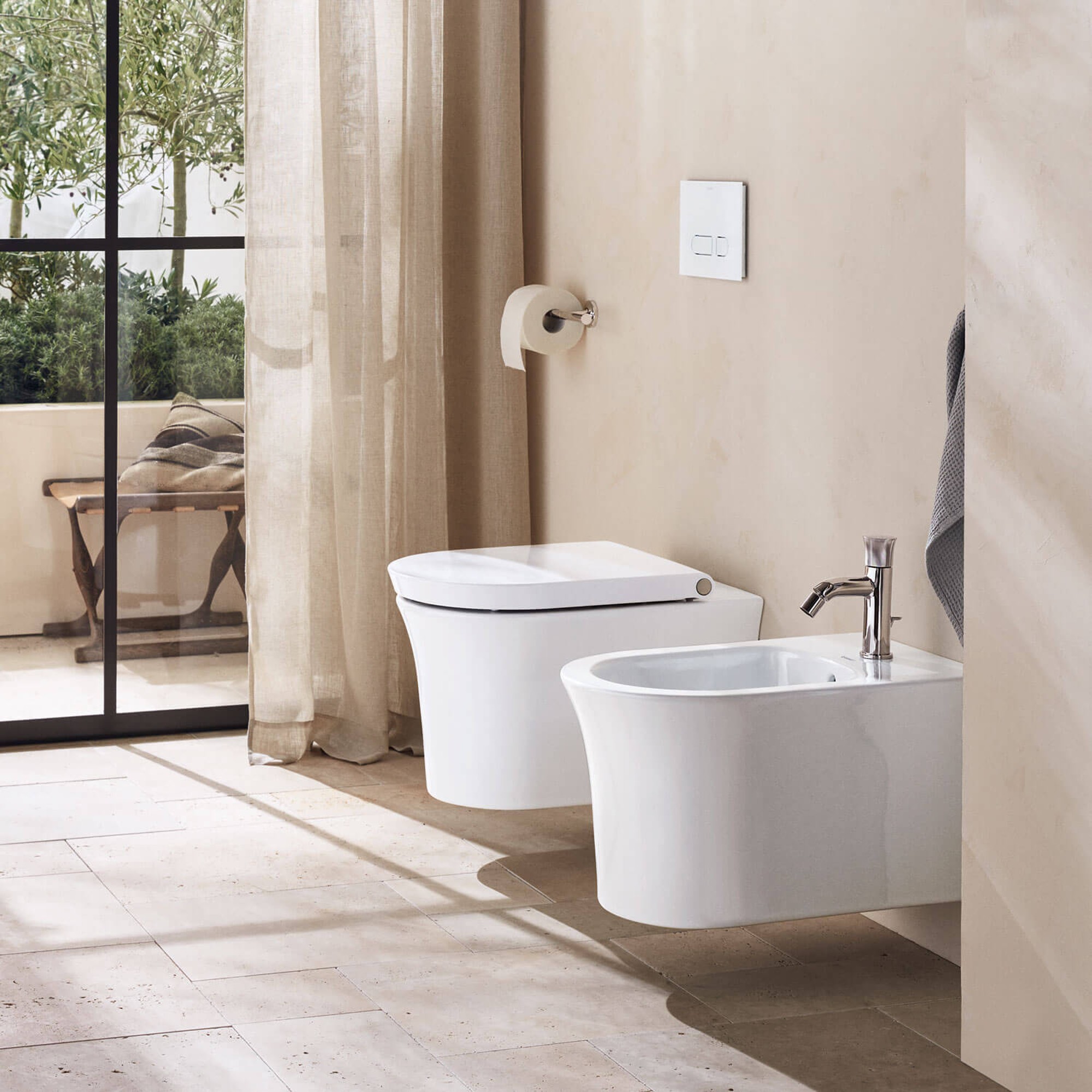
Light plays a major role in Scandinavian bathrooms. The same applies to Japandi interior design. Whenever possible, the focus should be on maximizing natural light through large and numerous windows.
Warm white LED spotlights and indirect lighting help create a natural, relaxed atmosphere. Wooden or paper wall sconces can be used to add special accents and highlight the style’s Japanese roots.
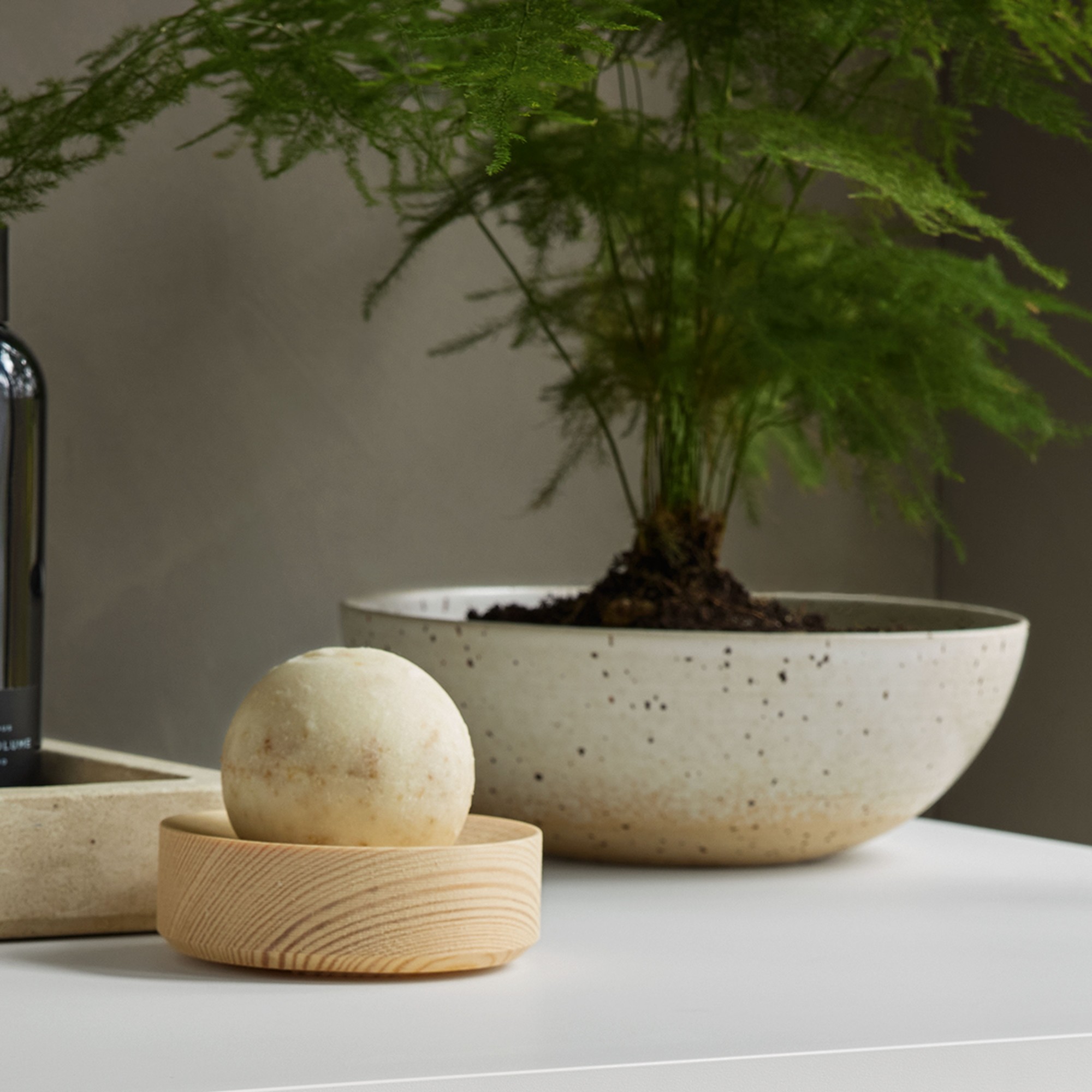
Accessories
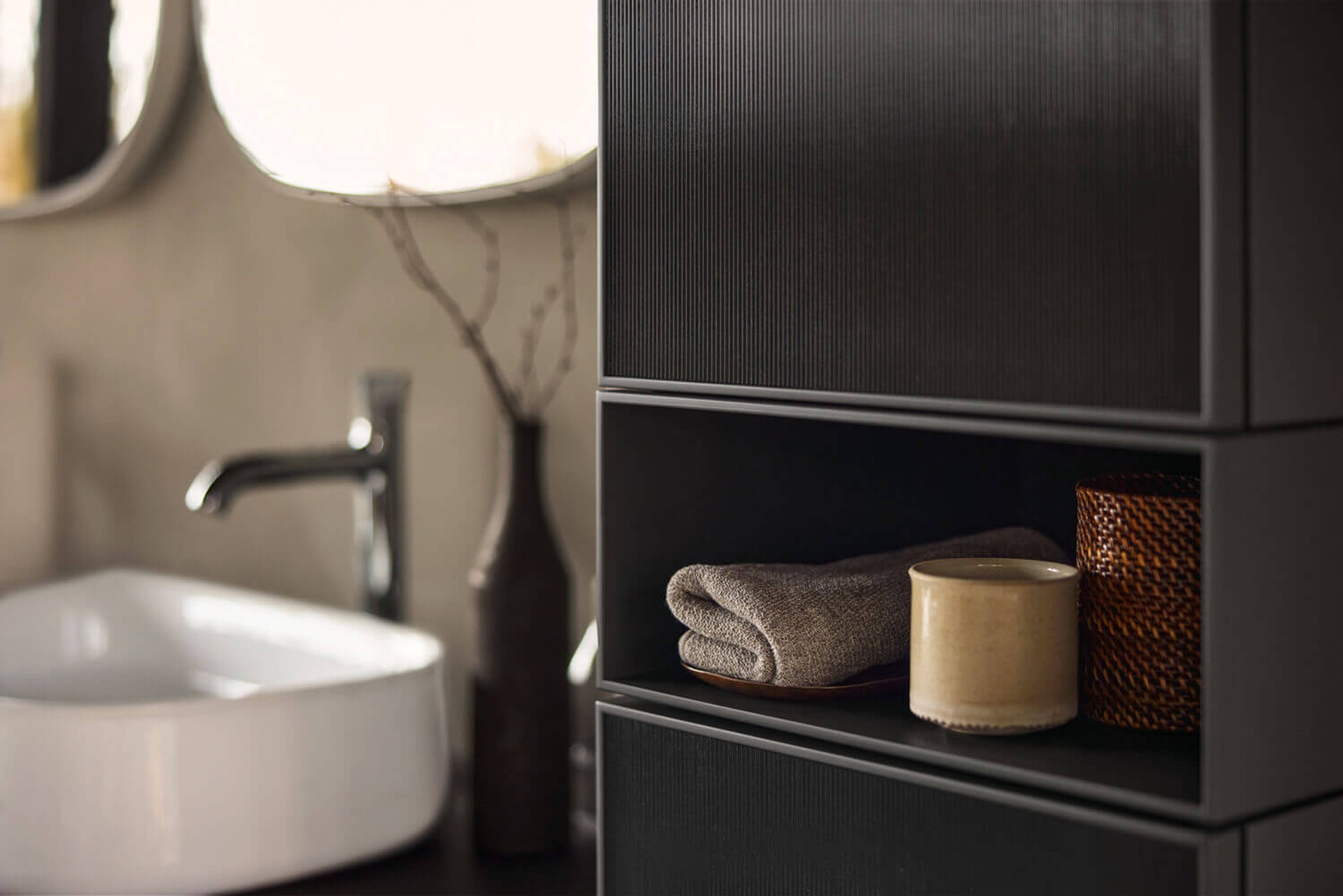
While “less is more” applies to decorating a Japandi bathroom, even small details can create striking accents. Ceramic bowls help keep the bathroom tidy, and complementary plants blend in beautifully. Soft towels made of linen or cotton emphasize the focus on wellness and nature.
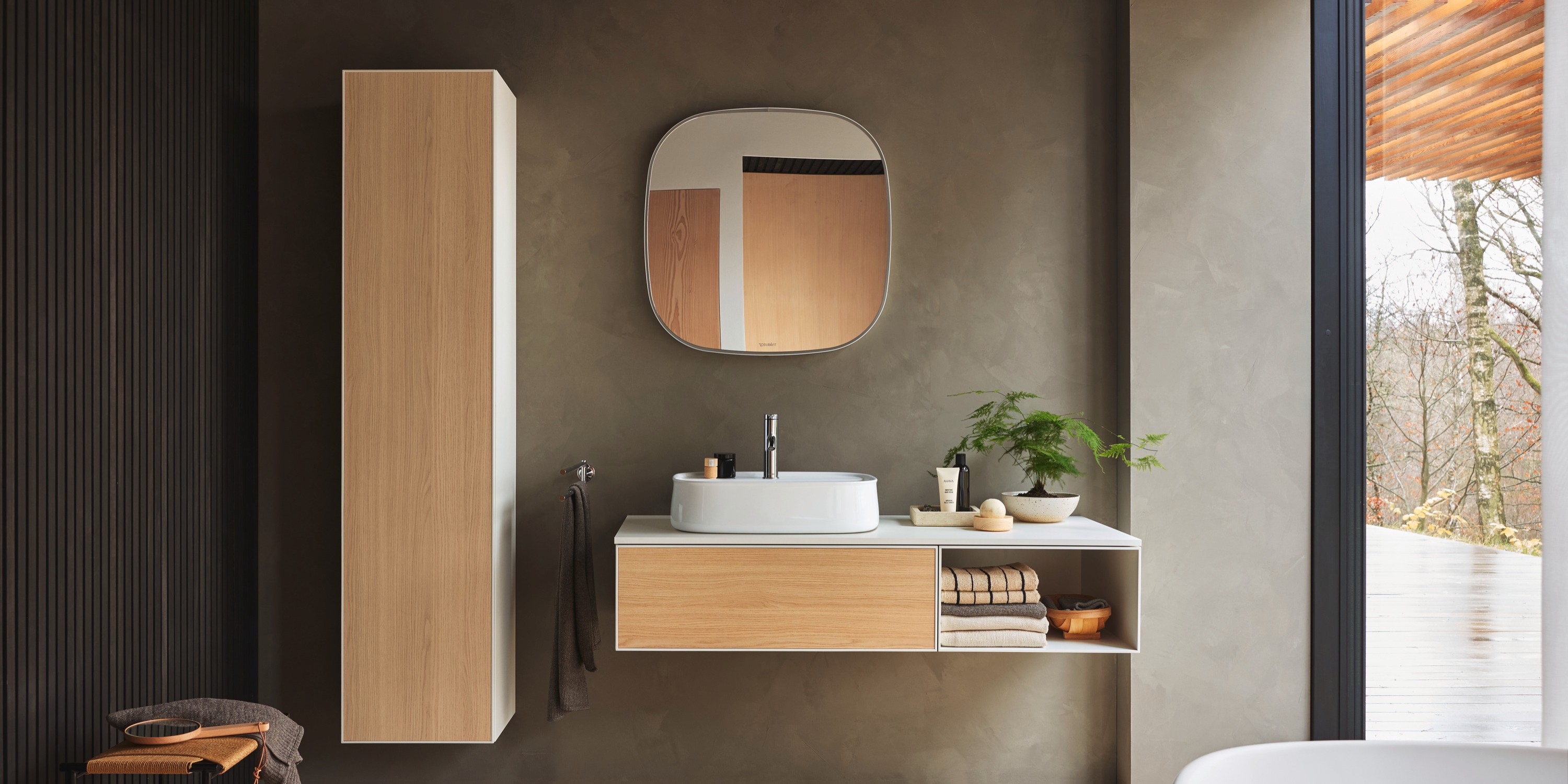
Tips for implementation
If you want to design your own Japandi-style bathroom, it’s actually quite easy to do. The following tips can help:
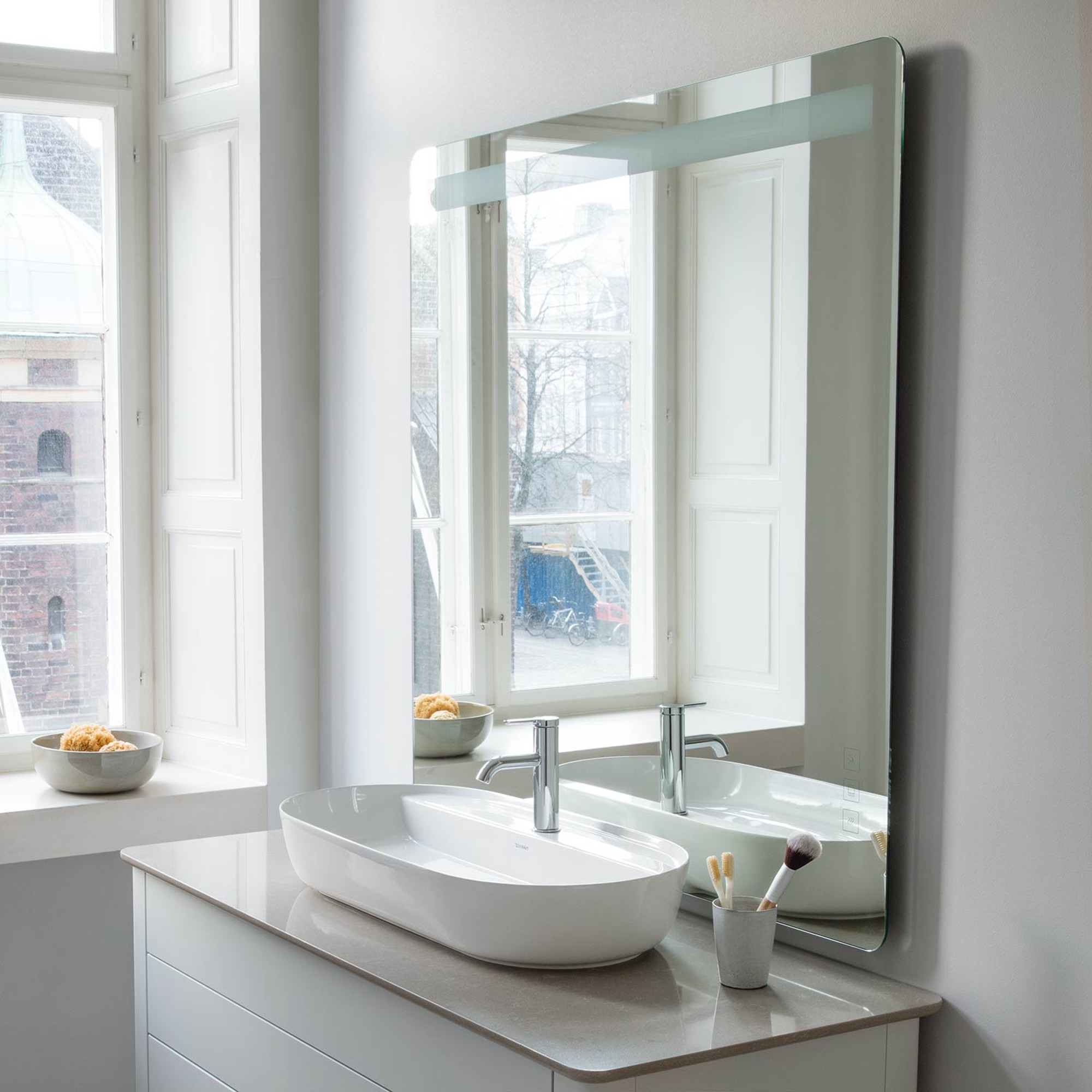
Bright and open
Quality over quantity
Not everything has to be perfect