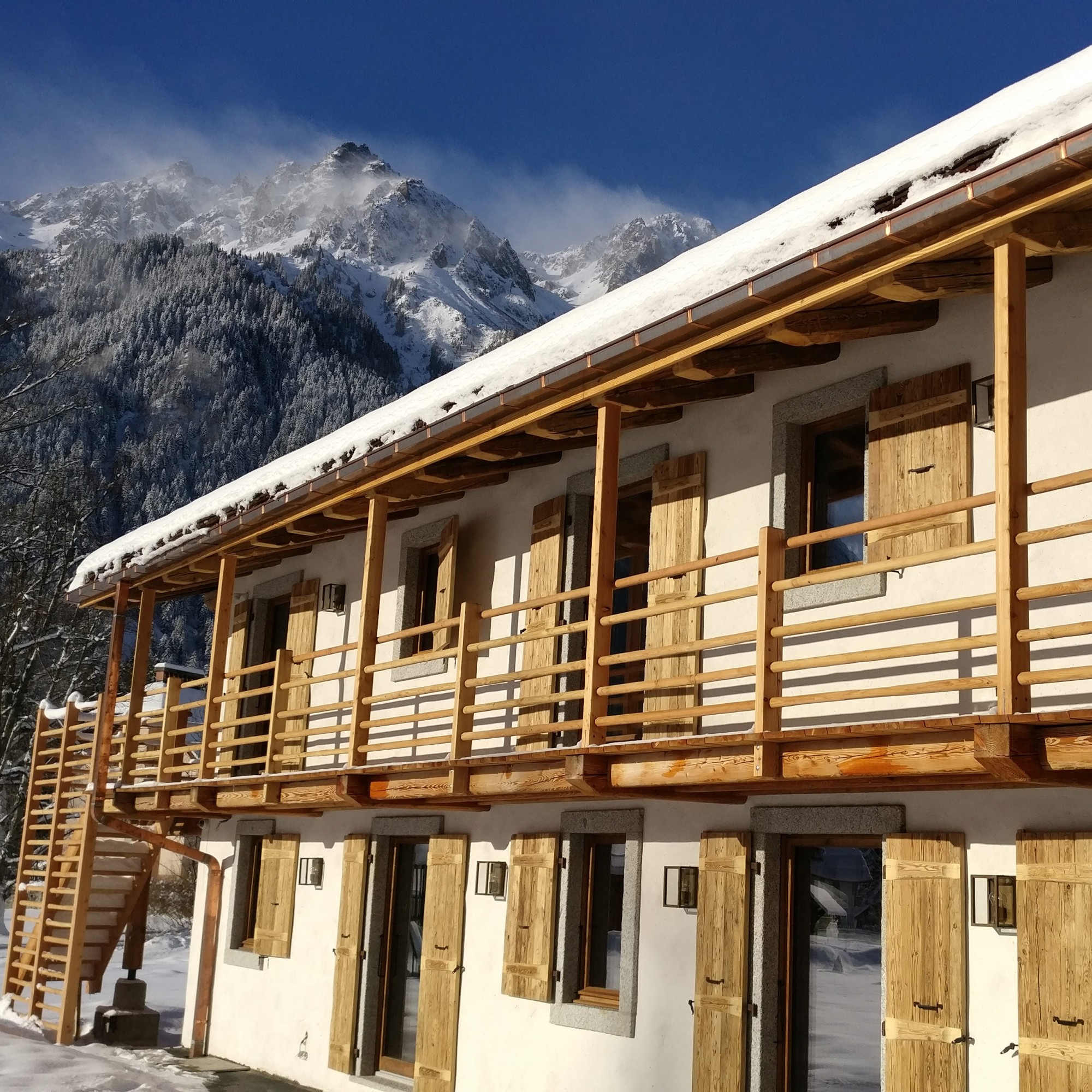
Casa/Studio Passive House
Reference summary
Architect
PIRACCINI+POTENTE SUSTAINABLE ARCHITECTURE
Location
Cesena
Italy
Duravit series
Category
The term "passive house" is used to describe buildings that significantly reduce heat loss through ventilation and do not require conventional heating. These energy-efficient buildings are certified by the Passive House Institute in Darmstadt – an internationally renowned institute for research and development of building concepts, components and planning tools. To receive certification, requirements regarding architecture, technology and ecology must be met.
The project shows how it is possible to achieve the energy performance of a passive house not only in new insulated buildings, but also in renovation and retrofitting projects. By applying the Passive House Protocol, buildings in need of renovation are upgraded and made more energy efficient and earthquake-resistant.
The building is made of a mix of materials, including wood (laminated and cross-laminated timber), steel, masonry and reinforced concrete. The natural properties of each material were taken into account to ensure optimal interaction. This way, the construction costs of the house were kept at market levels without neglecting quality aspects.
A large portion of the heating needs are obtained from passive sources such as solar radiation, heat emitted by people and technical devices. The Casa/Studio Passive House is not connected to the gas grid and only has a controlled mechanical ventilation system. This allows clean and filtered air supplied from outside to be enriched with the heat of the extracted stale air. By avoiding the use of combustible energy sources, the building does not release any emissions into the atmosphere.
This extraordinary building is home to, among other things, the Duravit series ME by Starck, Starck 1, L-Cube, Happy D.2, Luv and Sensowash® Slim. A highlight is the DuraSquare washbasin with metal console in black matt, which impresses with its clarity and minimalism.
For Stefano Piraccini, the passive house serves as both a residence and an architectural office. The architect had the washbasin built on the bedroom terrace so that he can enjoy the view of the river Savio during his morning routine.




_1_1.jpg)

_1_1.jpg)