

About the brand
Leading brand for designer bathrooms
Our Tradition
Even a company that values its centuries-old tradition had to start small at some point. Duravit was once a newcomer to the business, an adventurer breaking new ground.
Georg Friedrich Horn, who in 1817 established an earthenware factory in Hornberg in the Black Forest, initially focused entirely on the manufacturing of tableware. The expansion of the product range to include sanitaryware laid the foundations for the company's later success: in 1950, production was switched from earthenware to porcelain, and in 1960, the sanitaryware world heard a new name: Duravit.
Today, Duravit is an internationally operating group with 11 production facilities and over 7,000 employees worldwide.
Regionality – the Duravit brand
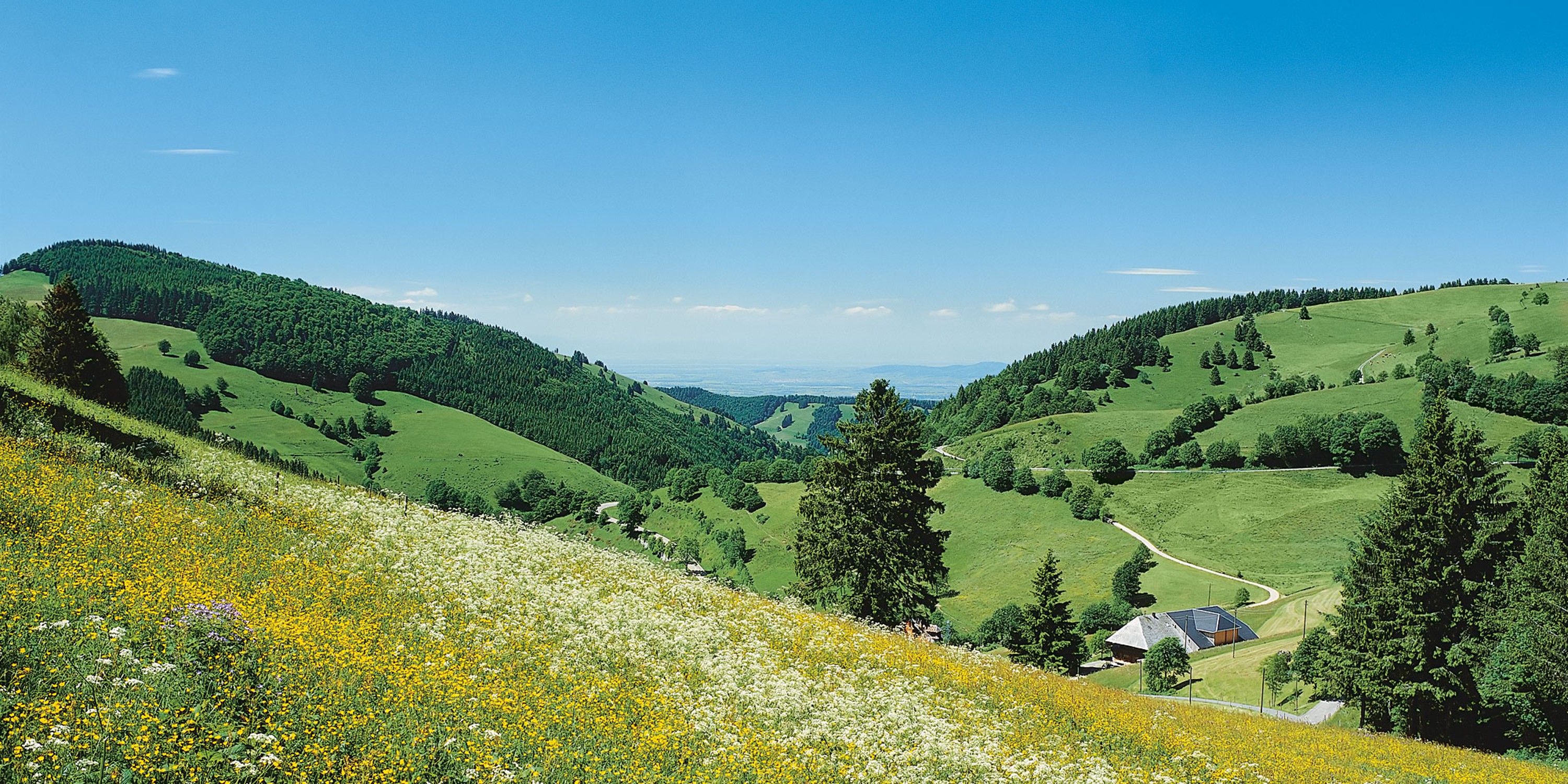
Having roots and nurturing them is a source of strength that Duravit draws on. So it's the most natural thing in the world for us to live in harmony with nature. That's why Duravit is not only a partner and sponsor of the Black Forest Nature Park, a large protected area and Germany's largest nature park, but also focuses all its efforts on protecting water, air, and soil to the best of its ability. This begins with resource-saving manufacturing, where techniques such as water treatment and heat recovery are used. It continues logically in the products themselves, which help to save water.
There is no end in sight: Duravit considers potential environmental impacts right from the development stage and ensures that all activities are carried out in a responsible manner that protects our natural resources.
These efforts are also evident: Duravit is officially certified as an environmentally conscious company in accordance with ISO 14001, ISO 50001, and PEFC (PEFC/04-31-2357) for its commitment to environmental protection.
Taking responsibility
The Duravit company logo is a stylized wood grouse, which, unlike its living counterpart, travels around the globe. Wherever Duravit is, the wood grouse is also there, symbolically carrying the Black Forest out into the world. Meanwhile, however, its living counterpart is fighting for survival in the Black Forest. That is why Duravit has decided to make a donation to Auerhuhn im Schwarzwald e. V. We are sponsoring our very own Duravit wood grouse.
Quality assurance "handmade"
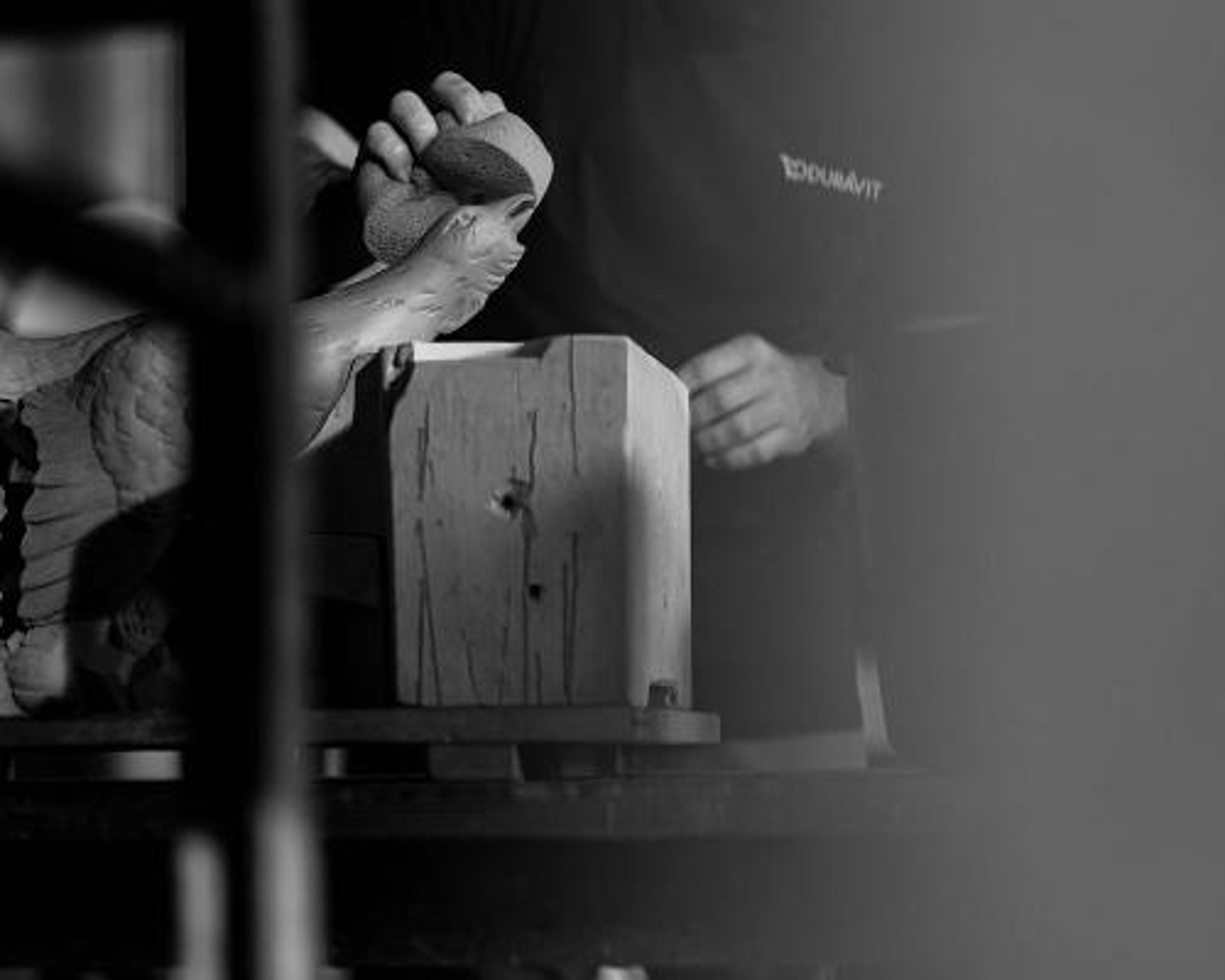
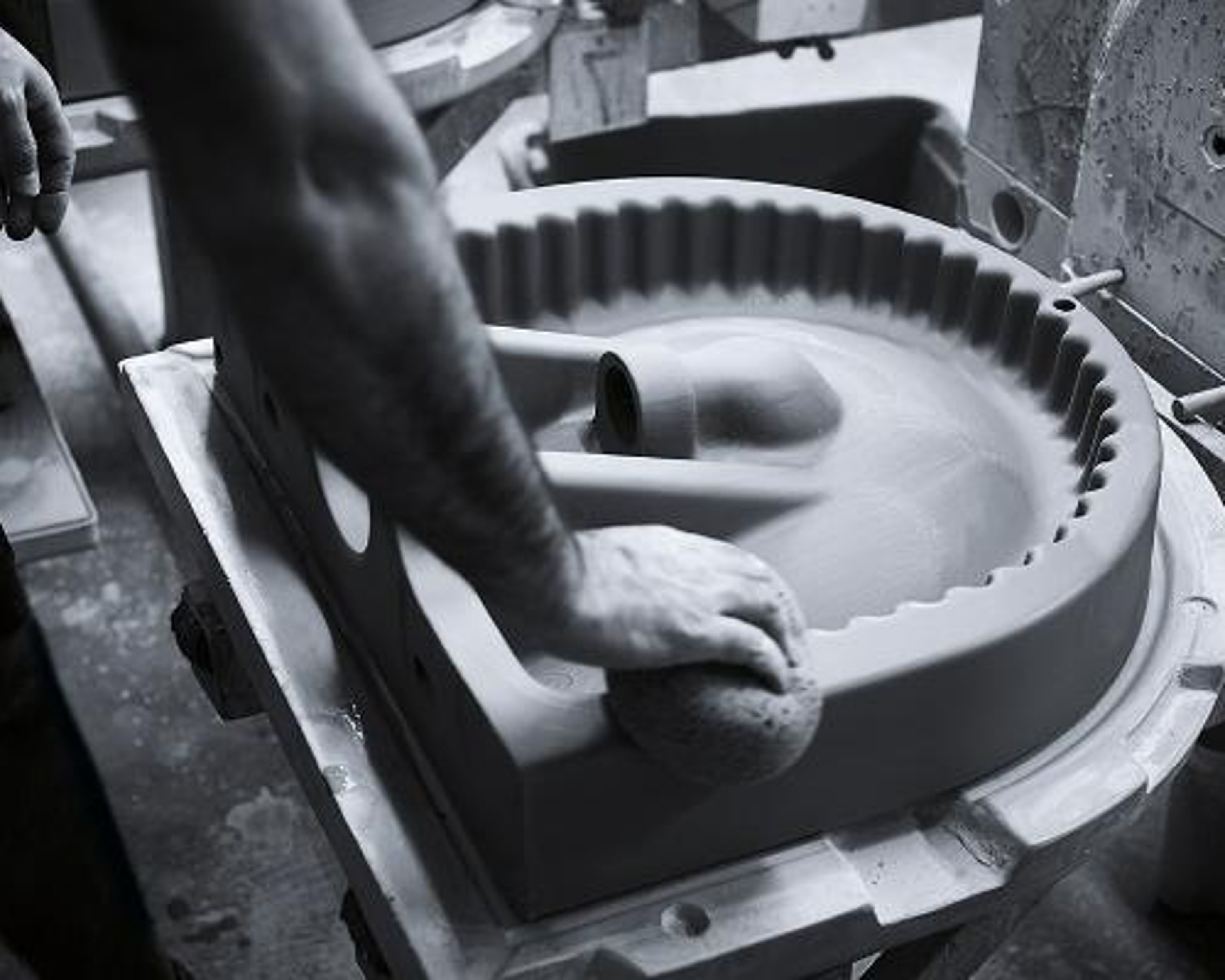
Even though we live in an age of high-tech and automation, when it comes to products with such high standards of design and function, quality is often still a question of human craftsmanship. That is why Duravit still relies on a considerable amount of manual work wherever high standards need to be maintained. This applies to ceramic production as well as to all other areas of production at Duravit.
Design and the Duravit Brand
How can you actually recognize "good design"? After all, tastes vary. Nevertheless, there are certain reference points that can be used as a guide.
On the one hand, there are the many international design prizes and awards that have been given to Duravit products. They highlight the courage in design that has become the trademark of the Duravit brand. Then there are the designers themselves. Each one is a specialist in their field, with a renowned name and an unerring sense of good design. Good design that never comes at the expense of functionality – "design for design's sake" is out of the question for both Duravit and our designers.
And thirdly? There's you, the bathroom user, with your own requirements and needs. These are also incorporated into Duravit bathroom designs thanks to ongoing dialogue with our partners in the sanitary ware trade and craft sector. That's how you recognize good design – it's as if it was made for you.
Sustainability and the Duravit brand
Everyone is talking about sustainability these days – Duravit has been practicing it for a long time. In the selection of materials, in the application of technologies, in the way we manufacture our products. That is why we continue to work with sanitary ceramics.
Ceramics is one of the oldest cultural techniques in existence, dating back to the 8th millennium BC. Porcelain has even been known in China for 11,000 years. Even today, Duravit sanitary ceramics are still made from the same basic materials—clay, kaolin, feldspar, and quartz—all naturally renewable substances. Using environmentally friendly production techniques and subject to strict quality controls, these materials are transformed into products that last and function almost forever.
A technique that is thousands of years old, today's expertise, and a vision for tomorrow: this is how Duravit creates award-winning design combined with the necessary sustainability—for a beautiful and responsible life in the bathroom.

Unchanged since 1994
Starck 1
It's nice to know that something good doesn't need to be "optimized": all products in the Series – ceramics, furniture, bathtubs, accessories – have been manufactured using the same elaborate craftsmanship since their market launch in 1994.