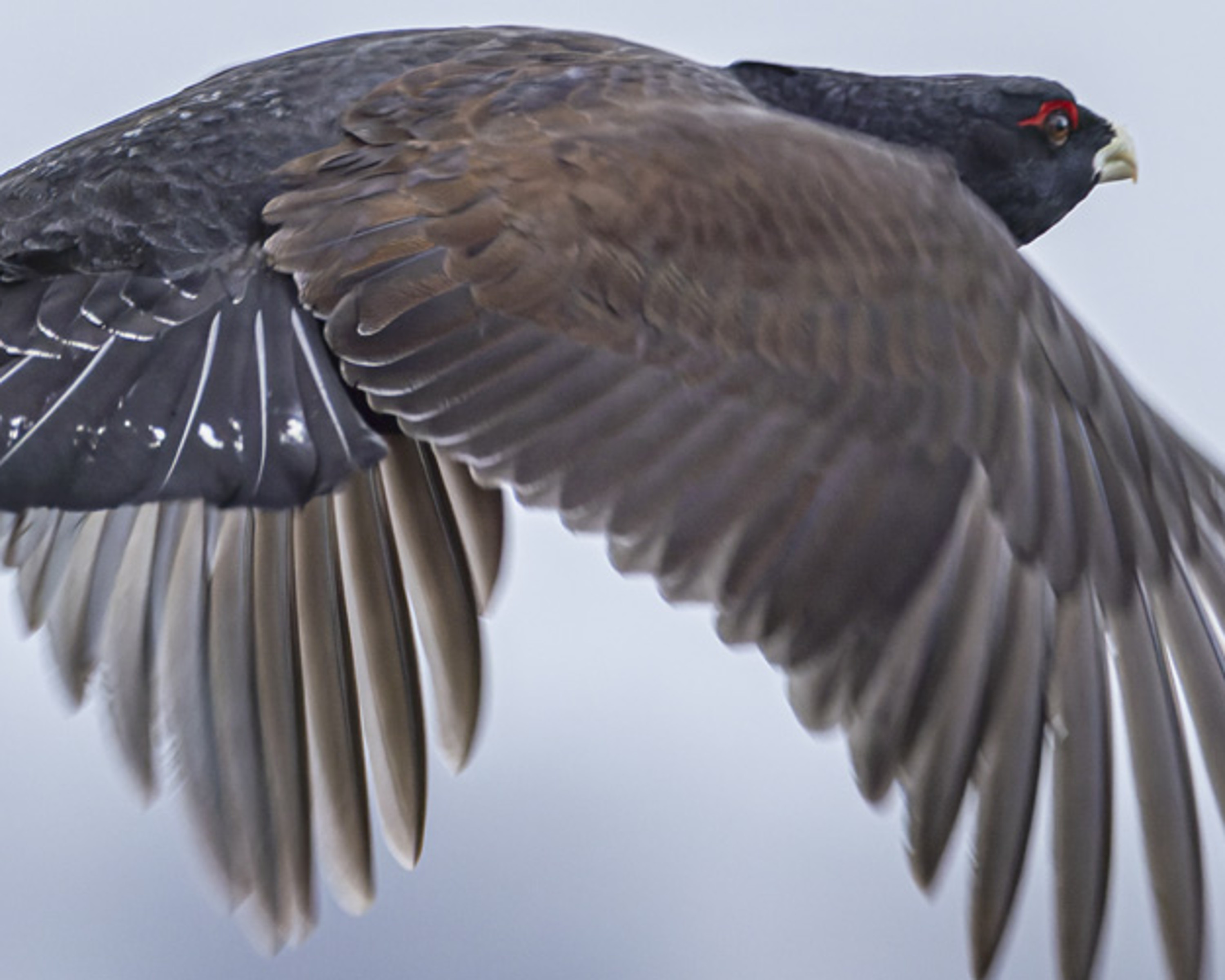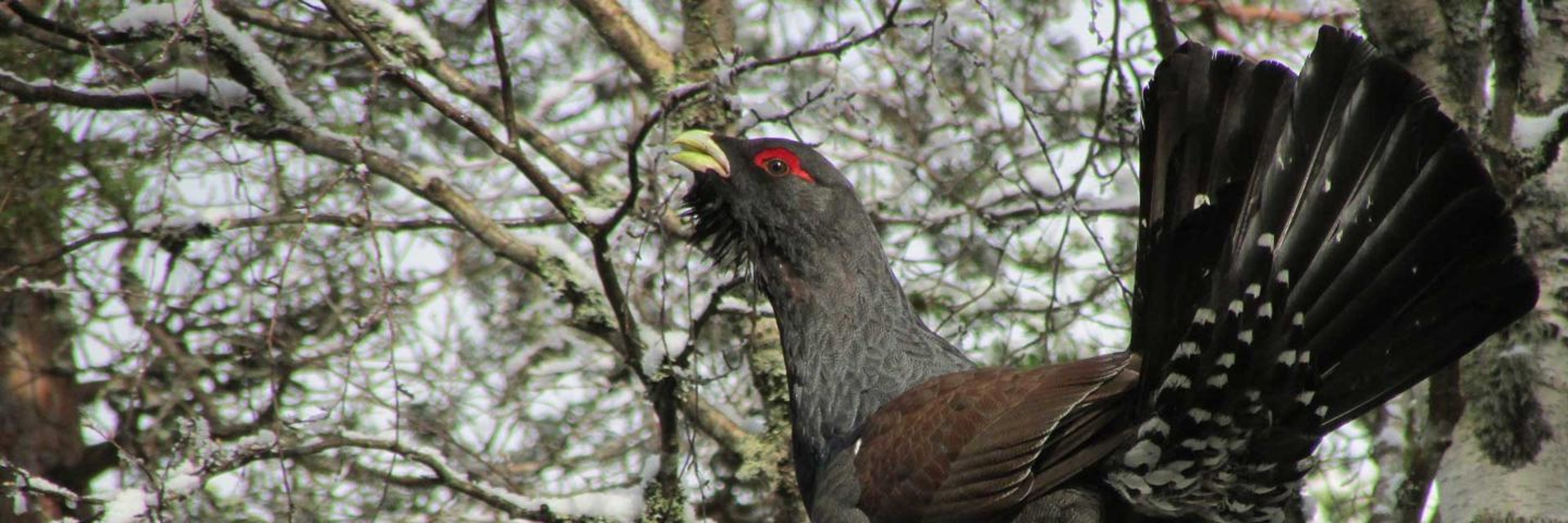
Wood grouse in a tree crown. © Joy Koppes

Wood grouse – a project close to our hearts

A blue wood grouse conquers the world!
We are talking about the stylized wood grouse in Duravit's company logo, which travels around the globe, unlike its living counterpart. Wherever Duravit is, the wood grouse is also there, symbolically carrying the Black Forest out into the world. Meanwhile, however, its living counterpart is fighting for its existence in the Black Forest.
Red Wood grouse logo with white heart

We take responsibility

To ensure that the wood grouse remains native to the Black Forest in the future, Duravit AG has decided to forego gifts to its partners and instead make a donation to the Auerhuhn im Schwarzwald e. V. (Black Forest Wood Grouse Association). We are therefore sponsoring our very own Duravit wood grouse.

As a company based in the Black Forest, we bear responsibility for our immediate environment and we take this duty seriously. Even though Duravit AG has now grown far beyond Hornberg and has production facilities and showrooms around the globe, its roots have been in Hornberg since 1817. Not far away from the real-life wood grouse that are threatened with extinction here. For this reason, Duravit has taken on responsibility for a sustainable habitat for the wood grouse.

Purpose of donation

Maintaining habitats and creating places of retreat

To prevent the number of wood grouse living in the Black Forest from declining further, the association Auerhuhn im Schwarzwald e. V. (AiS) is creating a wood grouse-friendly forest: blueberry bushes are being freed from encroaching young spruce trees, obstacles lying on the ground are being removed and urgently needed islands of light are being created – habitat maintenance is varied and urgently needed.
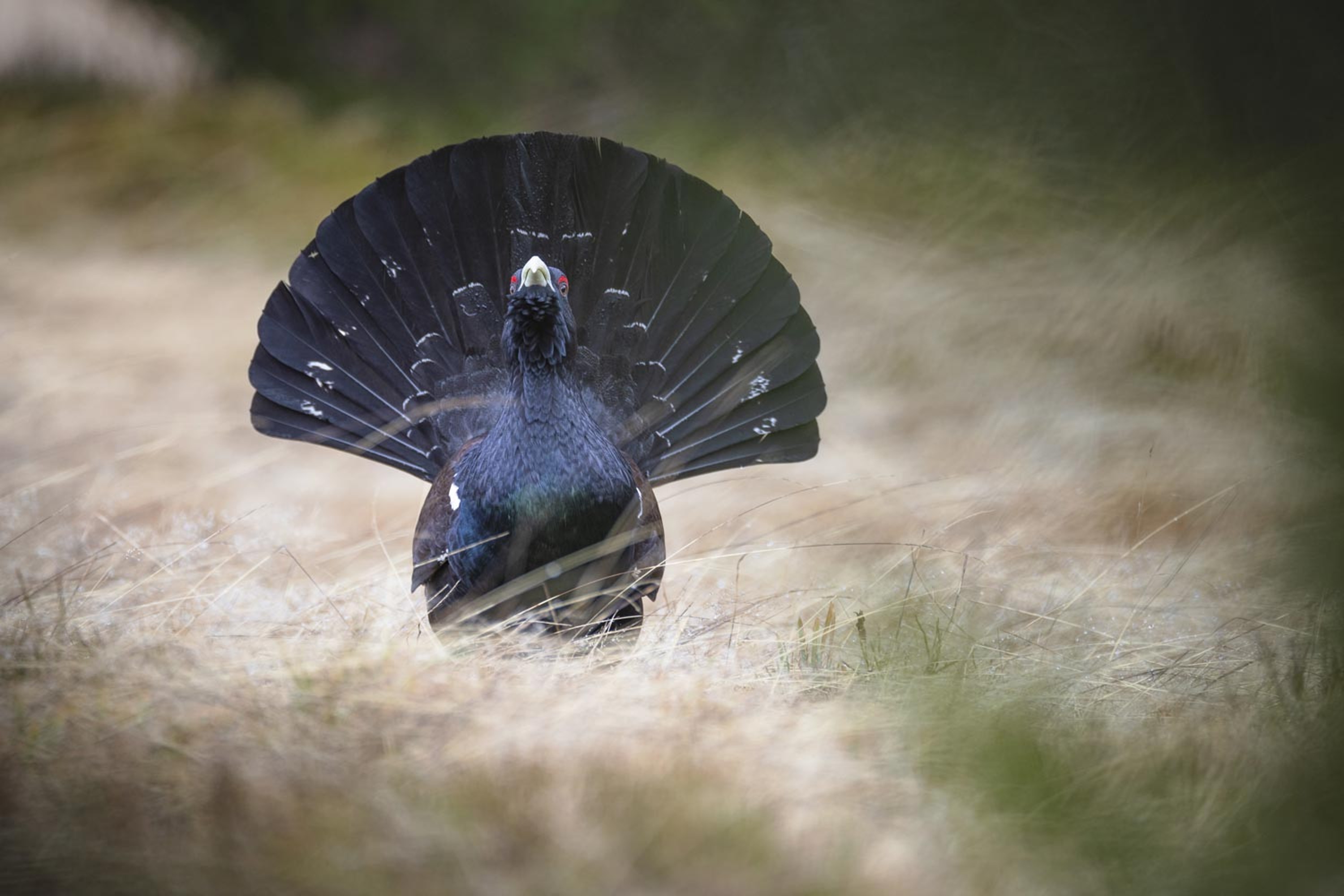
© Sebastian Schröder-Esch: Frontal view of a Wood grouse

This is our Duravit wood grouse

It is one of the largest forest birds in Europe and can be found in sun-drenched, blueberry-strewn, open and varied mountain forests.

Would you like to sponsor a wood grouse? You can find more information here.

Profile

  • Favorite foodblueberry
  • Natural enemiesFox, hawk, badger, stone marten, tree marten, wild boar, raven
  • Sizefrom 74 to 95 cm
  • Weightfrom 3.5 to 5 kg
  • Wing spanup to 90 cm
  • Maximum age in freedomup to 10 years

Facts about the wood grouse
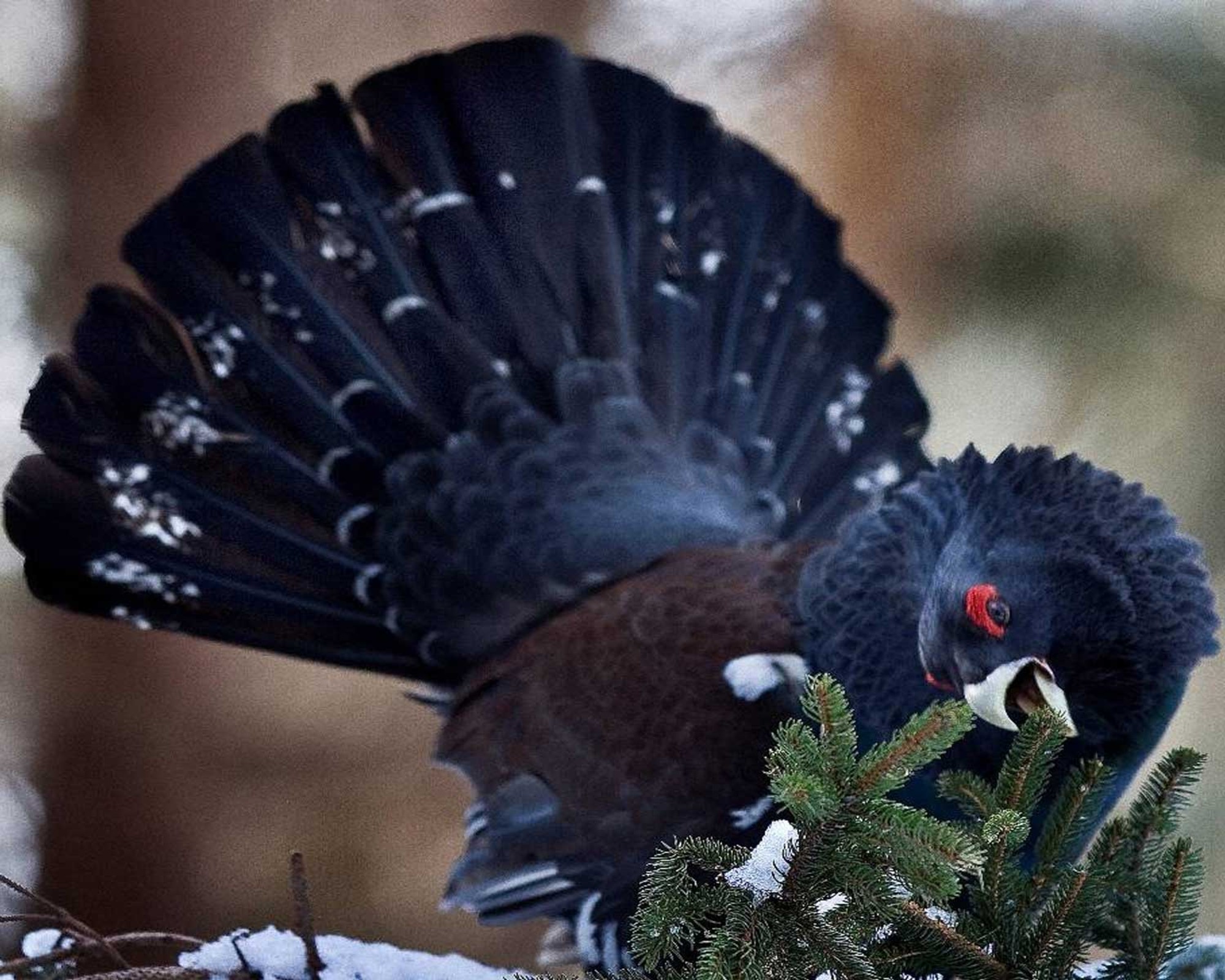
A Wood grouse eating pine needles. © Erich Marek

Lives (almost) vegan

Wood grouse are seed and herbivores, which is why they prefer to feed on blueberries, grasses, flowers, and beechnuts in summer. In winter, however, they feed almost exclusively on needles, preferably pine. Only in their first weeks of life do the chicks feed on insects.

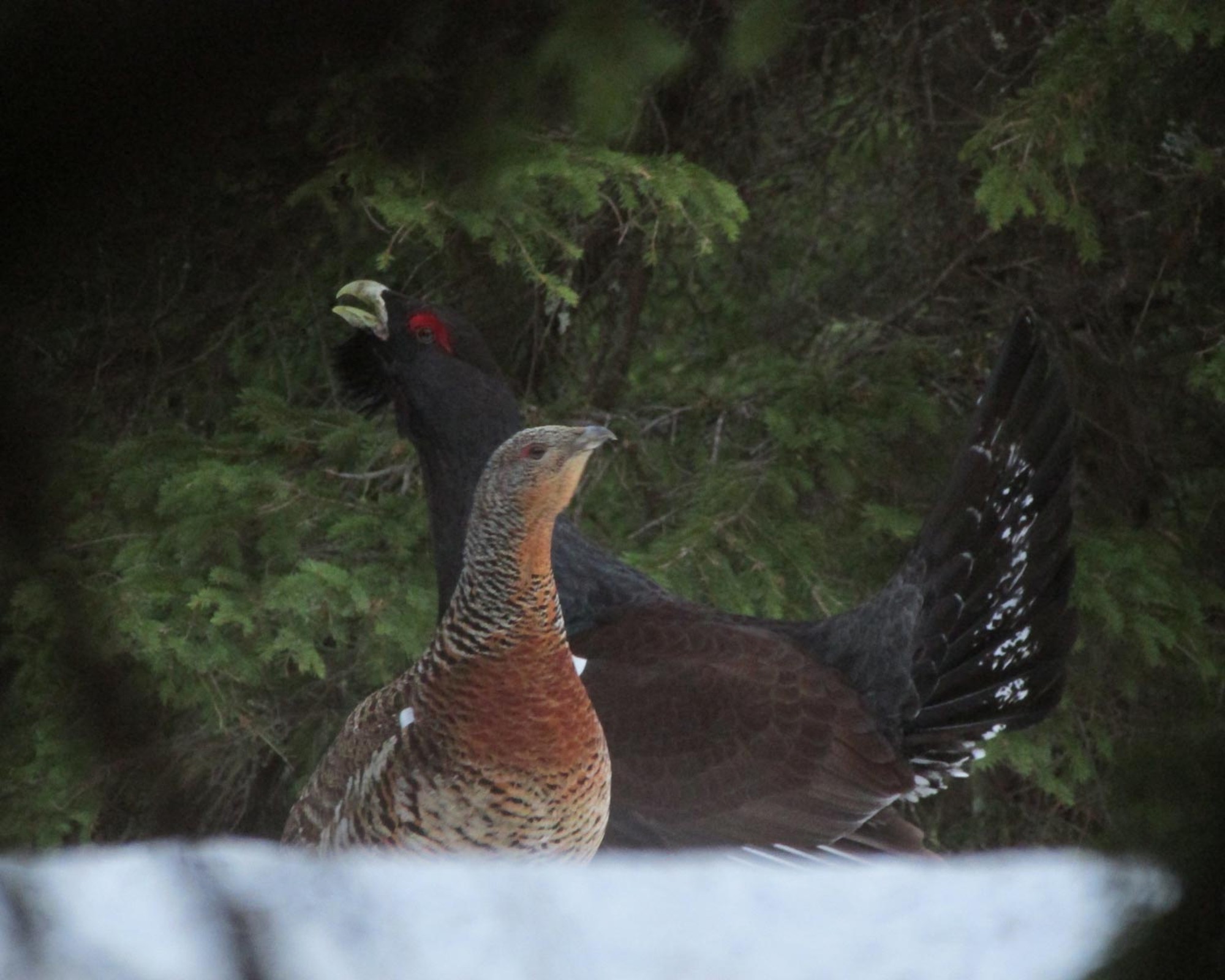
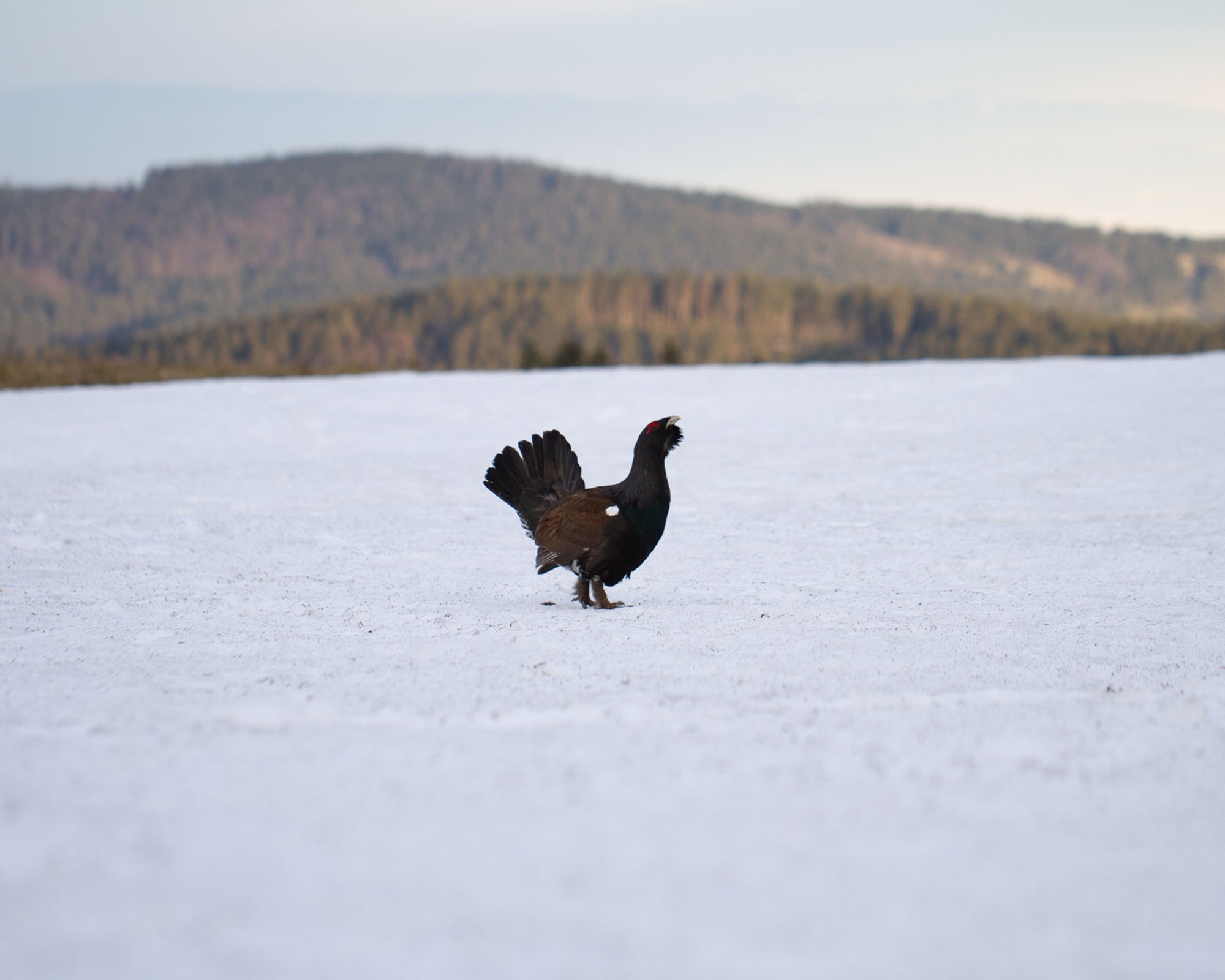
Two Wood grouse displaying in the snow. © Joy Coppes

A rarely seen bird

Wood grouse are generally quiet and shy, which is why they are rarely encountered. However, there is one exception: during the mating season between March and May, male wood grouse can be observed more frequently. The male wood grouse is notorious for its conspicuous mating behavior, so it is best to avoid crossing its path during this time.

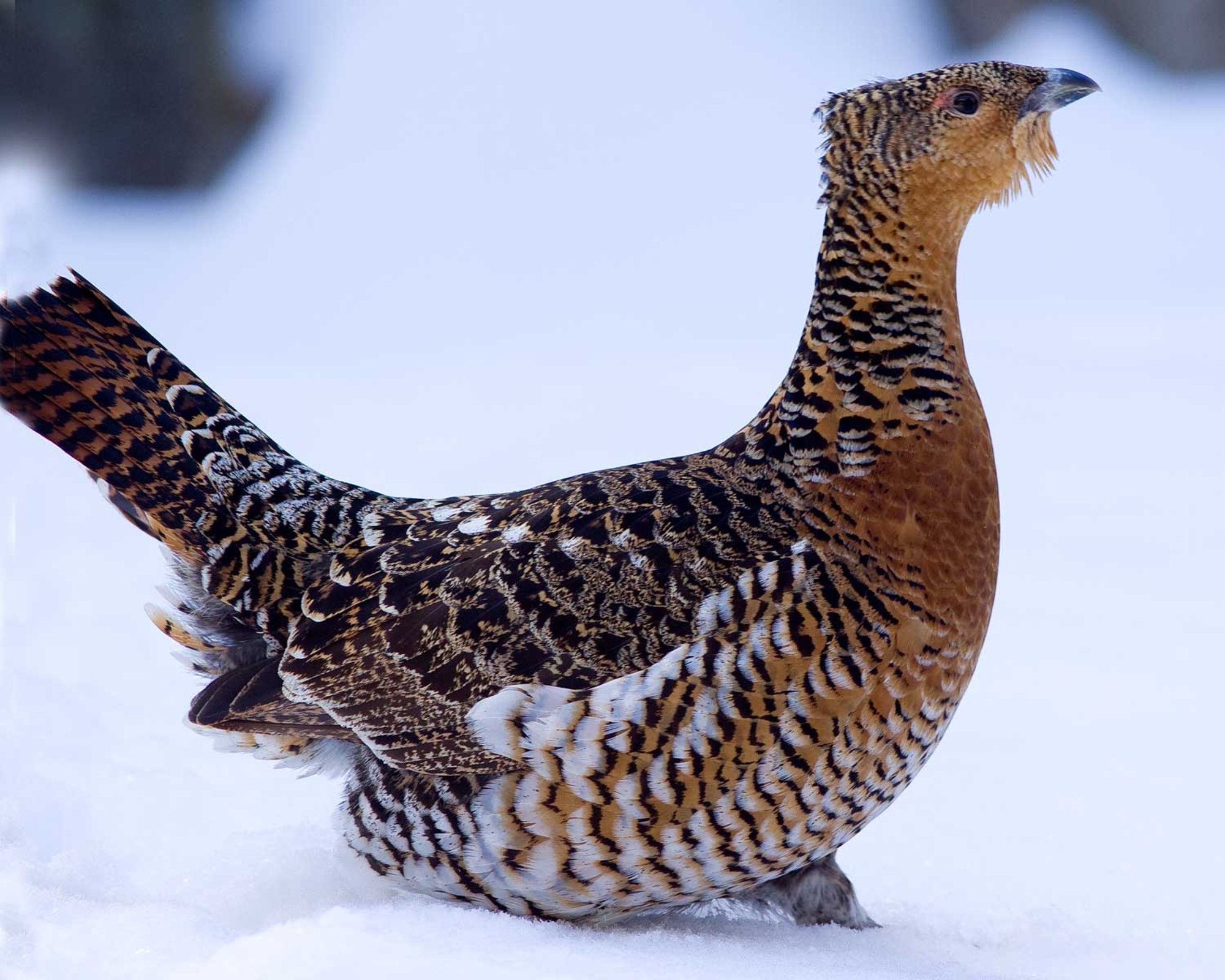
Wood grouse with thick plumage in the snow. © Erich Marek

Winter equipment included

Unlike other bird species, the wood grouse does not fly south for the winter. Instead, it adapts to the low temperatures with a thick coat of feathers and remains in its native habitat.

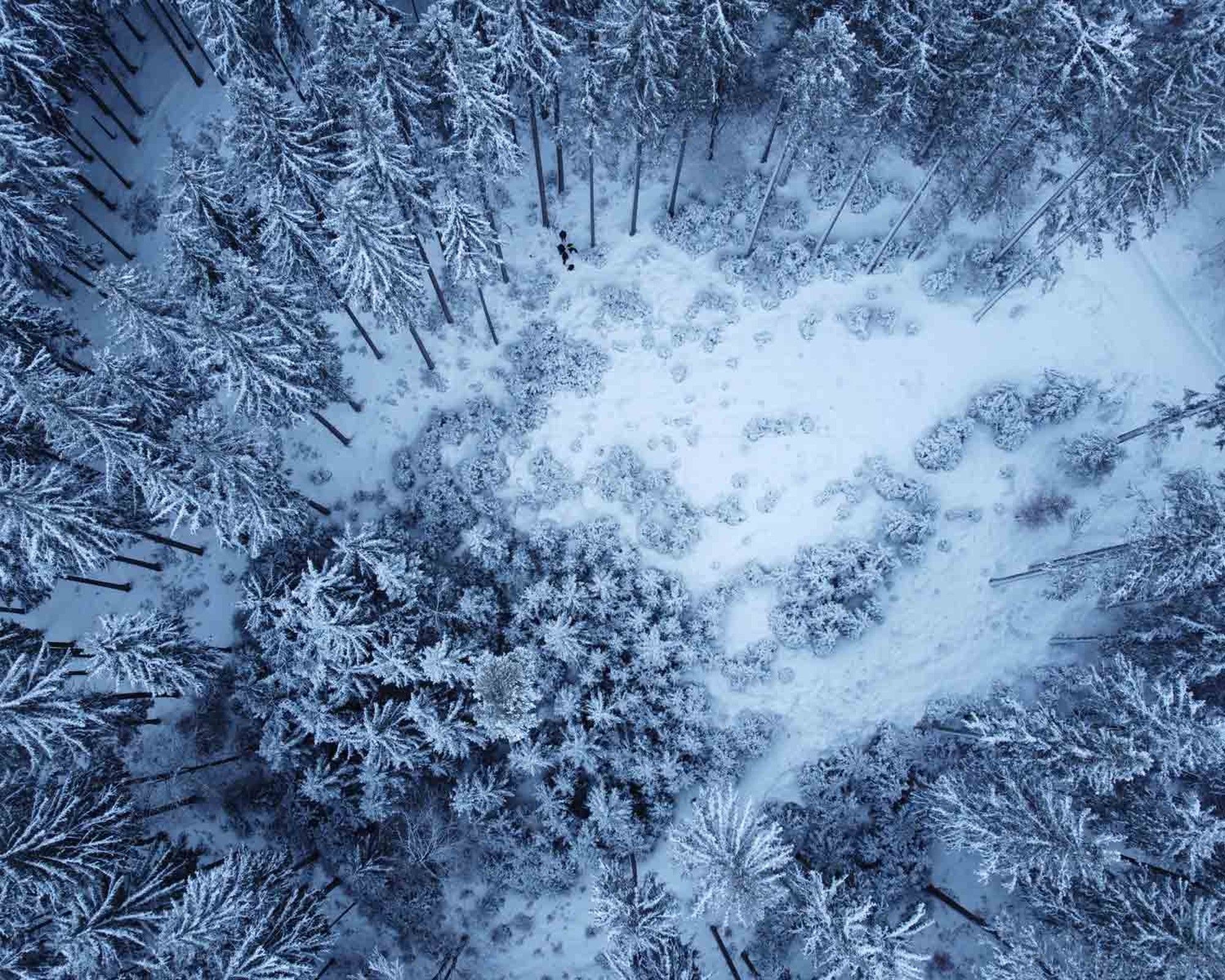
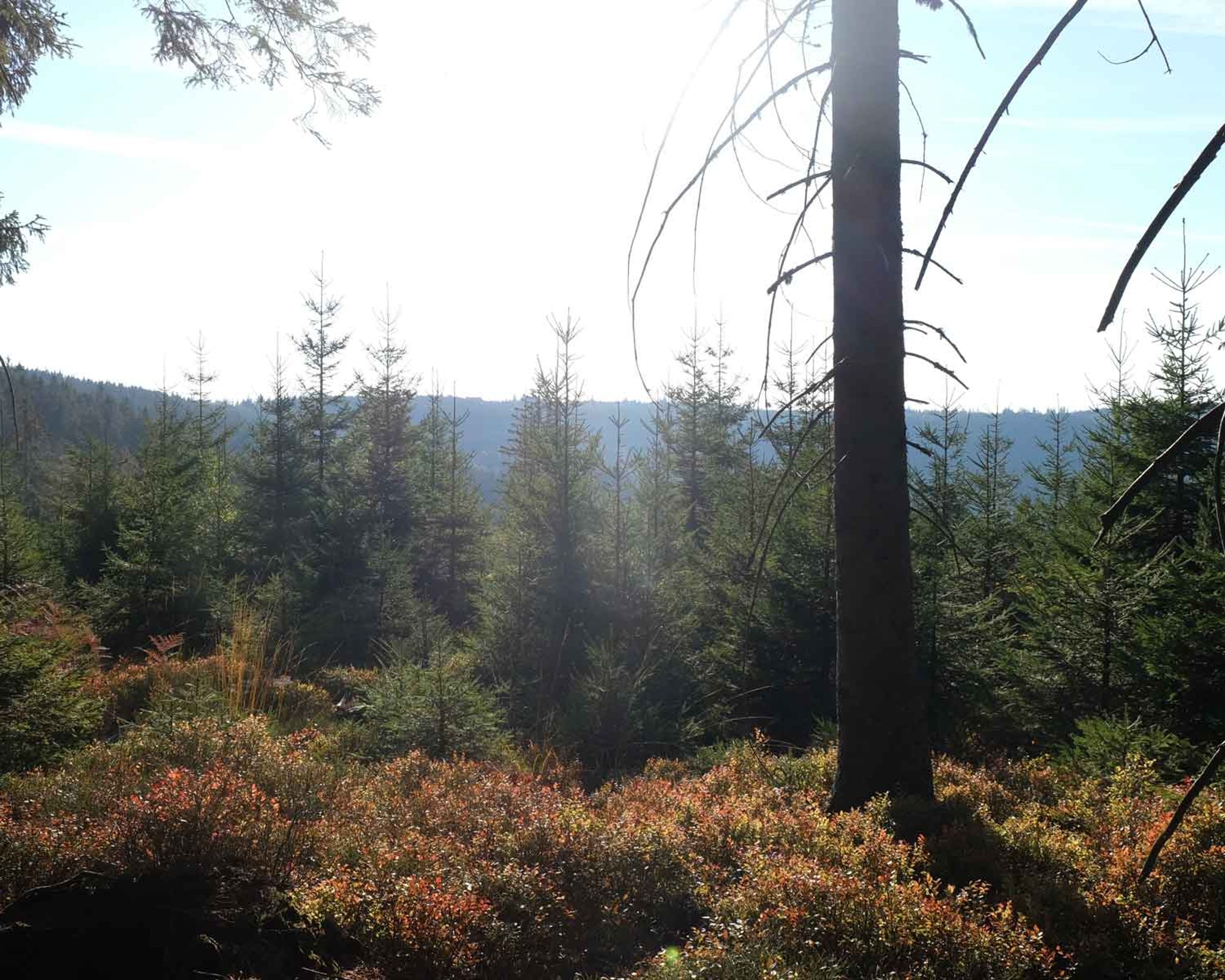
Coniferous forest in winter, viewed from above. © Zeno Bader

Adaptable appendix

Yes, you read that correctly! While the human appendix is (incorrectly) believed to serve no purpose, the appendix of the wood grouse changes with the seasons: in winter, it grows up to 1.80 m long and then shrinks back in spring. Why all this effort? It's part of its survival strategy: in winter, the wood grouse mainly eats needles, which are ground down in the intestine together with small stones. This is a very complex process that takes place in the appendix, among other places.

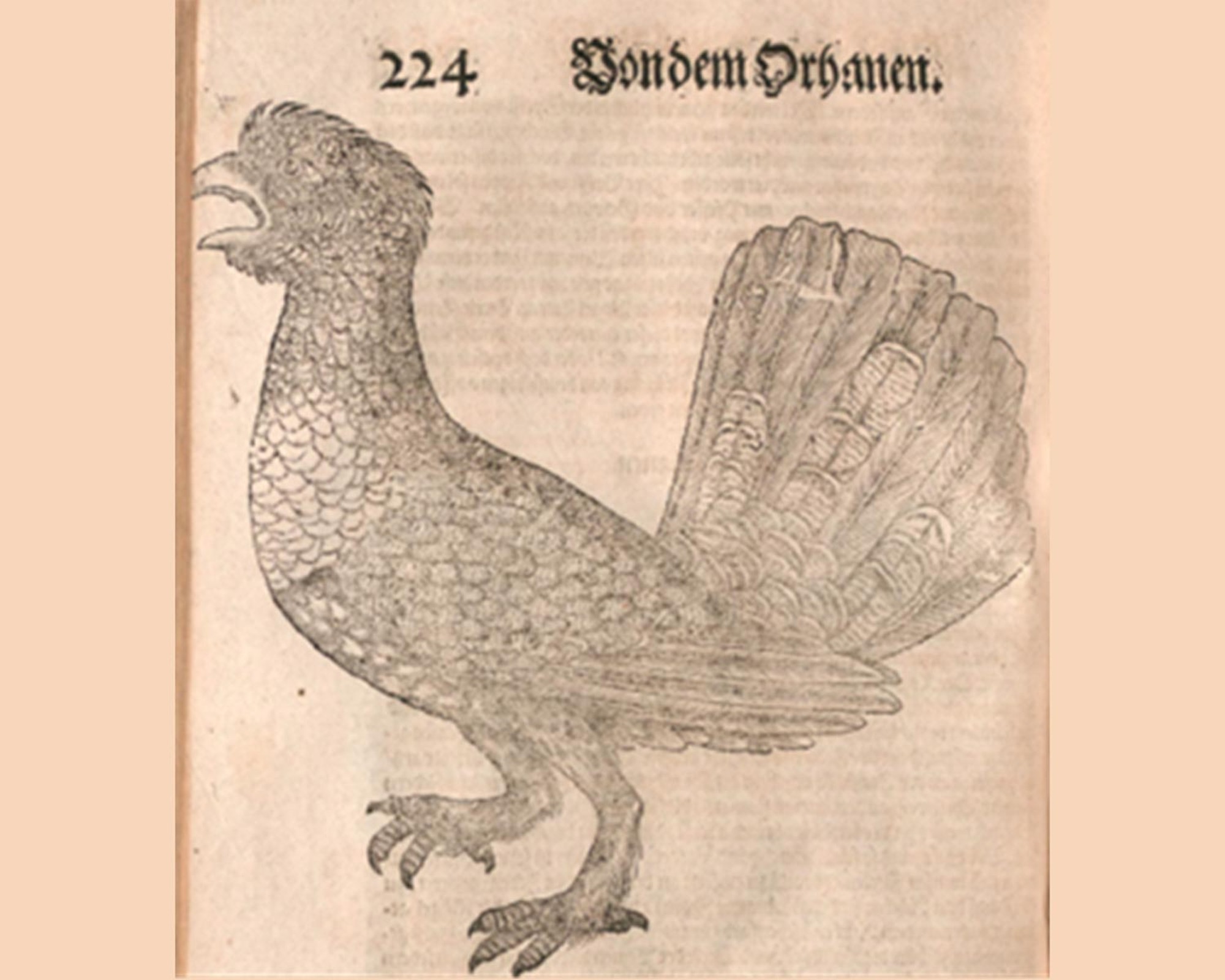
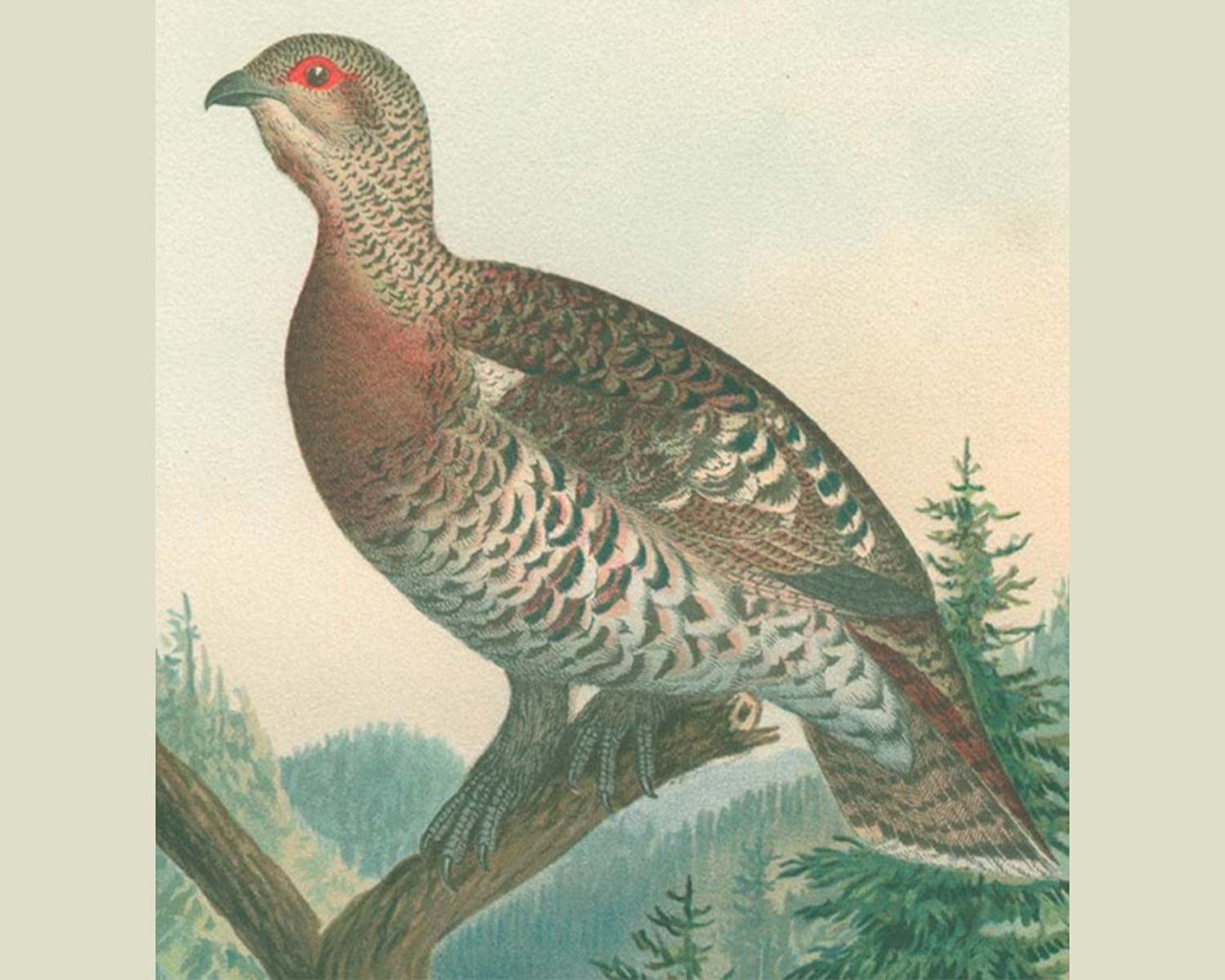
Illustration of a wood grouse in an old book.

Myths and legends

In medieval books about animals, one author claimed that the wood grouse threw crystals down from the eternal ice of the mountains. If there is any truth in this legend, it is that wood grouse actually picked up small stones to break up the contents of their stomachs.

Wood grouse on a vast snowfield. © Michael Rüttiger

Consideration required

Despite its warm plumage, the Wood grouse is forced to reduce its energy consumption to a minimum during the winter months. If they are disturbed by humans off the designated paths, their flight response causes their metabolism to skyrocket in a short period of time. This costs energy and weakens the animal in the long term. It can even lead to death.

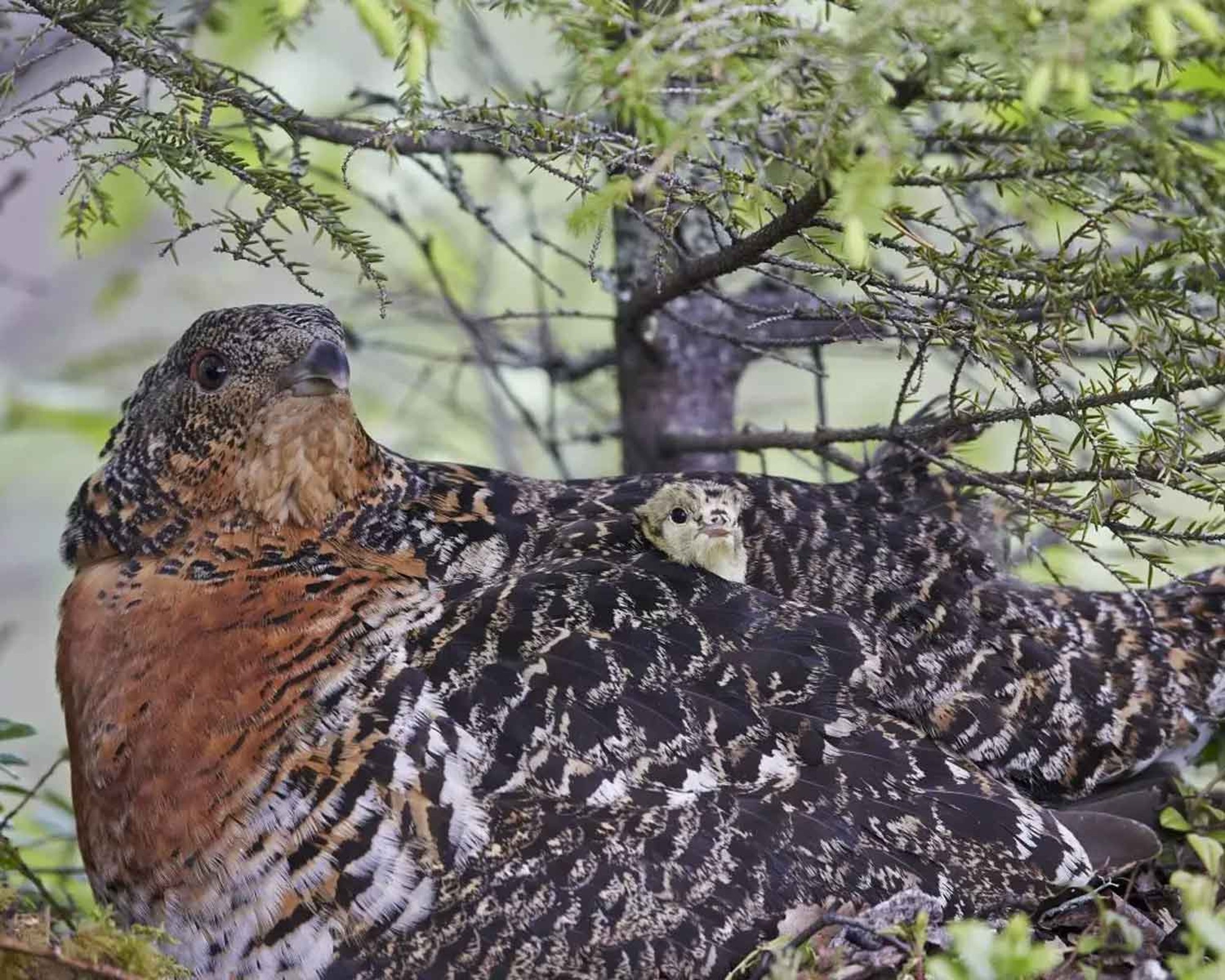
Wood grouse hen with chicks in their plumage. @ Markus Varesvuo

Enjoy your meal!

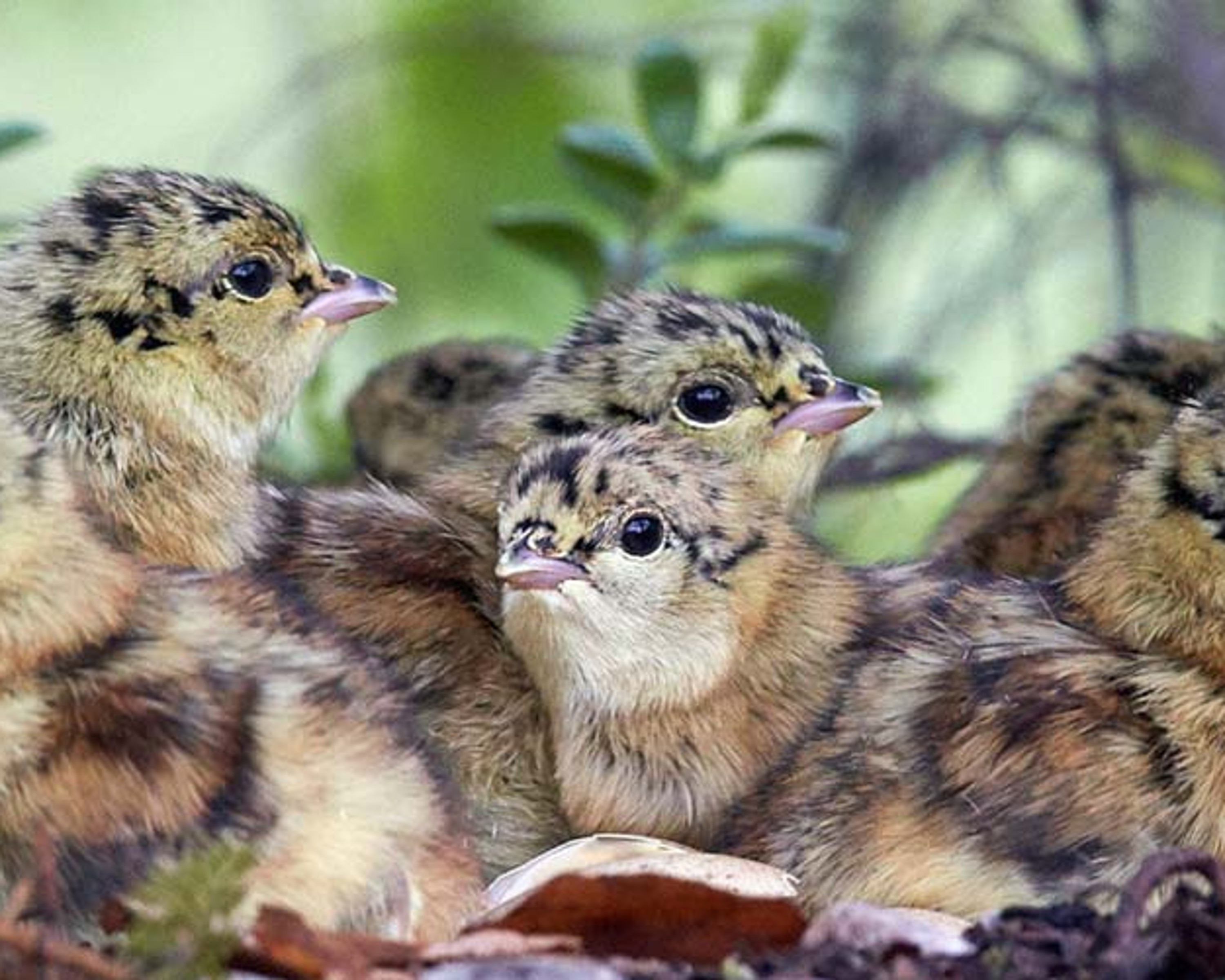
It's certainly not to everyone's taste, but it's definitely fascinating: Wood grouse chicks eat their mother's droppings. This is how they ingest the mixture of bacteria they need to break down the nutrients from coniferous trees later on.

View of the Black Forest. @ Matthias Mohaupt

Island population

Wood grouses are mainly found in the vast expanses of the Eurasian northern hemisphere. In Central Europe, however, they are now only found in the Alps and in small island populations such as the Black Forest.

Motif of a female capercaillie on a branch

Motherliness and caring

While the male wood grouse was a popular motif on postcards from the Black Forest in the 19th century and was frequently mentioned in myths and legends, the female wood grouse rarely played a role. However, when she did appear, she was regarded as the epitome of motherhood and care, as she raises her chicks independently without the help of the male.

A flying wood grouse. © Sebastian Schröder-Esch

The primeval bird of the Black Forest

Since 1984, the number of wood grouse living in the Black Forest has declined to an alarming extent. Various factors are responsible for this negative trend:

  • Decline in suitable habitats due to changes in forestry practices
  • Existing habitats are fragmented by tourism
  • Natural predators such as foxes, martens, hawks, and even wild boars are on the rise.

For the first time after 11 years of declining numbers, 106 wood grouses were counted in 2023. That is almost 10 percent more than in the previous year.

We need 300 displaying male wood grouses to ensure a stable and genetically healthy population. Although we are still a long way from this goal, the initial increase in numbers is a positive sign.
Jakob Huber, Managing Director of Auerhuhn im Schwarzwald e. V.
Several Wood grouse chicks. © Markus Varesvuo

Auerhuhn im Schwarzwald e. V.

"Together for the Wood Grouse" is the motto of Auerhuhn im Schwarzwald e. V., which has set itself the task of preserving the wood grouse in the Black Forest for future generations.

For me, the wood grouse is a symbol of the biodiversity in the Black Forest. My perception of the forest also changes when I realize what an impressive animal it is.

Jakob Huber, Managing Director of Auerhuhn im Schwarzwald e. V.