Water as a Resource
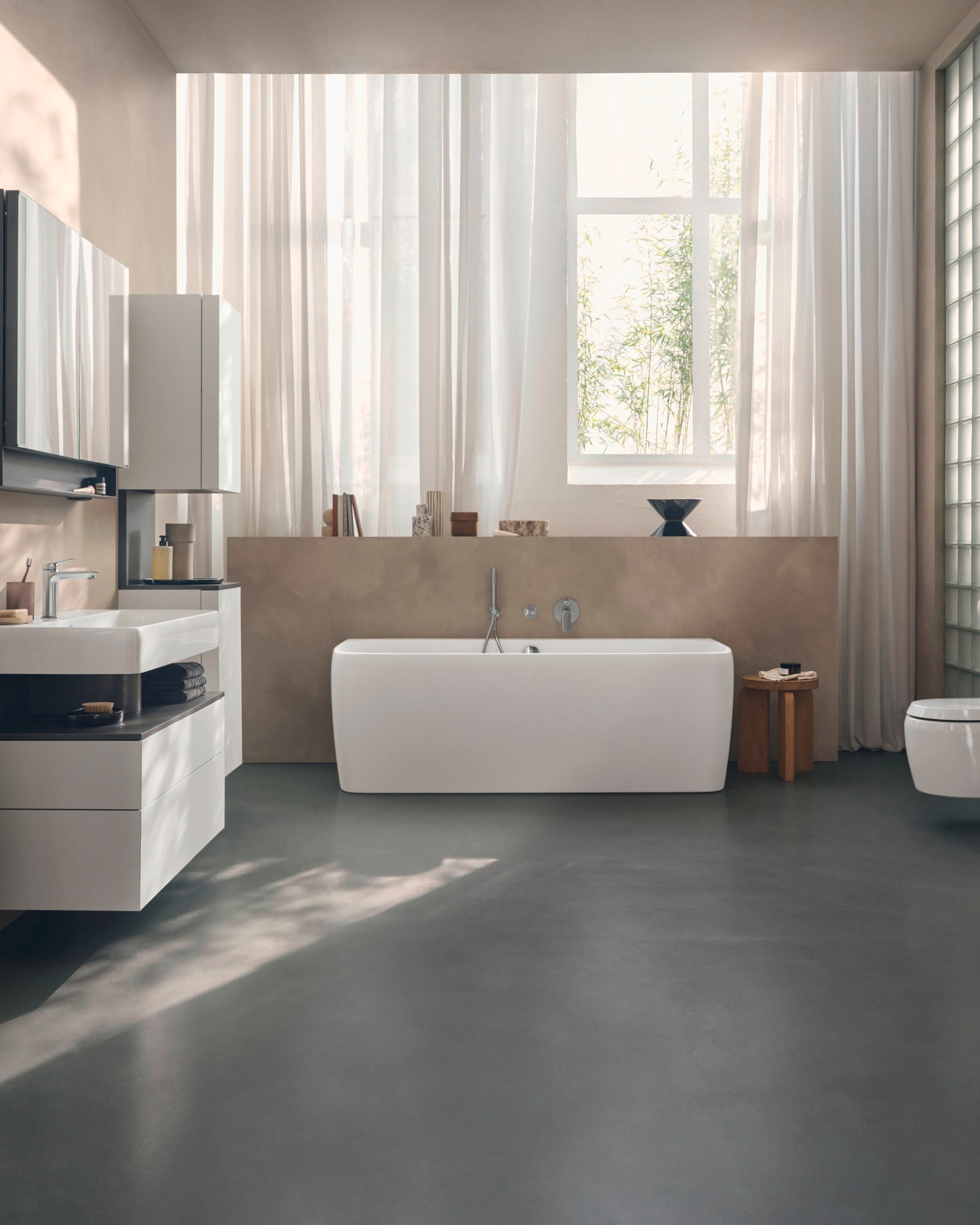
Architectural Solutions for the Bathroom
In Germany, an average of about 126 liters of drinking water is used per person per day. About 36 percent of this is used for bathing, showering, and personal hygiene, and another 27 percent is used for flushing the toilet.
This makes the bathroom the room where design decisions can effectively reduce daily water consumption. Unlike usage habits, these decisions have a lasting effect: The fixtures installed determine the flow rate throughout the entire lifespan of the bathroom.
Habits and technology are intertwined
Traditional behavioral changes—such as taking shorter showers, not letting the water run while soaping up or brushing your teeth, and consciously choosing to take a bath—continue to be effective. However, solutions that limit water use at the source and do not require self-discipline are more reliable.
Resource-efficient planning therefore combines users’ economical use of products with products that are designed to have low consumption rates from the outset. This approach is particularly effective in settings where use is anonymous, such as hotels, office buildings, or public restrooms.
Technically, several components are available for this purpose: flow limitation, air injection, reduced flush volumes, and faucets that deliberately trigger the hot water supply.

Showers: It's All About the Flow Rate
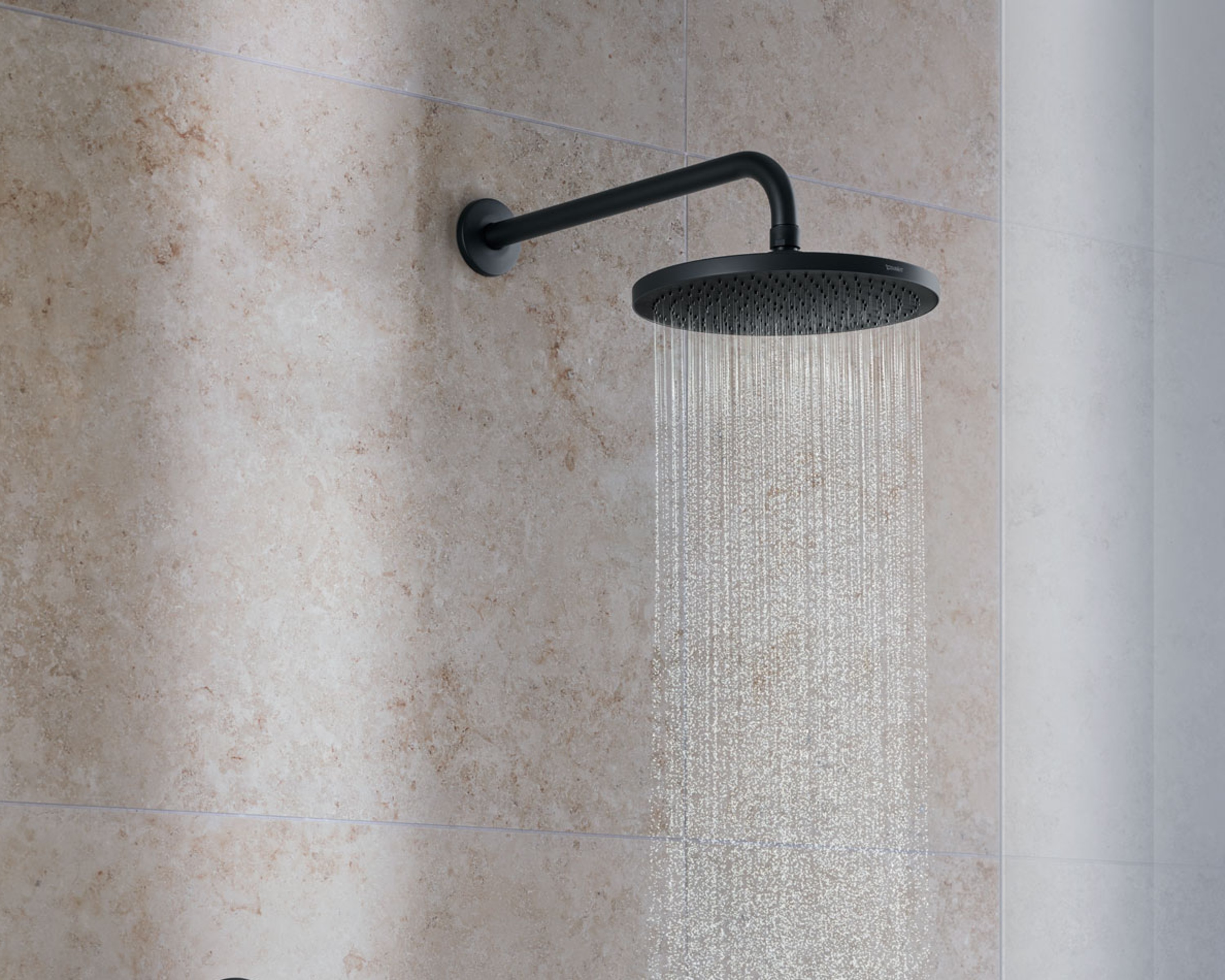
When showering, the shower head determines water consumption per minute. Duravit overhead showers with the MinusFlow feature limit the flow rate to a maximum of 9 l/min. For hand showers, this corresponds to a 40 percent reduction in water consumption compared to showers without MinusFlow; for overhead showers, the reduction is up to 60 percent. Because less hot water needs to be supplied, energy consumption also decreases.
For renovations of existing buildings, the shower head can be viewed as a single component. The specified flow rate provides a concrete benchmark for product selection.
Toilets: Flush Volume and Flushing Technology
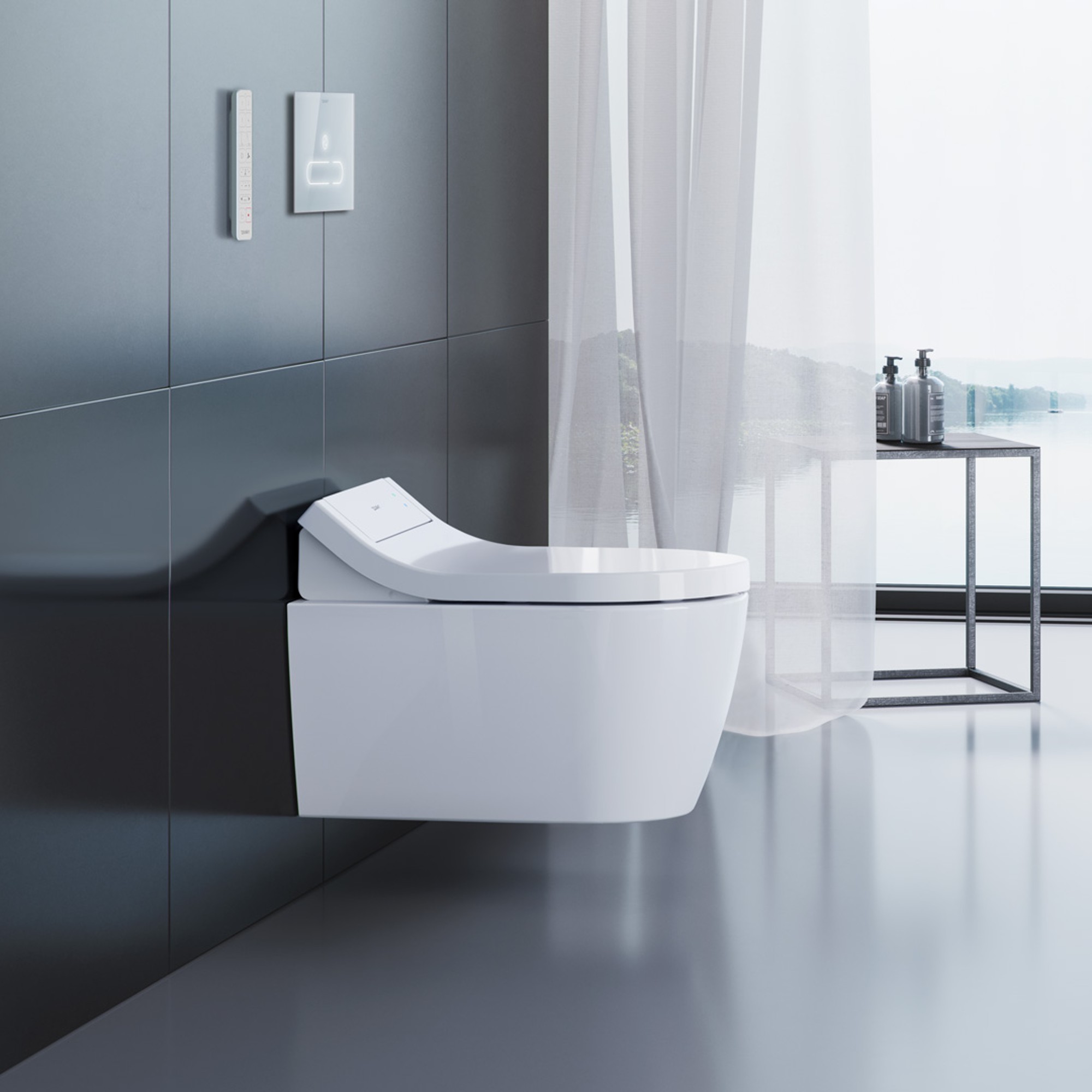
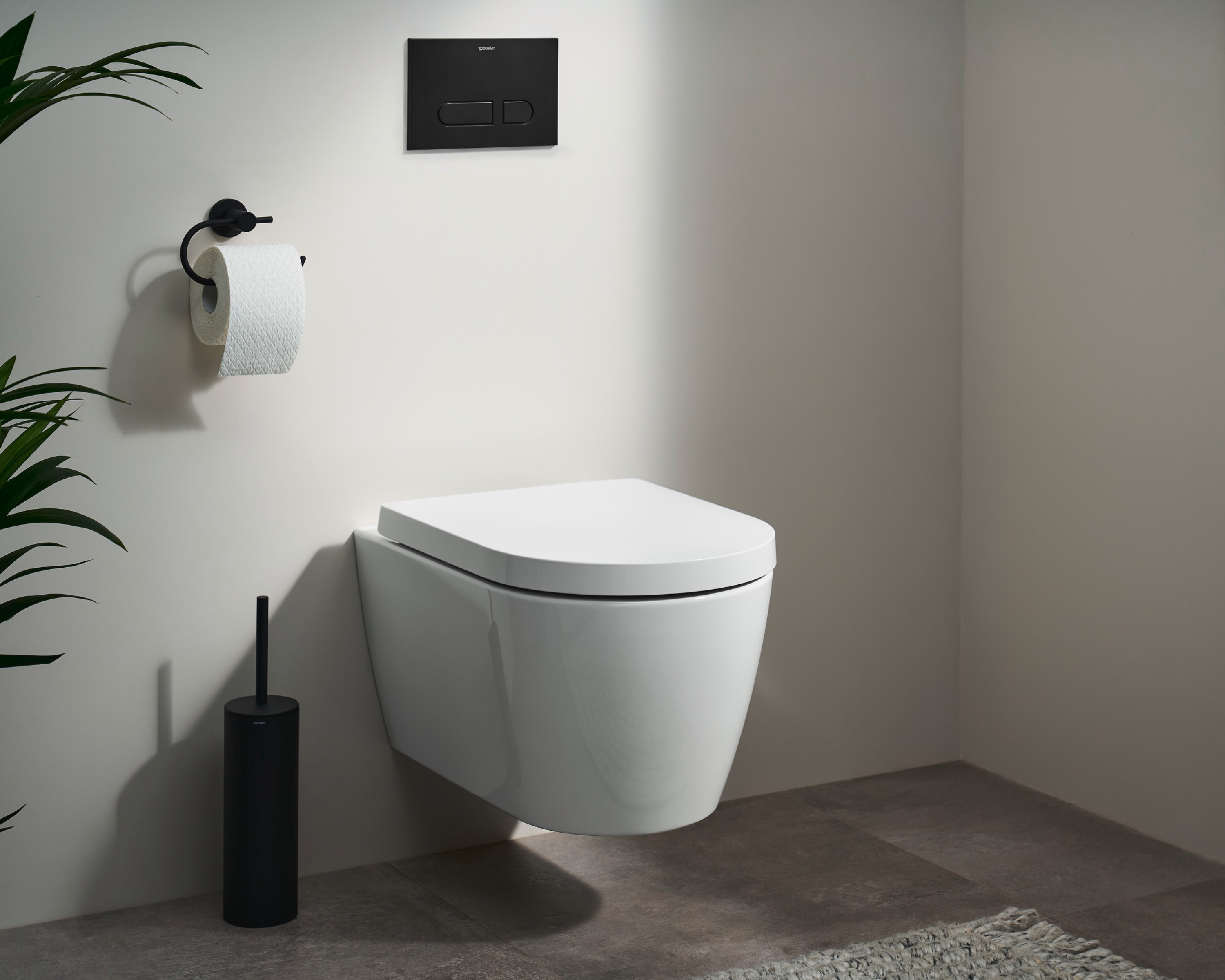
The toilet flush is one of the most frequent sources of water consumption in a building. The key factor is the interplay between flush volume and the shape of the bowl: a reduced amount of water must reliably reach the entire flushing surface. The ME by Starck Wall-mounted toilet Hero Edition, featuring DuraFlush technology, uses a rotating flush at 4 or 2 liters and is designed for a thorough, quiet flush without splashing.
Vanity: frequent use, short run times
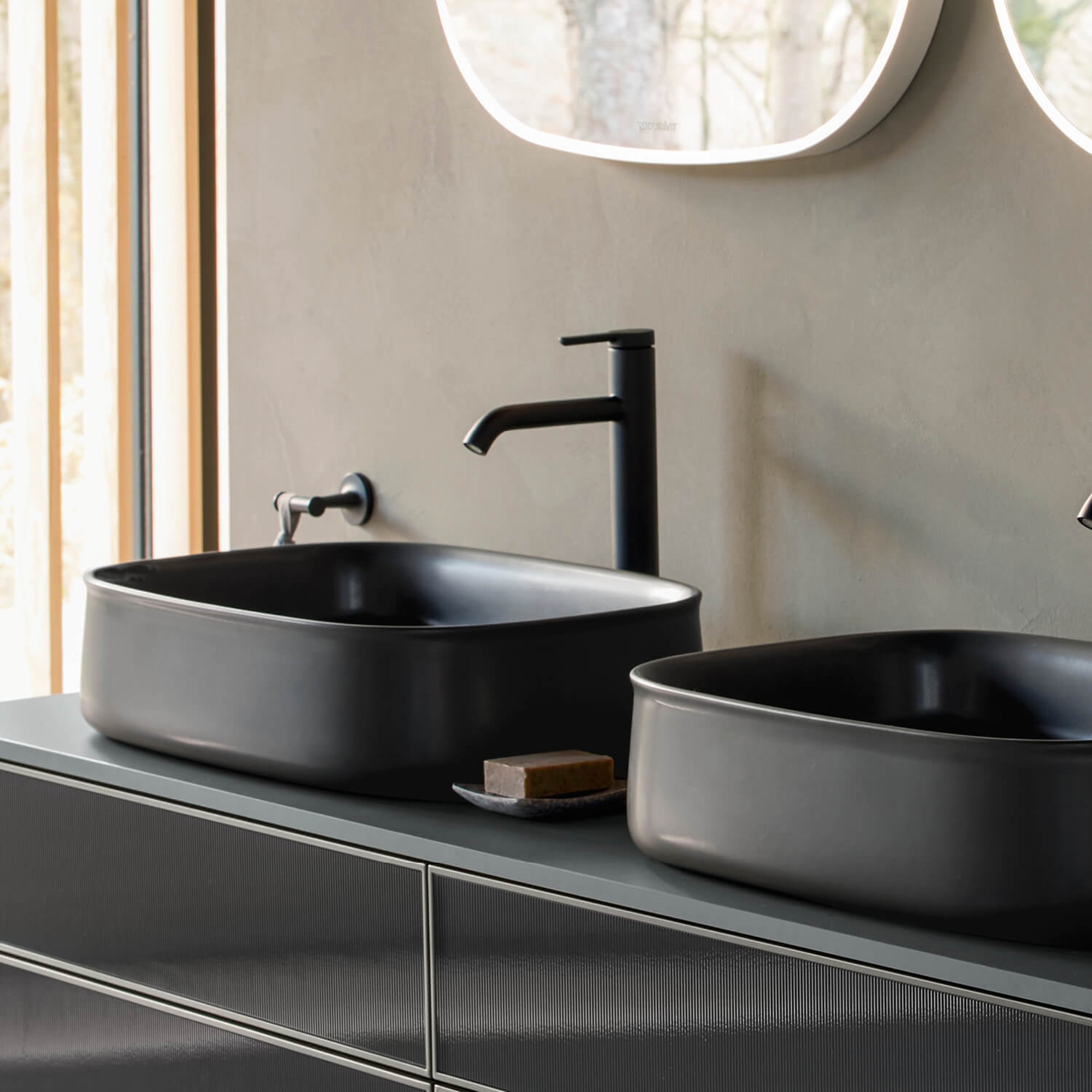
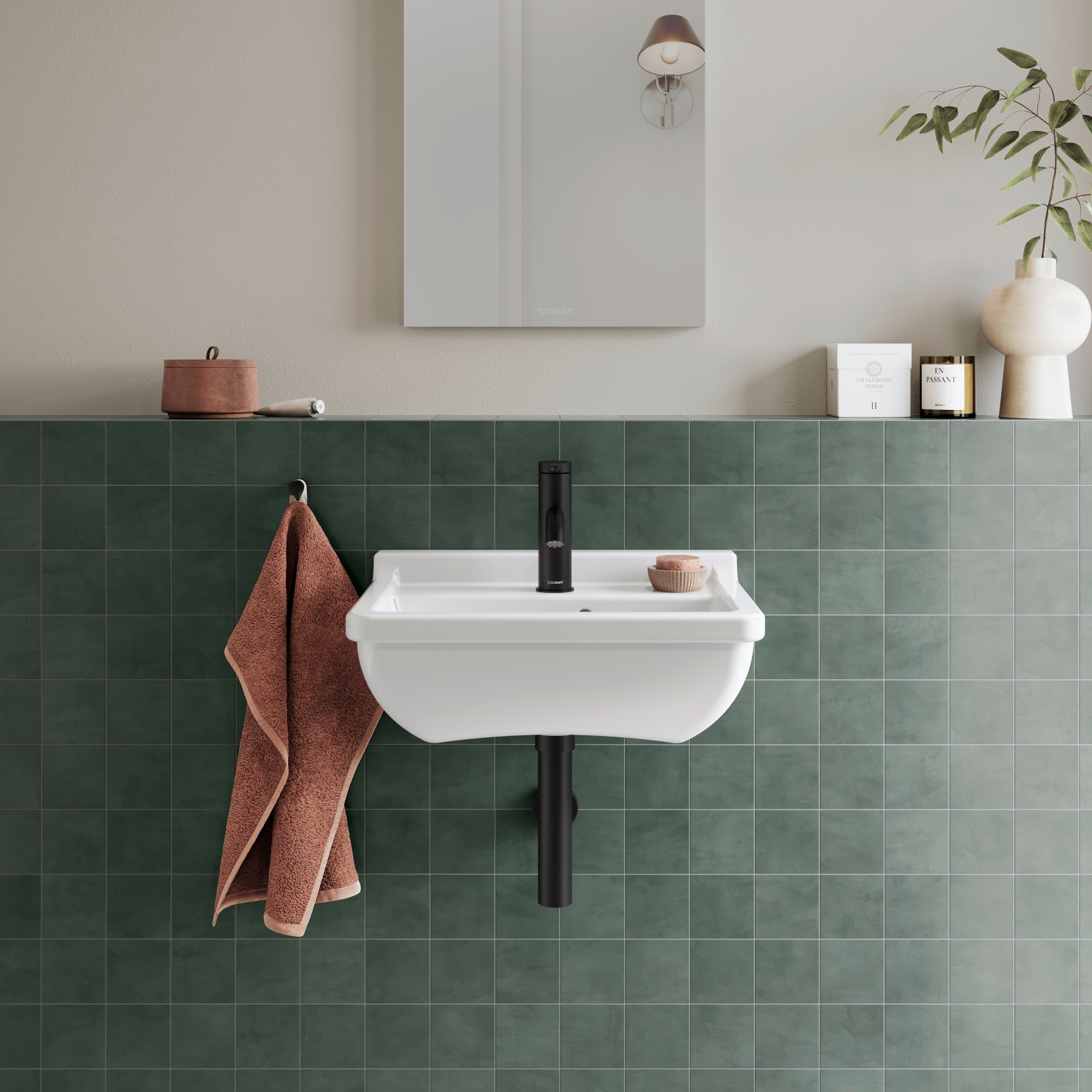
At the vanity, water consumption is spread out over the day across many short uses. Duravit combines two technologies here. As with showerheads, MinusFlow also limits the flow rate of sink faucets to 3.5 l/min, thereby reducing water consumption by 40 percent. Thanks to AirPlus, you also get a full, soft spray, as the water is enriched with air in the aerator. FreshStart focuses on energy efficiency: Single-handle lavatory faucets with this feature—such as the Balcoon M single-handle lavatory faucet by Patricia Urquiola—start with cold water when activated and only mix in hot water when the handle is turned counterclockwise. This means that during brief handwashing, only cold water is used; hot water is only supplied when it’s actually needed.
Life Cycle and Request for Proposals
For the request for proposals, comparable figures are important. Three pieces of information are key:
- Flow rate in liters per minute, in each case based on a defined pressure.
- Flush volumes for the full and partial flushes.
- Availability and names of replacement parts.
Water-efficient operation is a fundamental part of a strong sustainability record. When selecting products, it is important to review information on durability, repairability, the availability of replacement parts, and maintenance requirements, as these factors help determine how a bathroom will perform over the decades. The technical documentation for each product should indicate whether individual components can be replaced.
What Labels and Labeling Systems Do
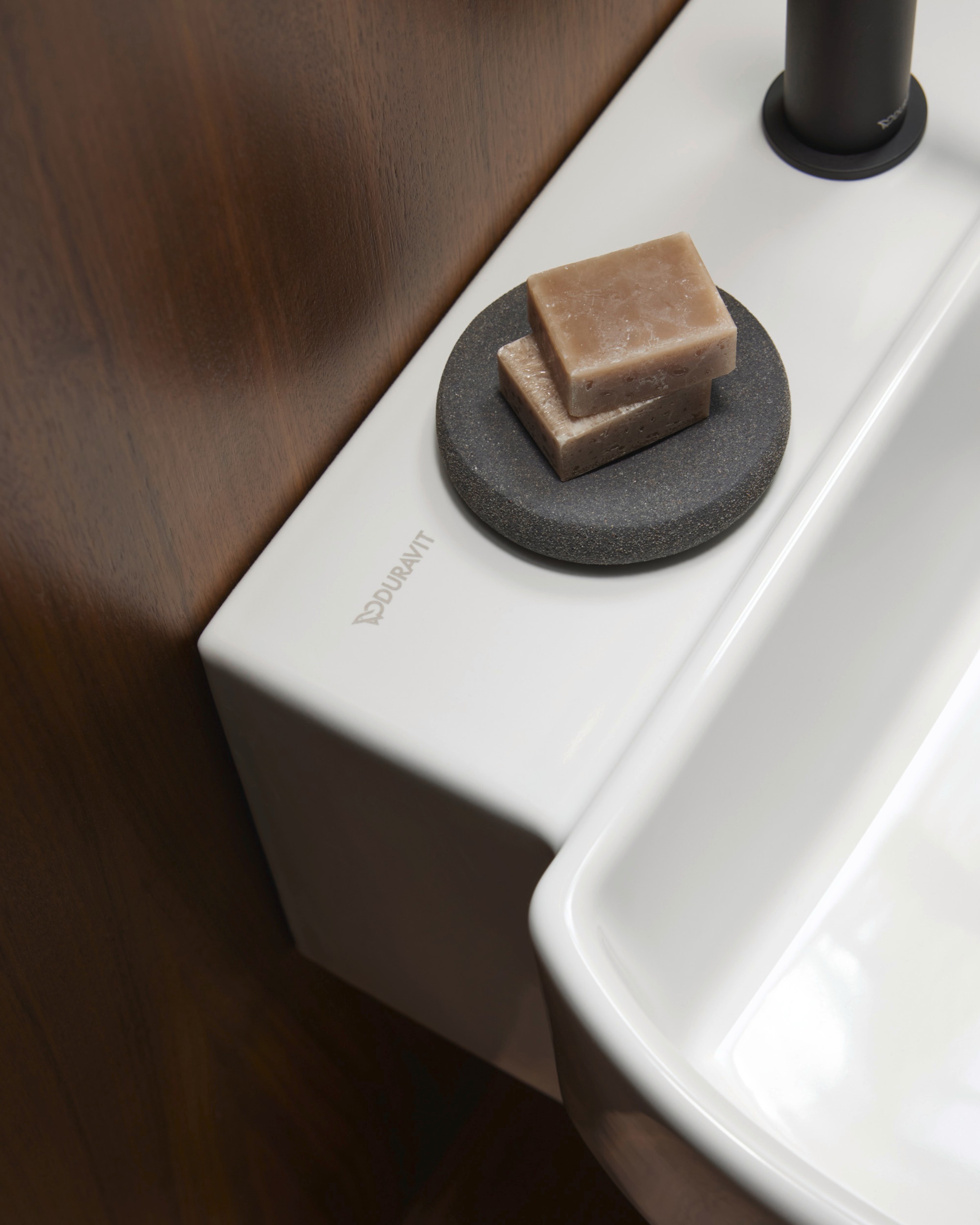
Labels organize product data and make it easier to compare products at a glance. The Unified Water Label is a voluntary system established by European bathroom manufacturers, in which Duravit participates alongside many other major brands. Through an online database and labels attached to products, it clearly displays key metrics on the water and energy consumption of bathroom products.
A second range is WaterSense, a partnership initiative of the U.S. Environmental Protection Agency (EPA), of which Duravit is a member. WaterSense is primarily aimed at consumers who want to reduce their water consumption. Products and services bearing the WaterSense label save at least 20 percent without compromising function or performance. When planning, the specific reference framework is crucial, as the ranges operate within different markets, use different testing criteria, and employ different benchmarks.
If you'd like to learn more about certifications at Duravit, you can find additional information here.
For planning purposes, such labels are a helpful starting point: They provide transparency, speed up the pre-selection process, and give building owners and professional planners a common basis for comparison. The technical documentation for each product builds on this foundation. It specifies the conditions under which the values apply and how a product performs in the planned context. Together, these elements form the basis for a bathroom that uses water efficiently while ensuring comfort, hygiene, and design quality.