World Water Day 2026: “Water and Gender”
Key facts about World Water Day:
Date
Sunday, March 22, 2026 (“Water and Gender”)
Origins & Organization
Launched in 1992 at the UN Conference in Rio de Janeiro and first observed in 1993. Coordinated by UN-Water as part of the 2030 Agenda.
Goal
Raise awareness about the protection of global water resources and promote access to safe drinking water.
What is World Water Day?
World Water Day takes place every year on March 22. The goal of World Water Day is to raise awareness of the importance of water as a vital resource. Each year, this special day of action has a different theme that highlights various global challenges related to water.
World Water Day was established in 1992 at the World Conference in Rio de Janeiro; it was observed for the first time in 1993. Since 2003, it has been organized by UN-Water and is linked to the 6th Sustainable Development Goal of the 2030 Agenda for Sustainable Development.
Why is World Water Day so important?
Although a vast portion of the planet is covered in water, the amount of drinkable freshwater is negligible. Since water is arguably the most important resource for life on Earth, it is essential to protect it. World Water Day draws attention to the global water shortage and other challenges facing this vital resource.

FAQs: 5 key water issues
What does water scarcity actually mean?
Most naturally occurring water is saltwater, which is unsuitable for daily use. Since freshwater accounts for only about three percent of the world’s water supply, and a significant portion of that is stored in glaciers, we speak of a water shortage—or, more precisely, a shortage of available freshwater.
Why is there a global water shortage?
The causes of water scarcity are manifold: a growing global population, unequal distribution of water resources, longer periods of drought, rising living standards, and reduced water quality—for example, due to fertilizers or chemicals. Many of these factors are further exacerbated by climate change.
What is the average daily water consumption?
In Germany, average daily water consumption per person ranges from 120 to 130 liters—and that doesn’t even include indirect water use. Most of those approximately 130 liters are used for personal hygiene, flushing toilets, and doing laundry.
What is indirect water consumption?
Indirect water consumption refers to the amount of water required to produce a product throughout the entire manufacturing process. For example, meat consumption uses a significant amount of water—about 15,000 liters of water are used to produce one kilogram of beef. Indirect water consumption is often referred to as virtual water.
Why are some countries more severely affected by water shortages than others?
In some regions, water scarcity is more acute than in others, and many people lack access to clean drinking water. Often, the problem stems from geographical location and/or a lack of water resources. In some countries, it is due to a lack of infrastructure or environmental regulations. However, even popular vacation destinations often struggle with water shortages during the summer months because water consumption increases significantly during this time.
Save water with Duravit
Conscious water management is an integral part of Duravit’s corporate philosophy, which is why we strive to continuously improve our systems to make them even more sustainable and water-efficient. With our innovative systems, we are already helping to reduce water consumption today.
Tip: In addition to our water-efficient Duravit systems, which reduce water consumption behind the scenes, being mindful of how you use this precious resource can save both water and energy. Learn more in our article on saving water.

Dual-flush
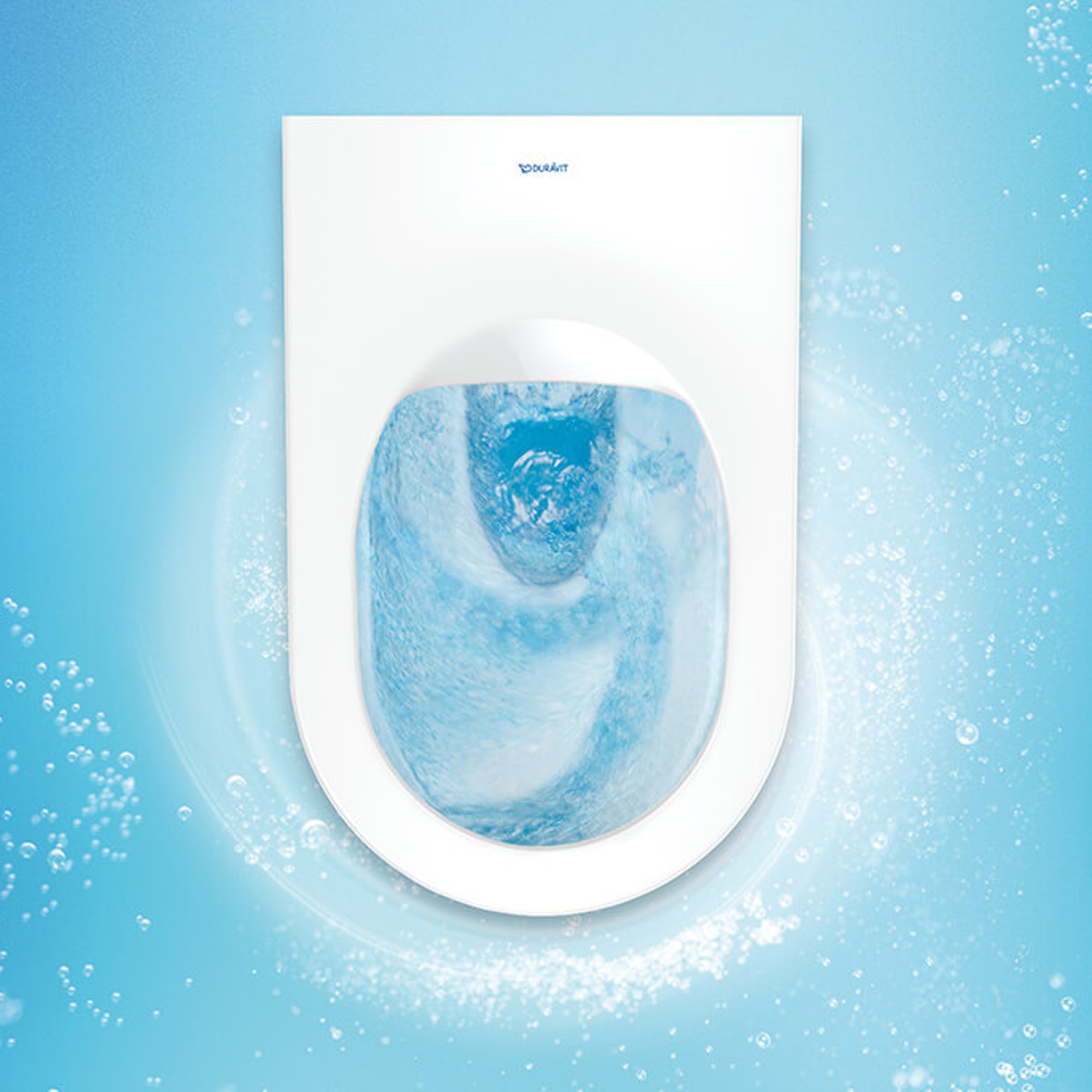
HygieneFlush

Duravit Rimless®

Waterless urinals