Bathroom floor plan shows bathtubs, furniture, and sinks in a rectangular room with dimensions.

Bathroom floor plans

If you want to redesign your bathroom, you should first and foremost consider the bathroom floor plan. In new buildings, there are a lot of things to consider: from the location in the house to light sources and the possible placement of partition walls. If you are renting or taking over an existing bathroom, you can use the floor plans to make decisions about the optimal layout of the available space. The following article explains what to look out for and how to plan your bathroom using a floor plan.
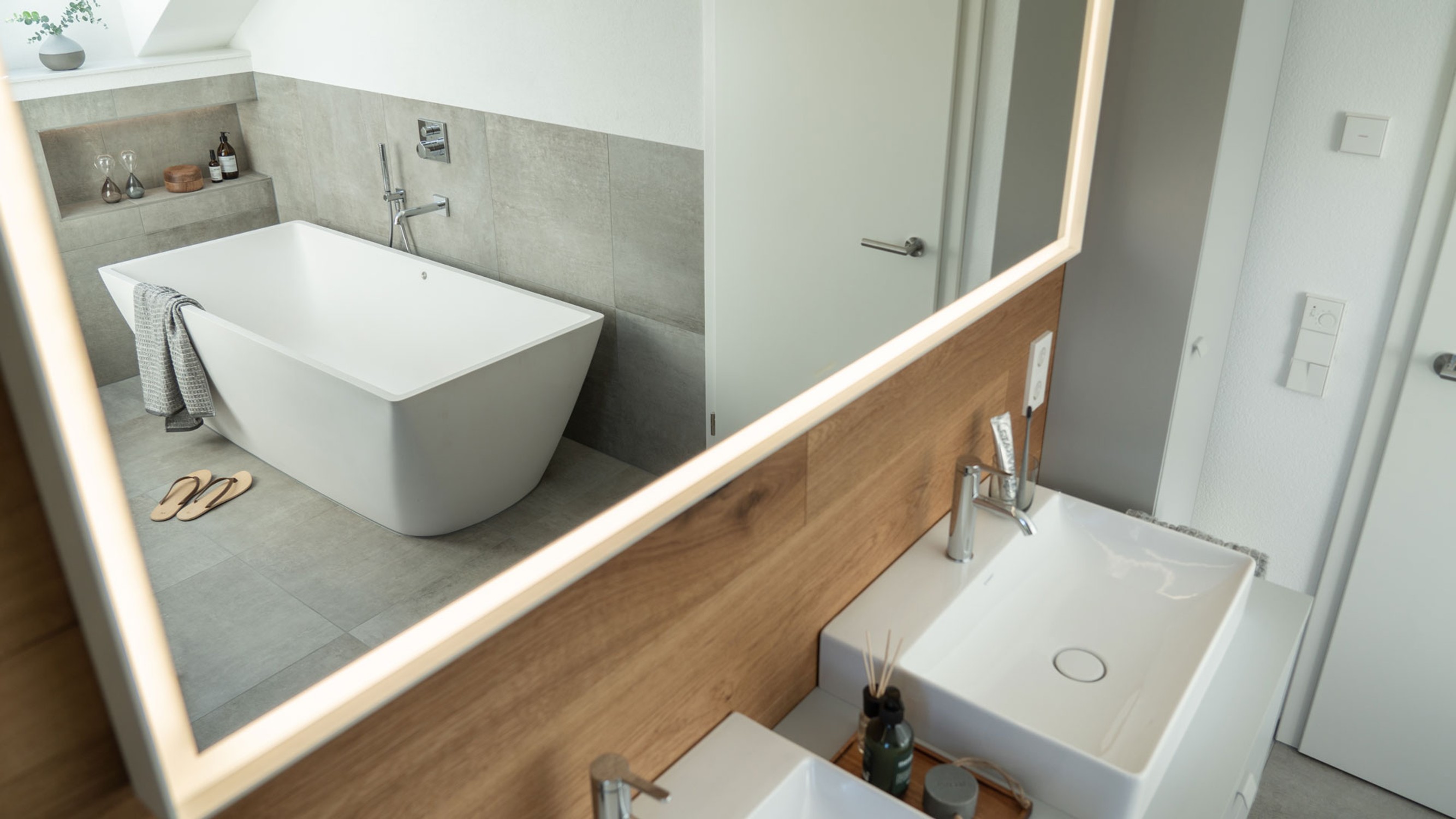
Duravit bathtub in a modern bathroom with tiled walls, wooden mirror, sink, and bath products on a shelf.

Bathroom floor plans: Considerations in advance

If you want to plan your bathroom, there are a few things you need to consider in advance. It also helps to draw up a floor plan for the bathroom. This will immediately show you where adjustments may be necessary and what works and what doesn't. When drawing up the bathroom floor plan, it is therefore best to ask yourself the following questions:
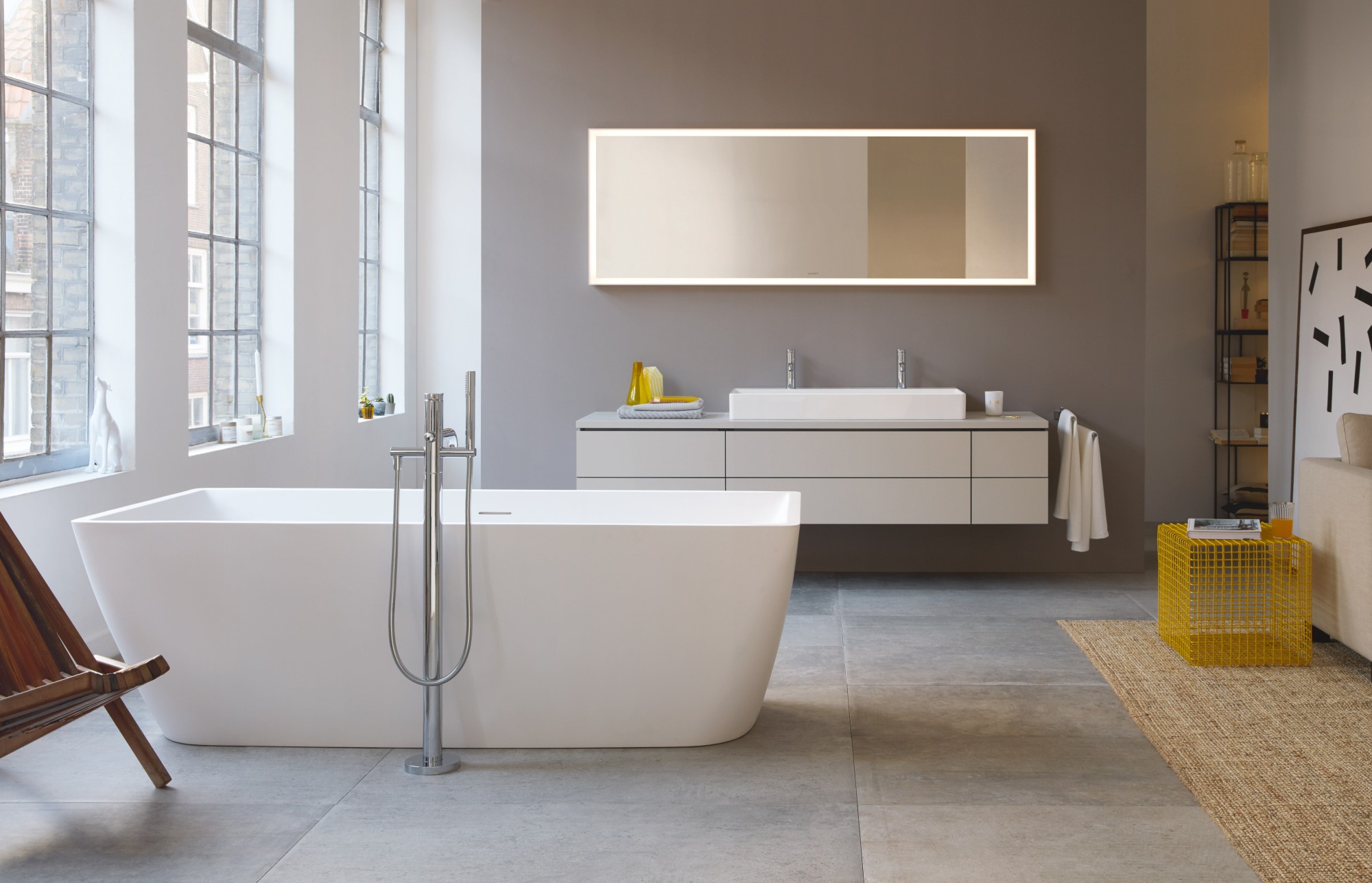
Bathroom with freestanding DuraSquare bathtub

What is absolutely essential for the bathroom?

Have you always wanted a bathroom with a sauna? This must be taken into account in the floor plan to ensure that the appropriate connections and sufficient space are available. The right pipes must also be taken into account if, for example, underfloor heating is to be installed. When planning a barrier-free bathroom, the floor plan must also be adapted accordingly to meet the necessary requirements. It is best to prioritize the requirements you have for your bathroom so that you can then set the appropriate priorities for further planning.

A woman and a child brush their teeth at a D-Neo sink in the bathroom.

Who uses the bathroom?

Hand in hand with the question of essential components goes the question of who will be using the bathroom. The answer to this question allows many further conclusions to be drawn about bathroom planning. If an en suite bathroom is planned, it should logically be located next to the bedroom. A floor plan for a small bathroom is sufficient here. In contrast, a family bathroom should be spacious and located so that everyone has easy access to it.

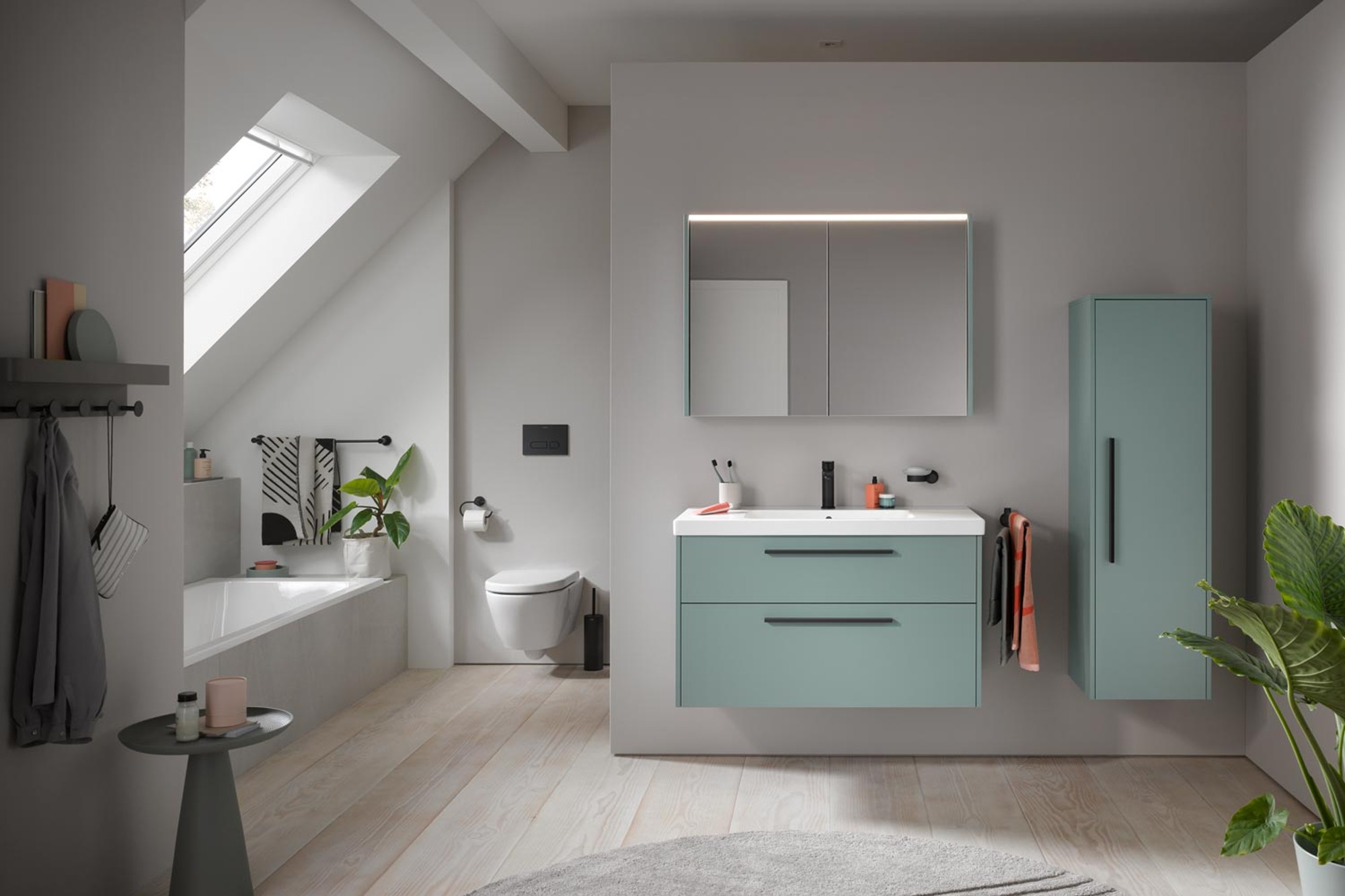
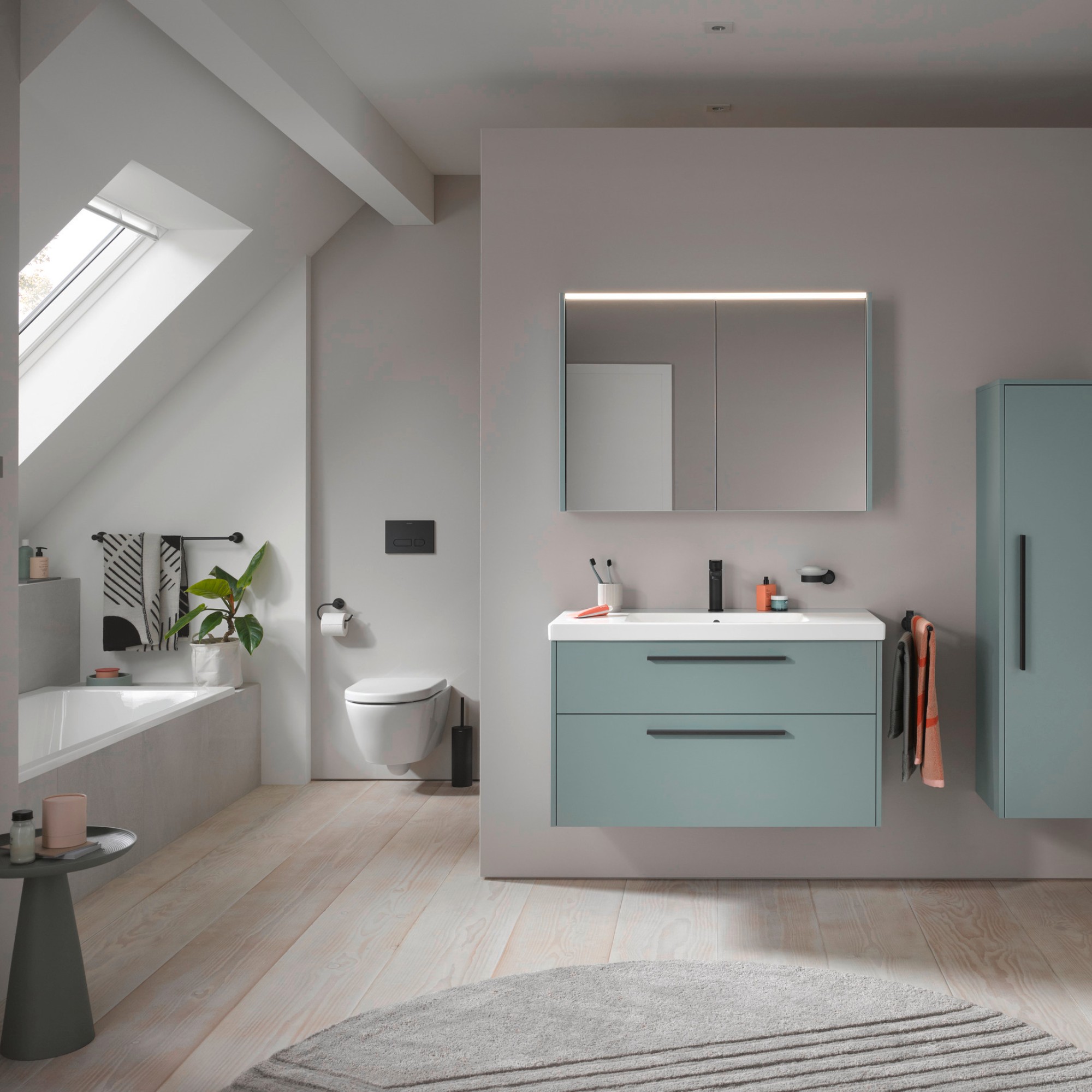
D-Code sink and cabinet in a modern design, brightly lit under a skylight, in a stylish, minimalist room.

What special structural features need to be taken into account?

Bathroom floor plans are always based on the structural conditions. Whether you are building a new home or renovating an old one, there are almost always special features that need to be taken into account. For example, a protruding bathtub requires a correspondingly sturdy base. The floor plan for a bathroom with a sloping ceiling must also be designed differently to ensure that there is sufficient space.

Planning the bathroom layout

Once the requirements are clear, you can begin planning the actual bathroom layout.
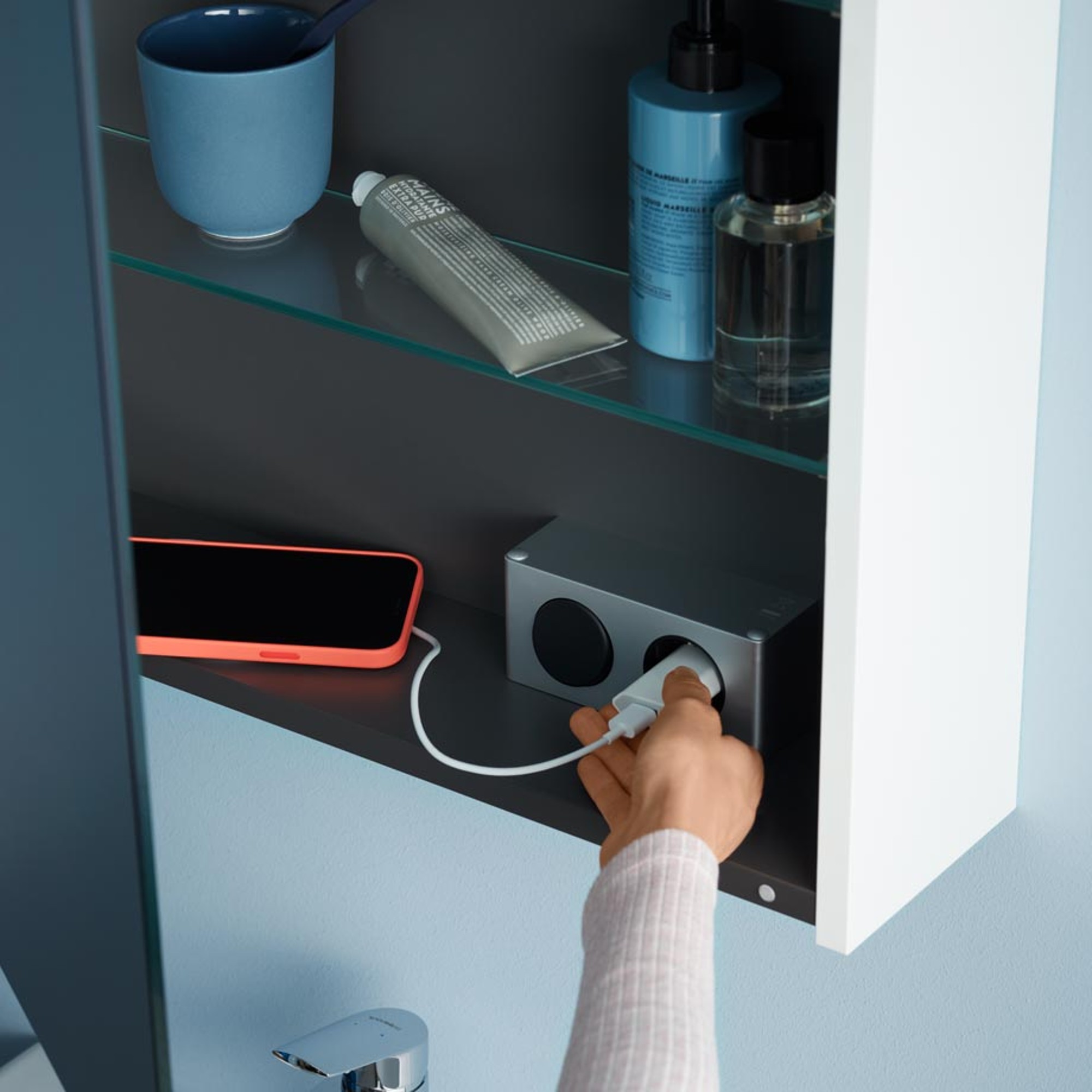
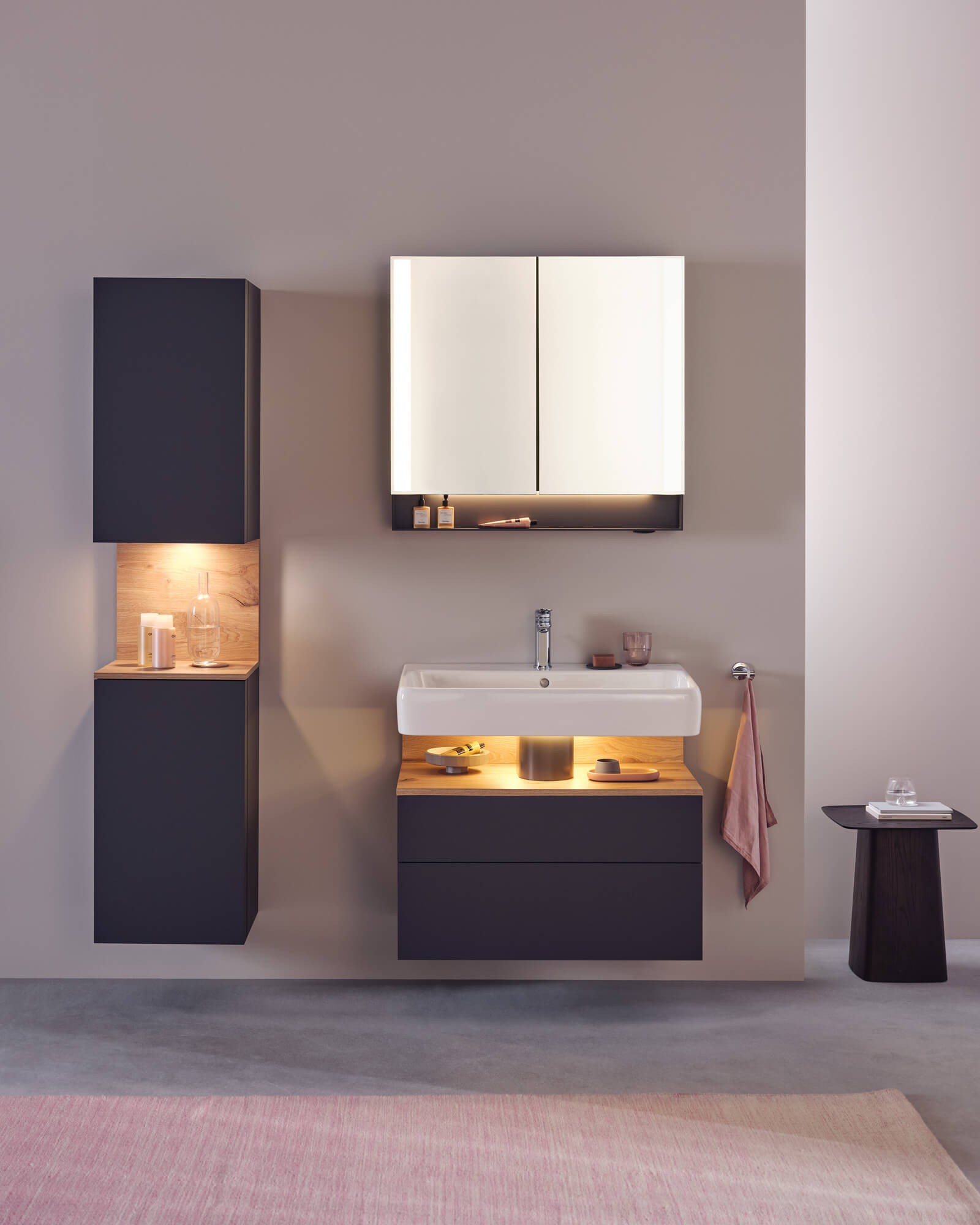
Bathroom cabinet from the Duravit No. 1 series with internal power outlet

The right connections

Water pipes and drains in particular, but also electrical cables, must be taken into account when planning bathroom layouts. In multi-story apartments, water pipes are often housed in a shaft to which both the kitchen and toilet are connected. On the same level, however, these are often located next to each other in order to make effective use of the installations. Use your preliminary considerations regarding the essential components of the bathroom to determine which and how many connections you need.

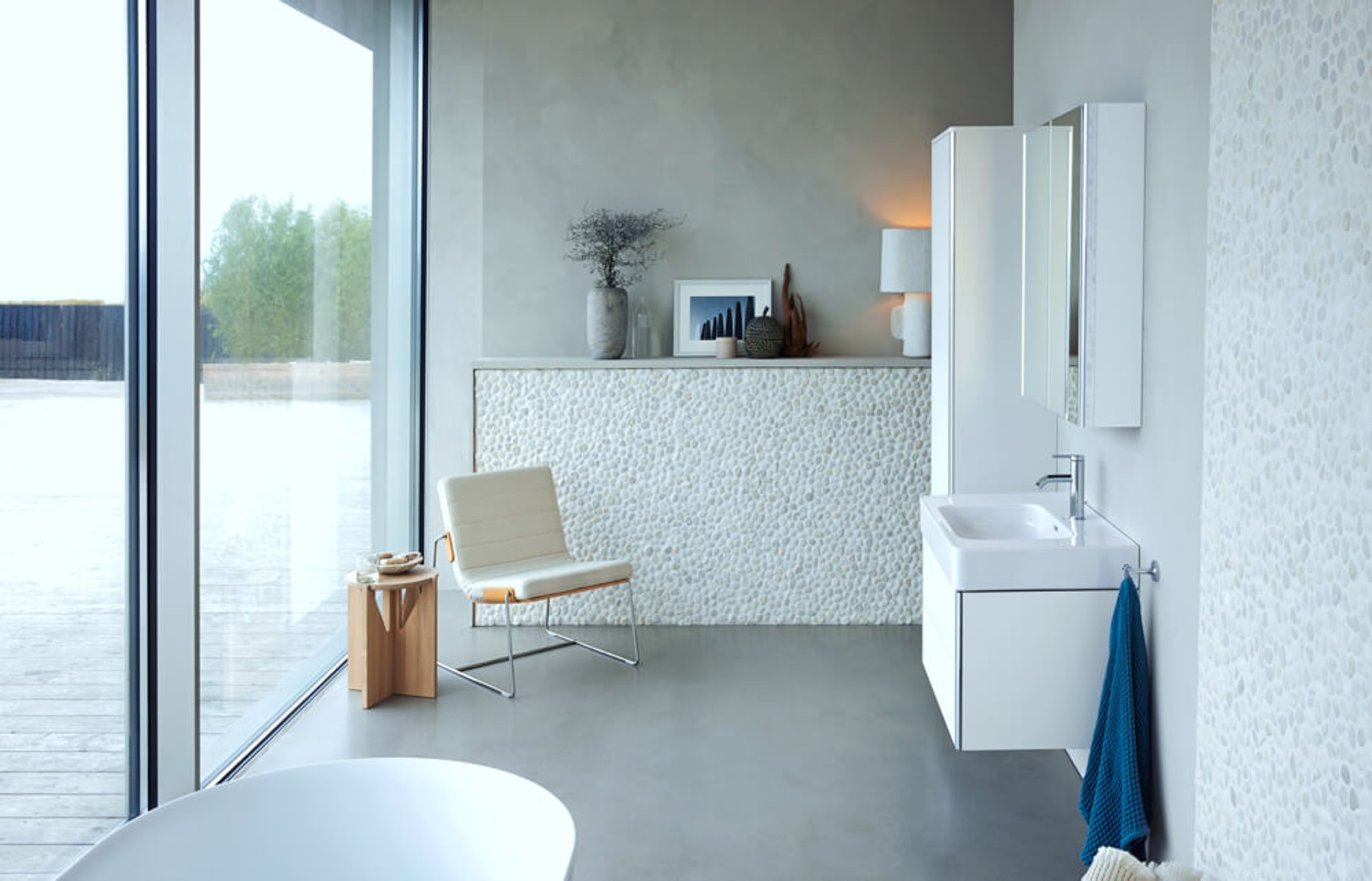
Qatego bathroom furniture in high-quality design

Lighting design

When designing the bathroom layout, lighting planning should not be neglected under any circumstances. Adequate and adjustable lighting is particularly important in the bathroom. Ideally, different light sources should be available. This ensures the right lighting both in front of the bathroom mirror when brushing your teeth and applying makeup, and when taking a relaxing bath.

Bright bathroom with Soleil bathtub and vanity

Ventilation

Ventilation should also be taken into account when planning the bathroom layout. Windows are the simplest solution here and can also help with lighting design. Ideally, there should be at least one large window. However, modern heating systems can also provide the necessary air flow. In bathrooms without windows, these are now even required by law.

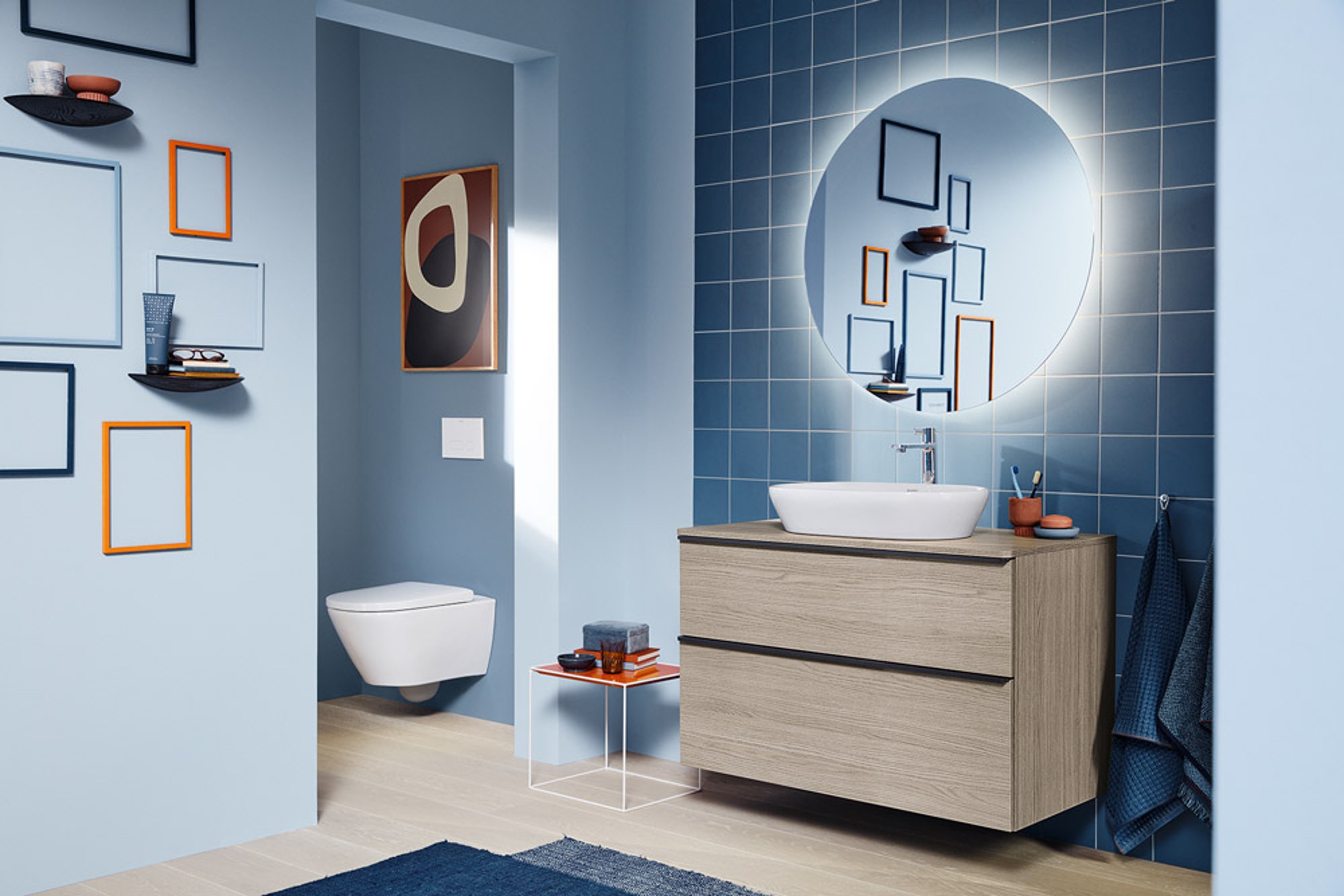
The D-Neo bathroom cabinet stands beneath an illuminated mirror, surrounded by blue tiles, modern details, and wall art.

Spaces and T-solutions

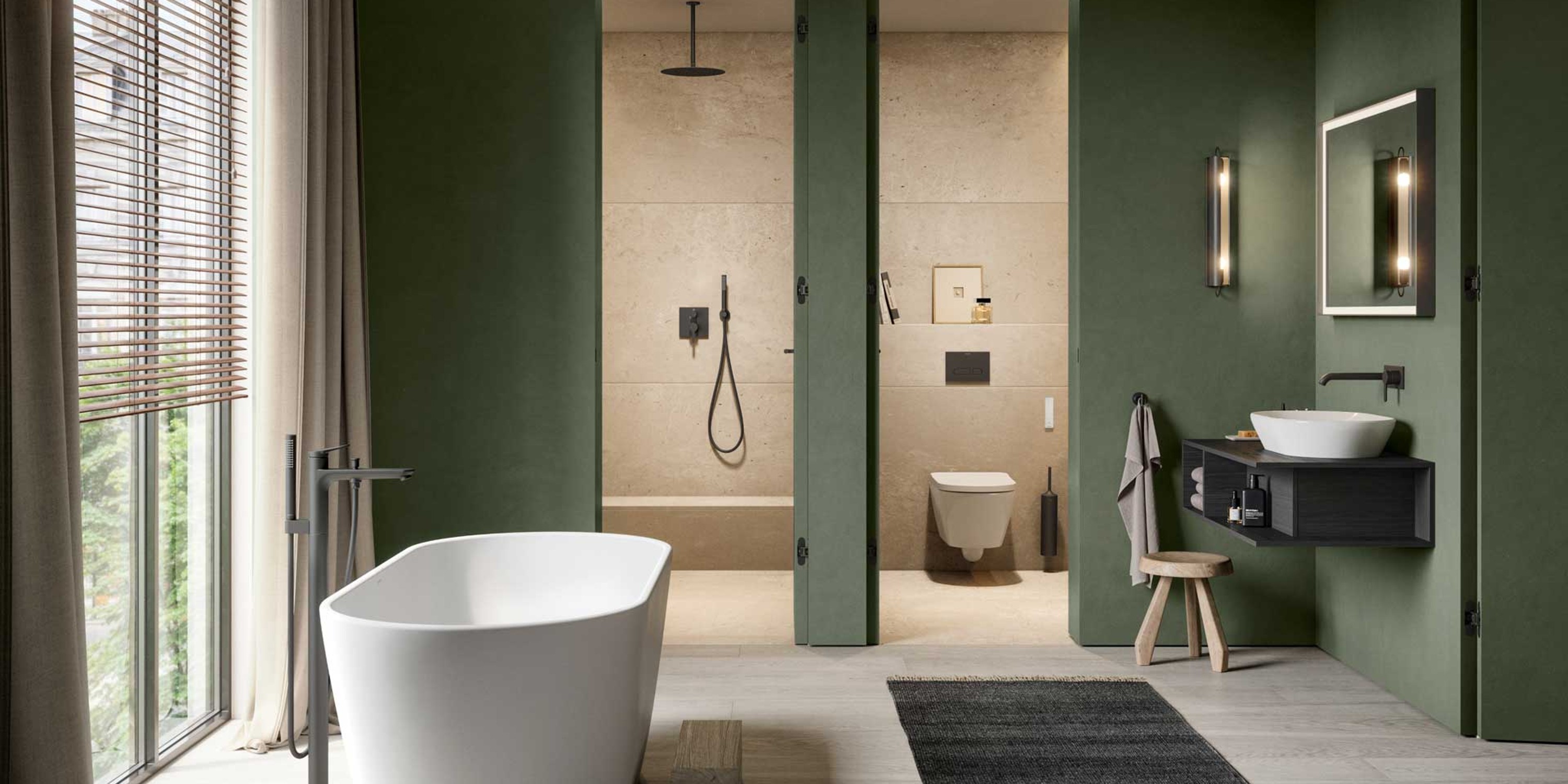
In order to design an appealing bathroom later on, it is a good idea to think about the room layout when planning the floor plan. Partition walls and so-called T-solutions are particularly helpful here. The name comes from the shape of the wall when viewed from above. These are often used to create separate niches in the bathroom, for example for the toilet or shower. Bathroom floor plans with walk-in showers in particular often feature this solution. If additional doors are installed, these solutions allow the bathroom to be used by several people at the same time – which is practical for family bathrooms, for example.

Furnishing based on the bathroom floor plan

Once the bathroom floor plan has been drawn up, it can be used to furnish the bathroom. Visualization using templates or a digital bathroom planner is often helpful here. The following points should be taken into account:

Arrangement

The connections and the general shape of the bathroom floor plan mean that some decisions are more or less predetermined. If, for example, the bathroom floor plan is very narrow—sometimes referred to as a tube bathroom—there are not too many options. However, as a general rule, the sink should be placed relatively close to the door. The toilet, on the other hand, should never be too close to the door or directly opposite it. Beyond that, personal preferences are the main deciding factor.

Distances

The distances between the respective furnishings and from the walls also play an important role. The following guidelines are recommended for a standard bathroom.

When planning the floor plan for a barrier-free or age-appropriate bathroom, a radius of 120 cm should be allowed around the sanitary facilities, and 150 cm for a wheelchair-friendly bathroom.

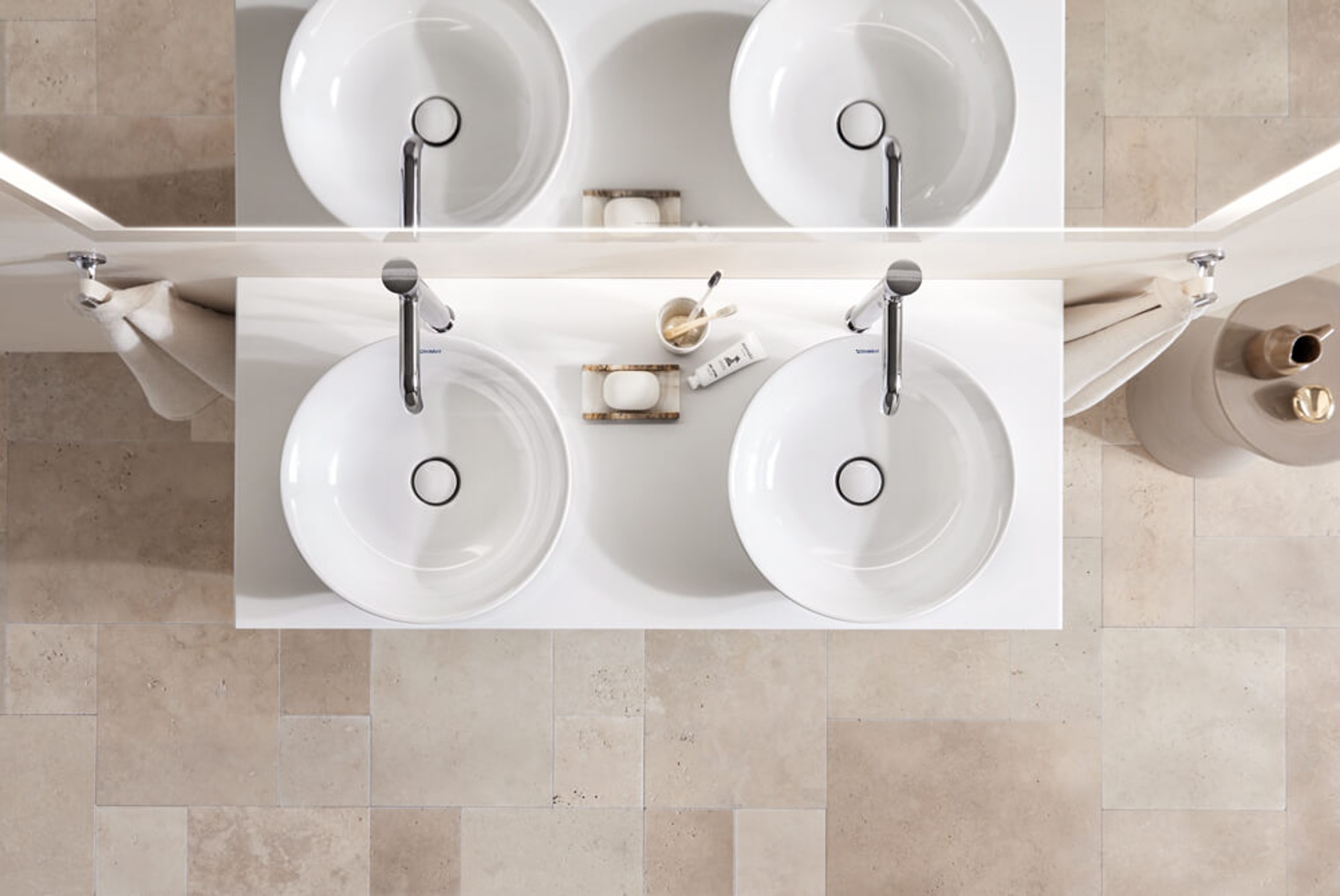
Two round White Tulip sinks

Sink

A minimum of 55 cm of free space is recommended in front of the sink to allow for comfortable standing.

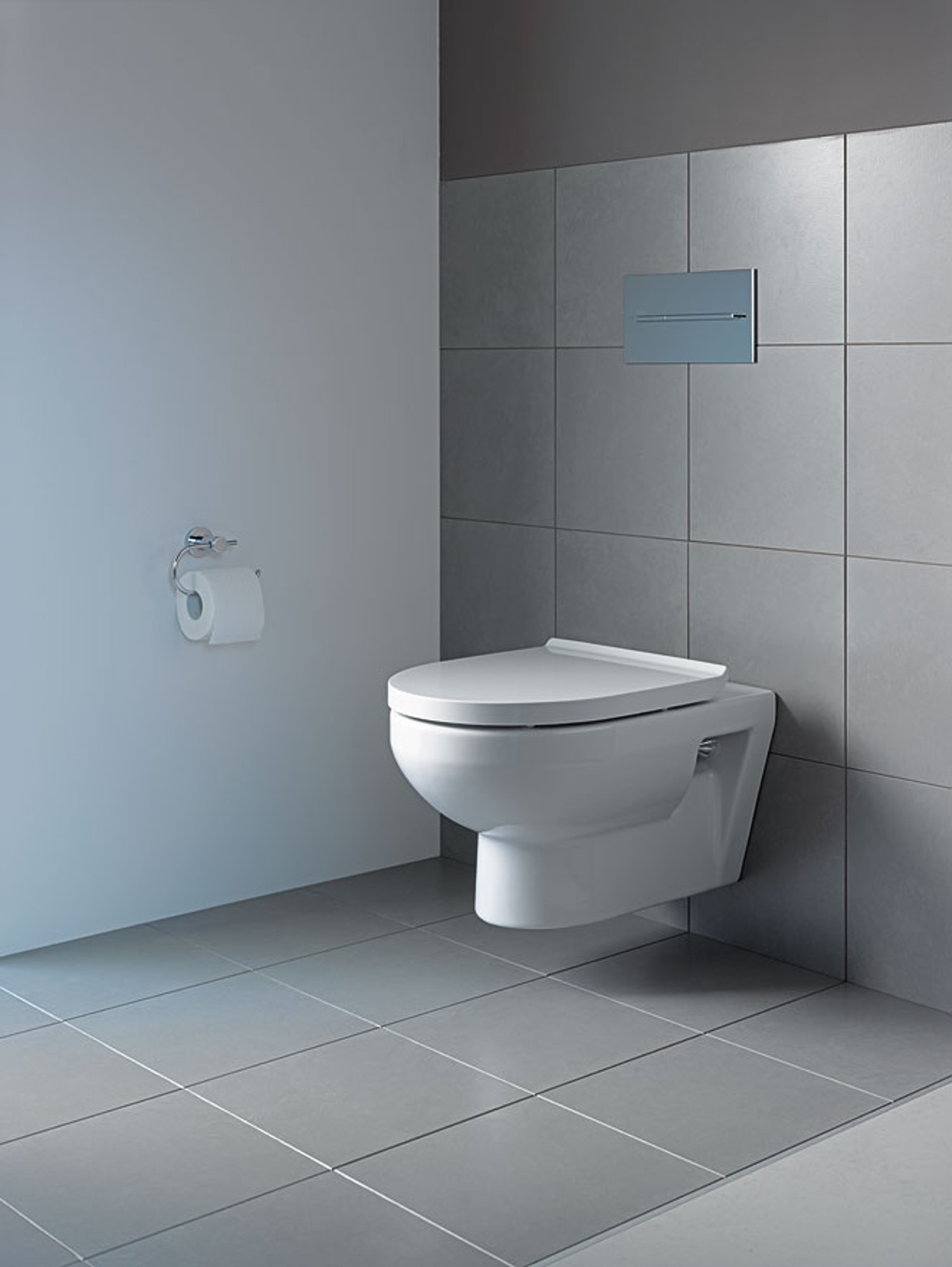
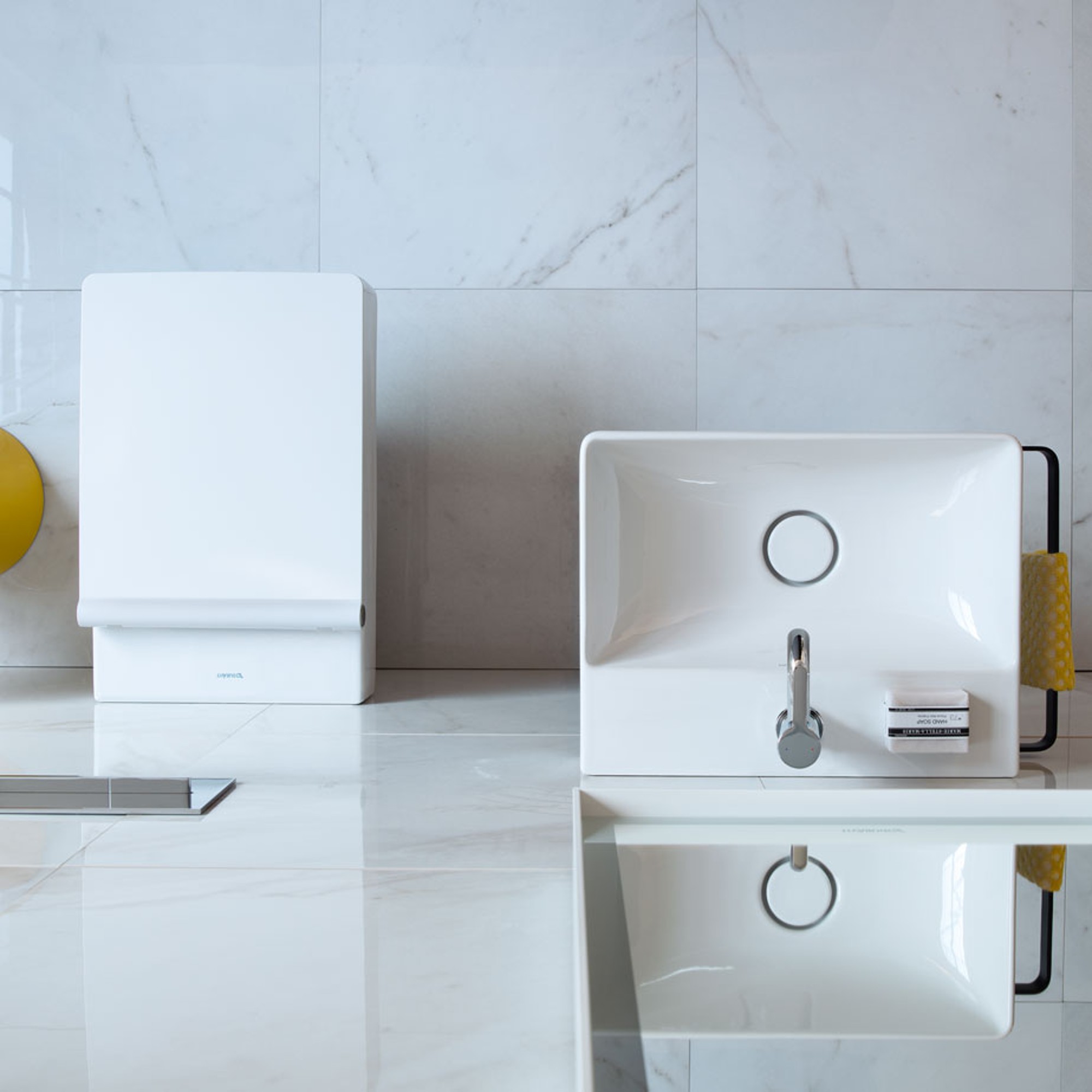
DuraStyle wall-mounted toilet hangs on tiled wall, next to toilet paper holder; surroundings with gray floor and wall tiles

Toilet

The toilet should also have at least 55 cm of free space in front of it, preferably around 75 cm. The center of the toilet should also be around 40 cm away from other objects and the wall.

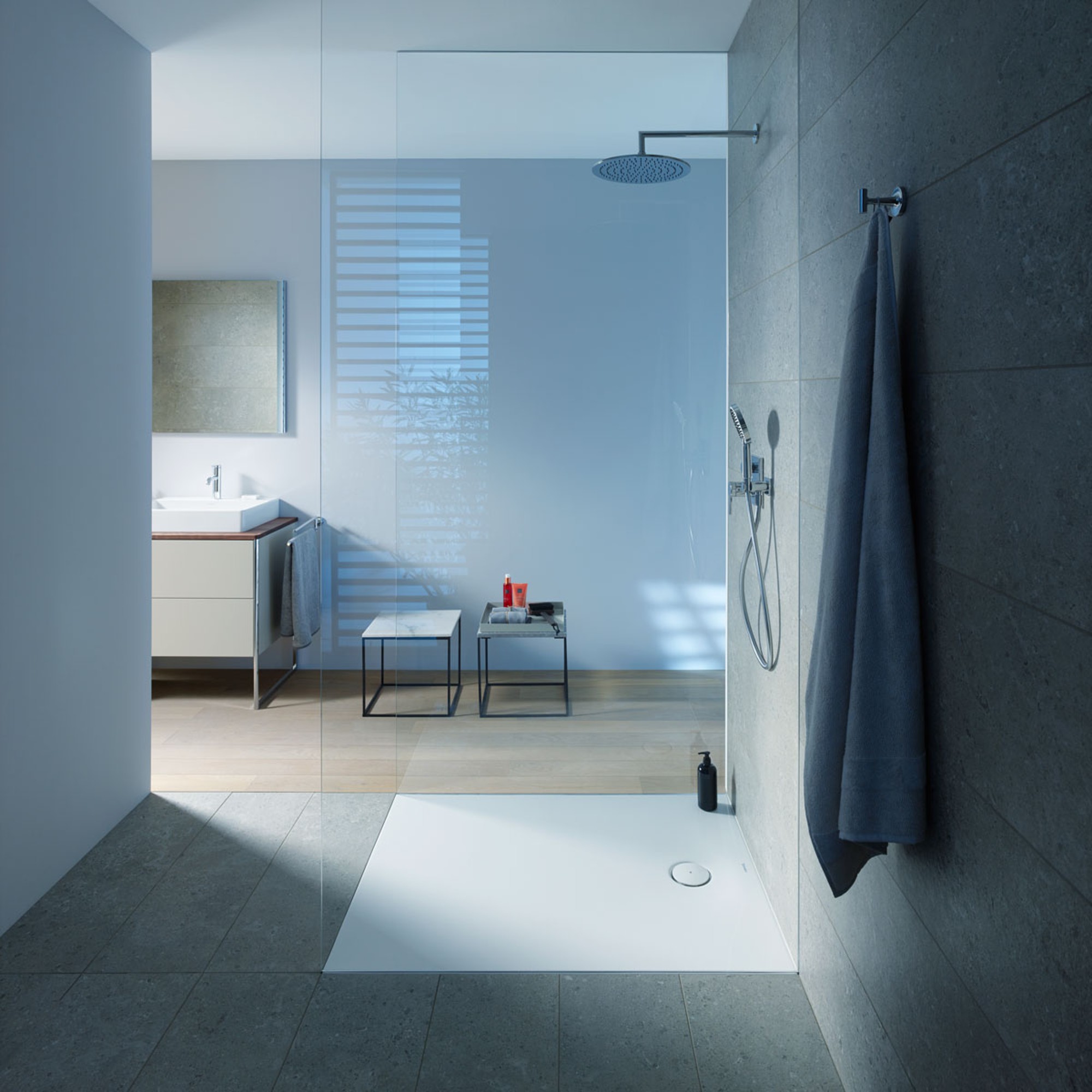
Tempano shower

Shower

The 55 cm rule also applies here, although the type of door is also important. If it swings outwards, there should be at least 60 cm of space.

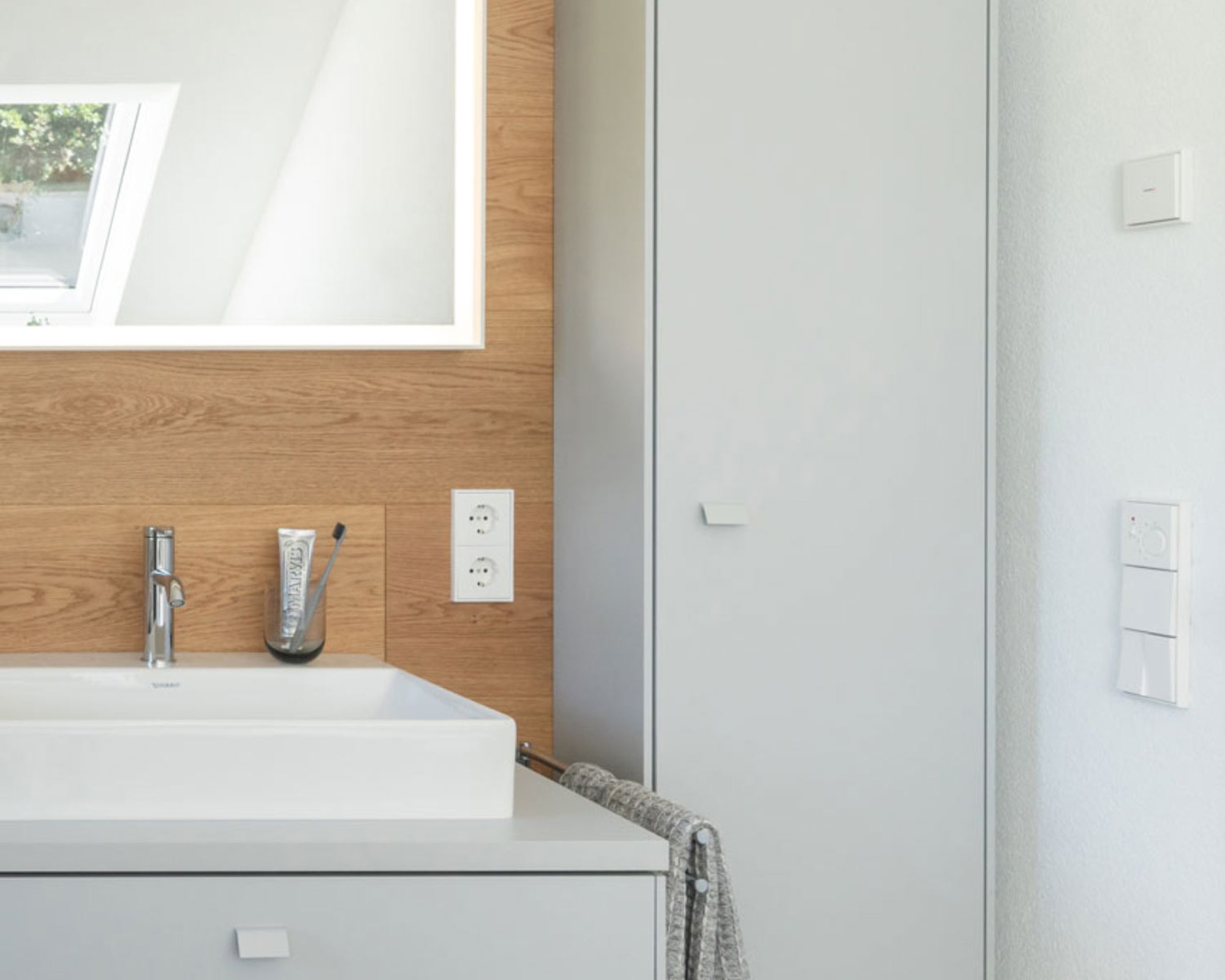
Duravit sink stands on gray cabinet next to outlet, mirror above wood paneling

Electrical appliances, sockets, and switches

These items should be located approximately 150 cm away from the shower and Bathtub.

You might also be interested in: