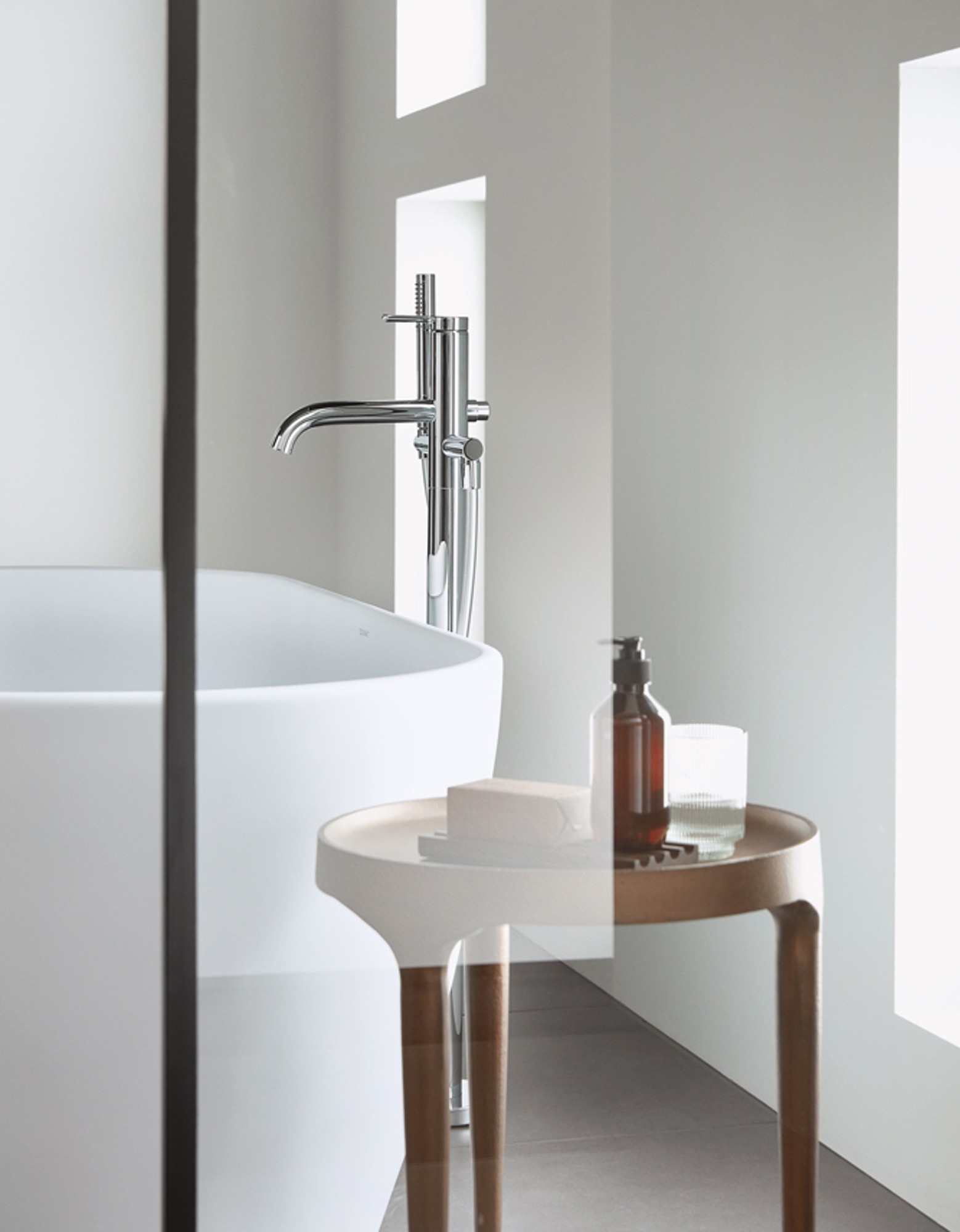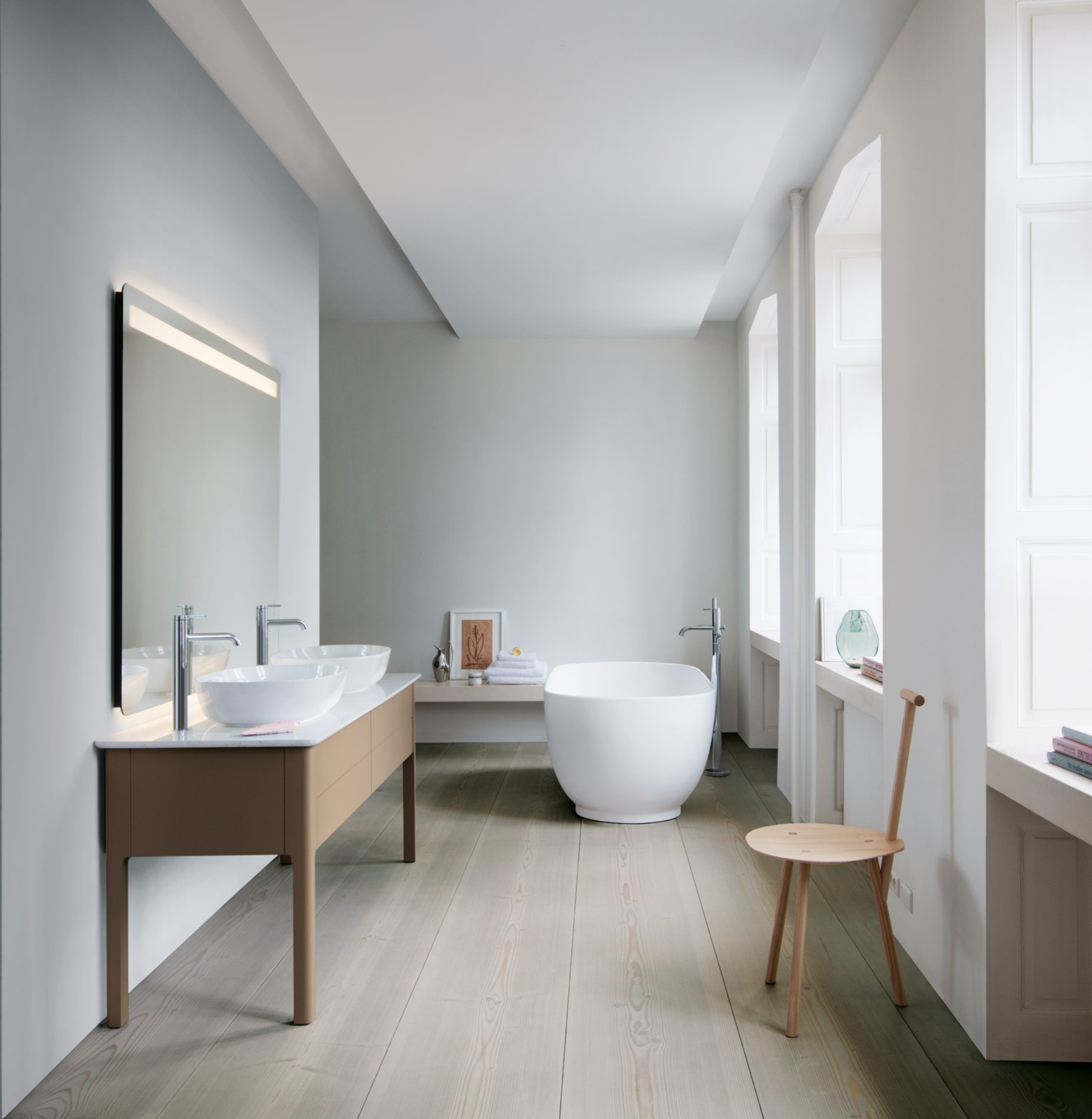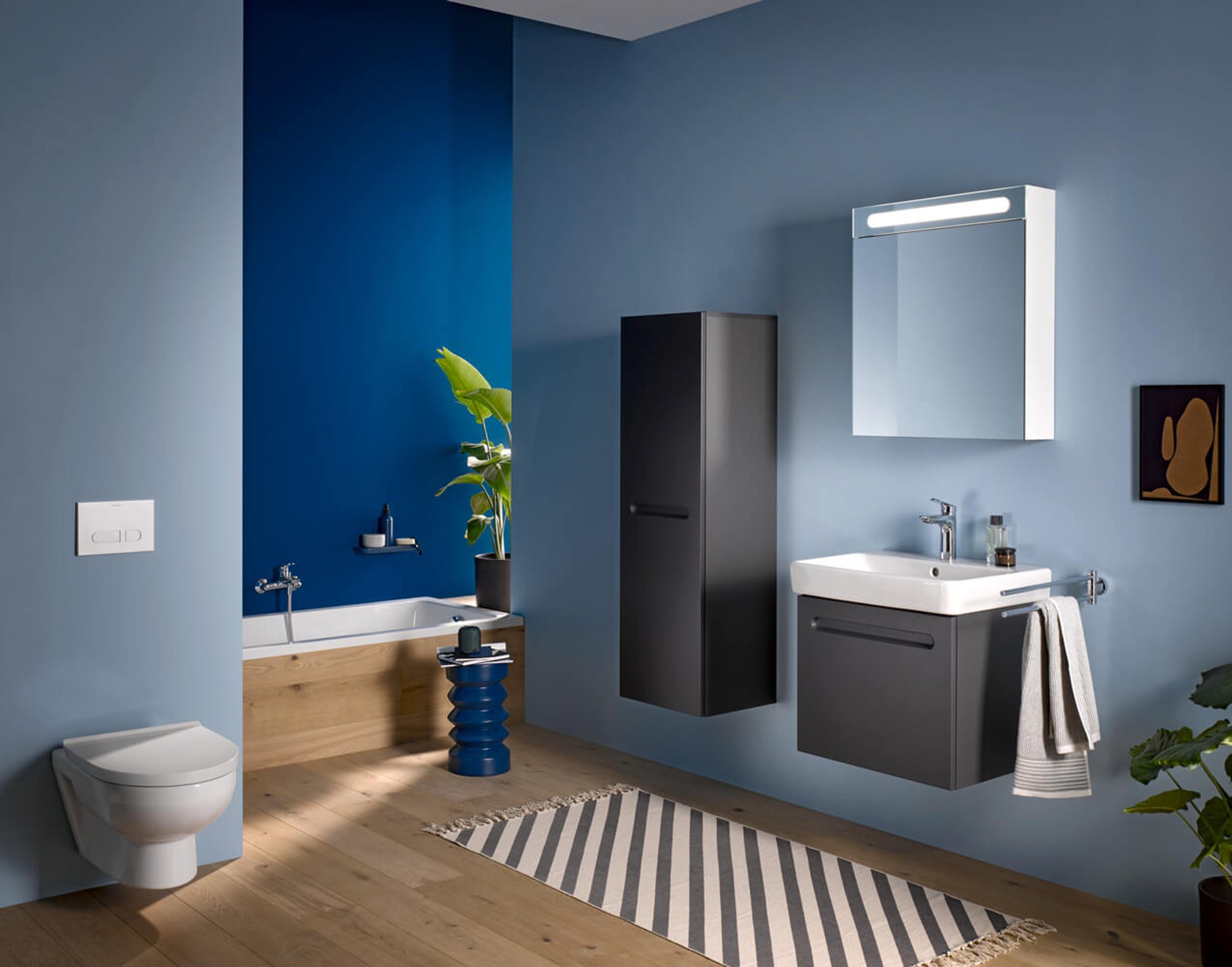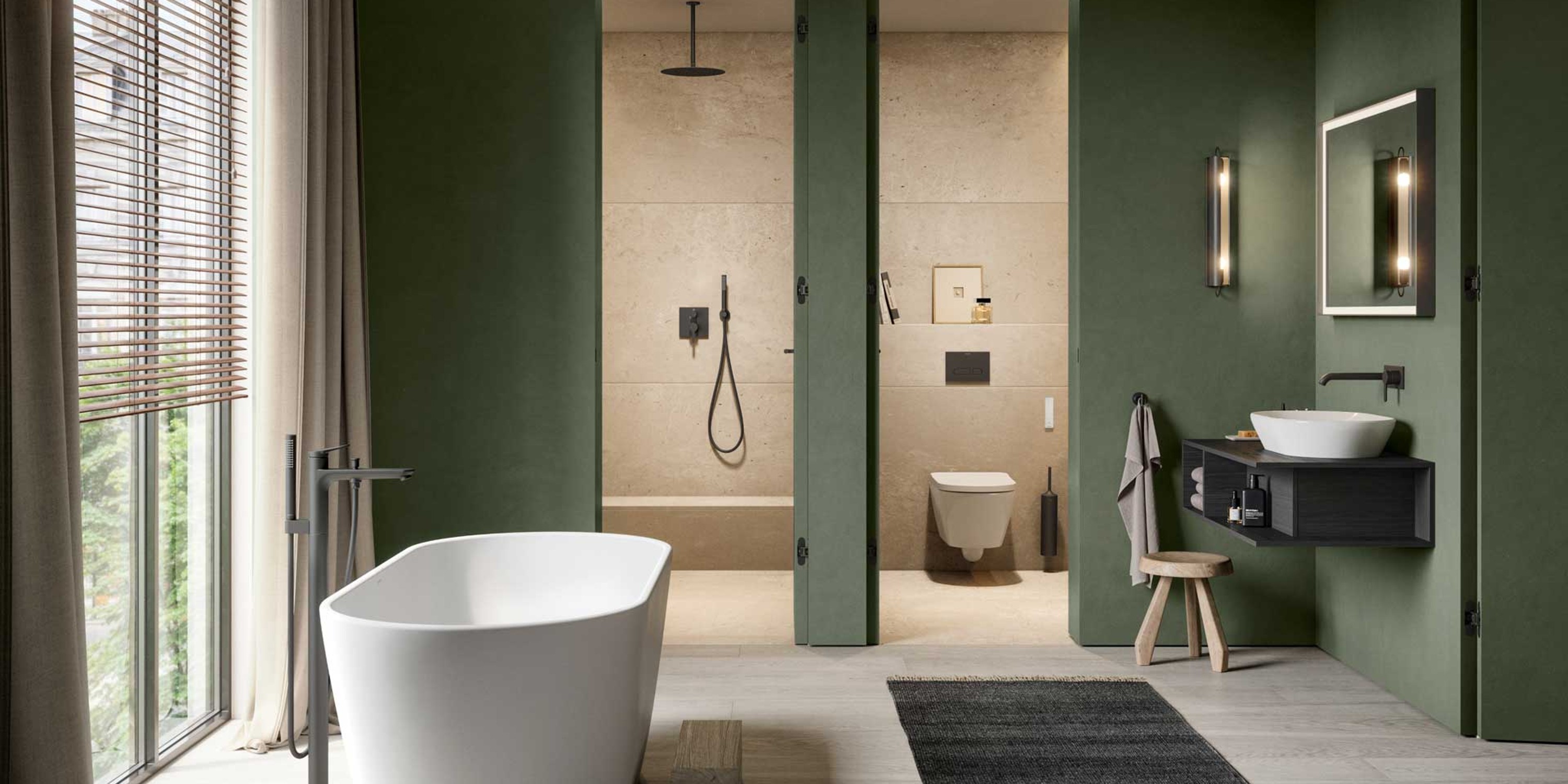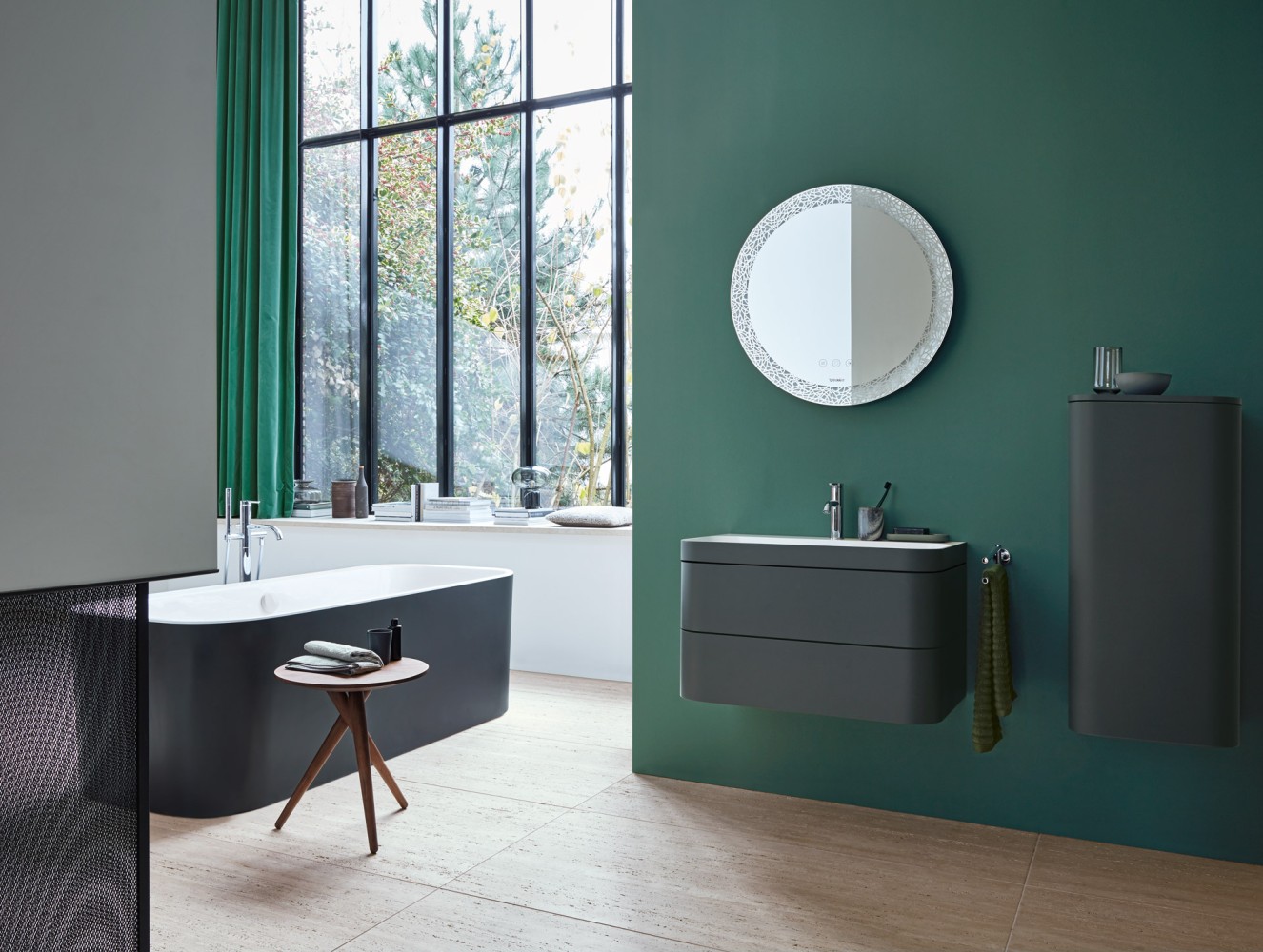
Duravit bathroom furniture and bathtub in a bathroom with a green accent wall

Painting the bathroom

How to apply a new coat of paint successfully

Unlike other rooms, there are a few special considerations to bear in mind when painting your bathroom. First and foremost is choosing the right type of paint, as conventional paints do not meet the requirements for bathrooms. But you also need to take the specific conditions in your bathroom into account when preparing and painting. We show you step by step how to paint your bathroom.
Duravit D-Neo bathroom furniture and sink in bathroom with colorful accents

Painting the bathroom: Which paint should be used?

Standard emulsion paints, i.e., wall paints for rooms such as the living room, are not suitable for painting bathrooms. This is because the high humidity in bathrooms means that the paint is subject to particular demands. Among other things, mold growth and paint flaking must be prevented. The following options are available to you:
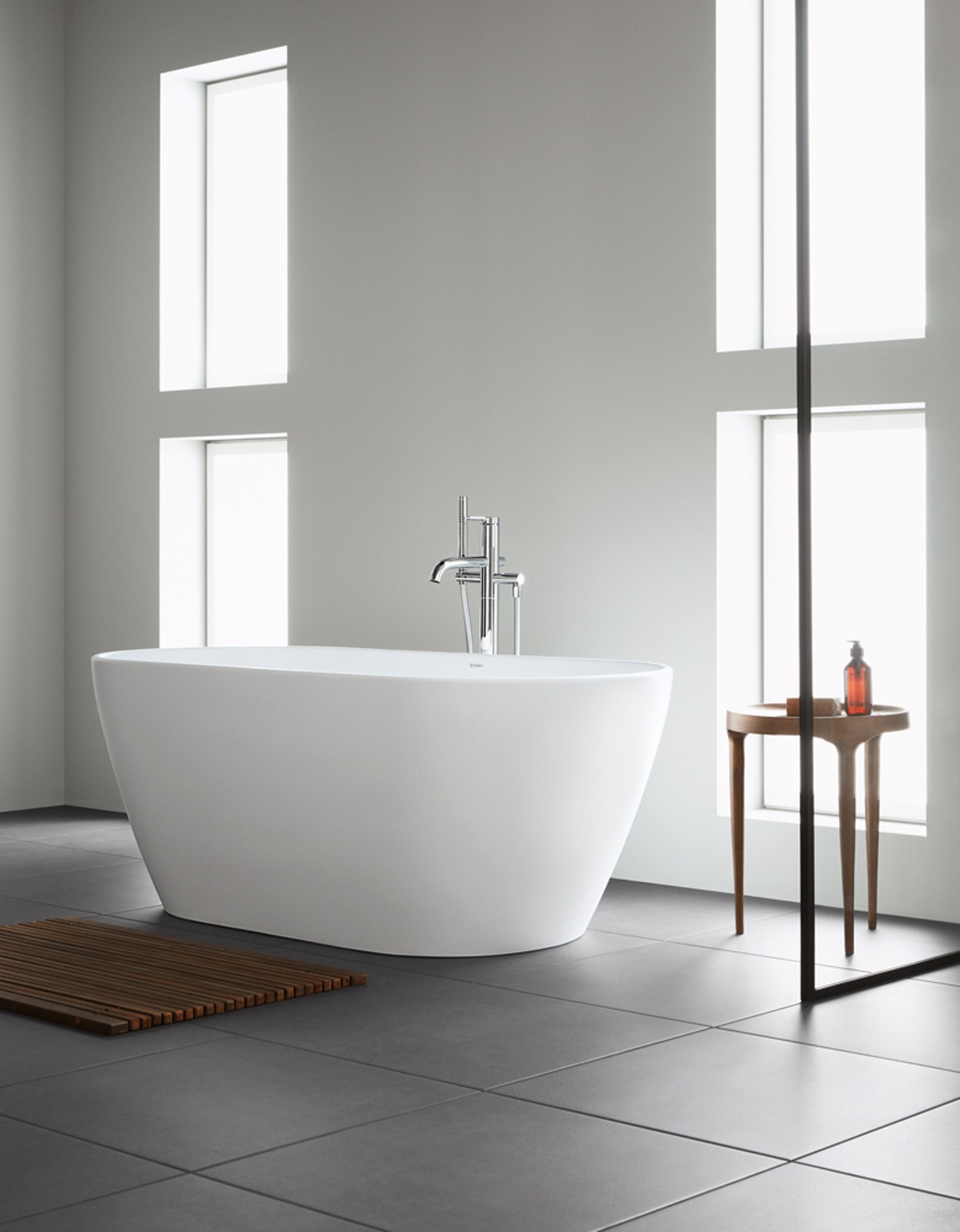
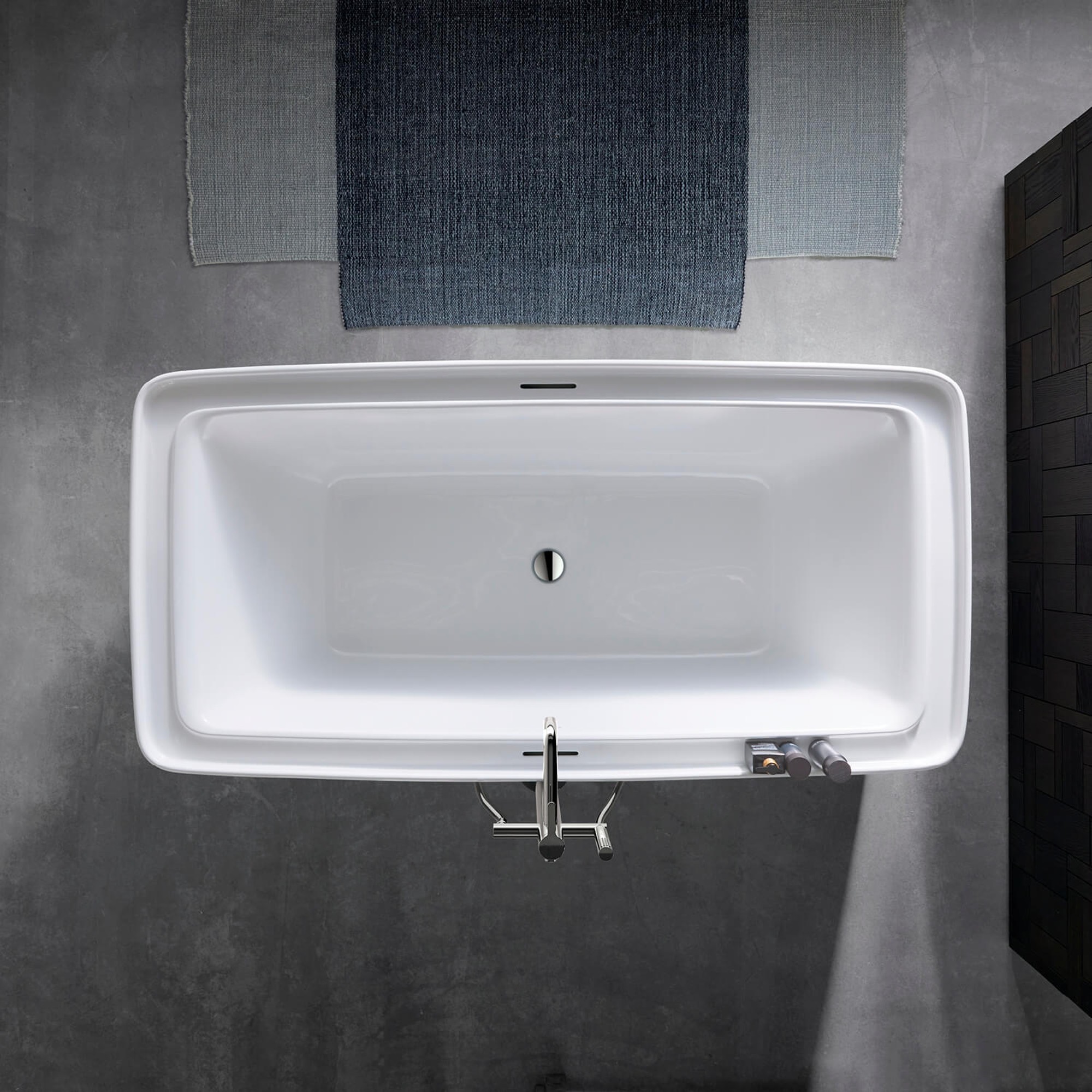
Freestanding bathtub by Duravit D-Neo in a minimalist bathroom

Silicate paint

Silicate paint is particularly useful for bathrooms because it has a high pH value, which mold does not like at all. However, painting with this type of paint is difficult because the pH value makes the paint corrosive in its liquid form. As a result, it is only available in selected specialist stores, and protective clothing must be worn when painting.

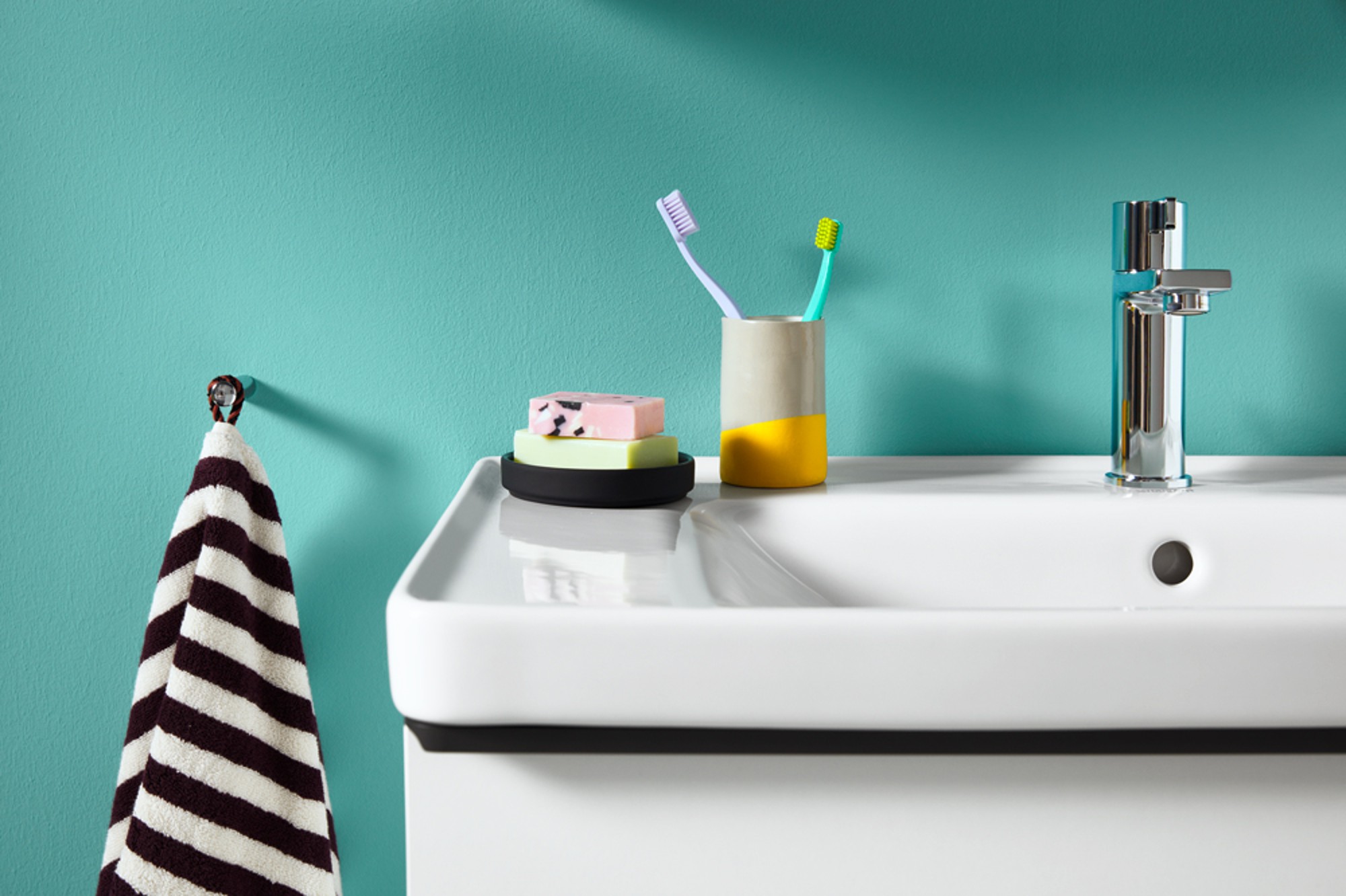
Duravit D-Neo sink in front of a turquoise wall

Wet room paint

Many hardware stores and specialist shops offer their own damp-proof paints, which can be based on different compositions. For example, there are paints with fungicides and biocides that naturally prevent mold growth. These paints are often the simplest solution for painting a bathroom. However, if you have allergies, you should pay attention to the exact composition of the paints.

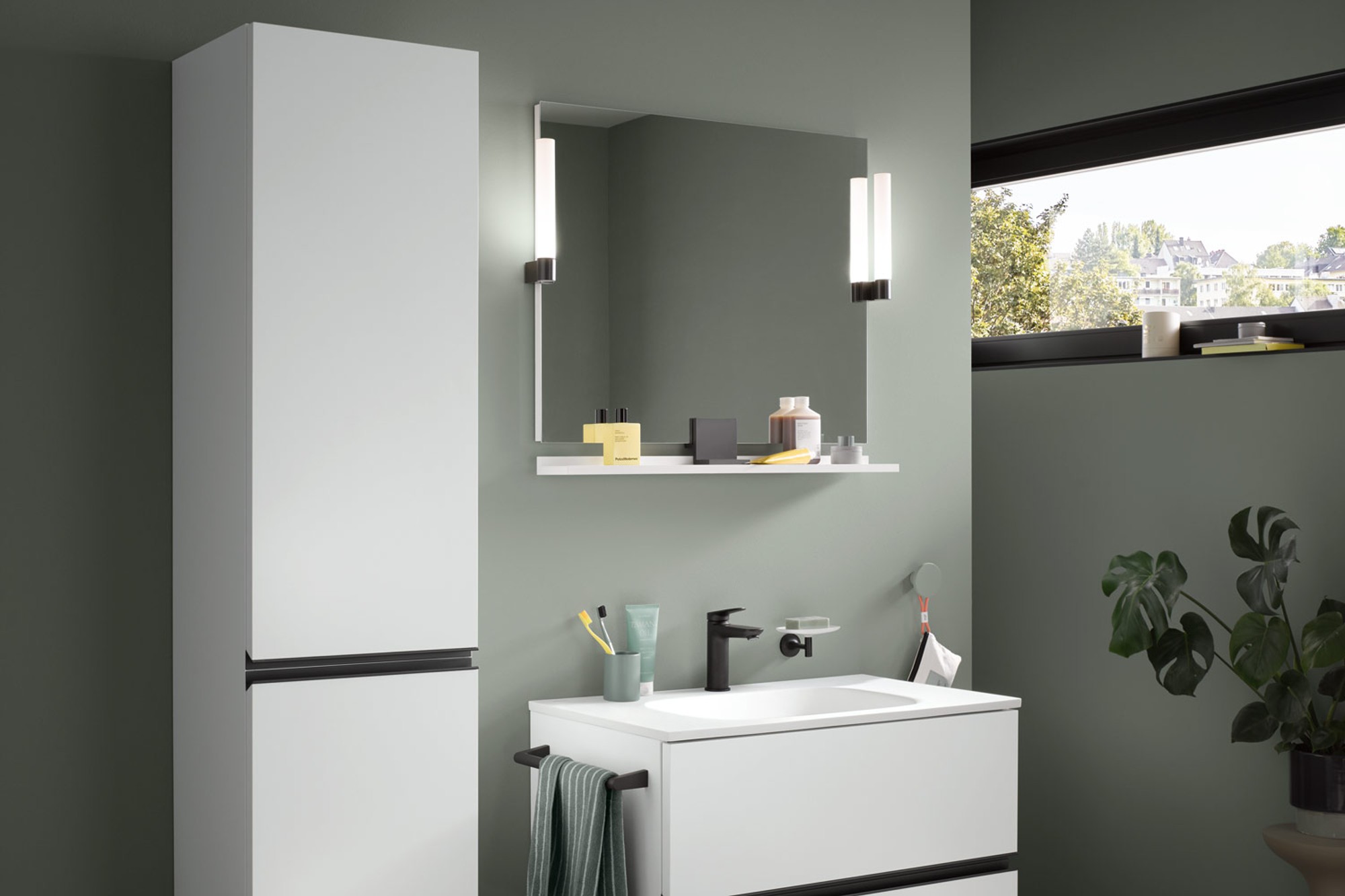
Duravit bathroom furniture and sinks from the Sivida series against an olive-colored wall

Lime paint

Natural lime paint, on the other hand, is more allergy-friendly. In bathrooms, as with silicate paint, the high pH value is the decisive advantage. However, it does not adhere particularly well to many surfaces and is also not scrub-resistant. Several coats are usually required here.

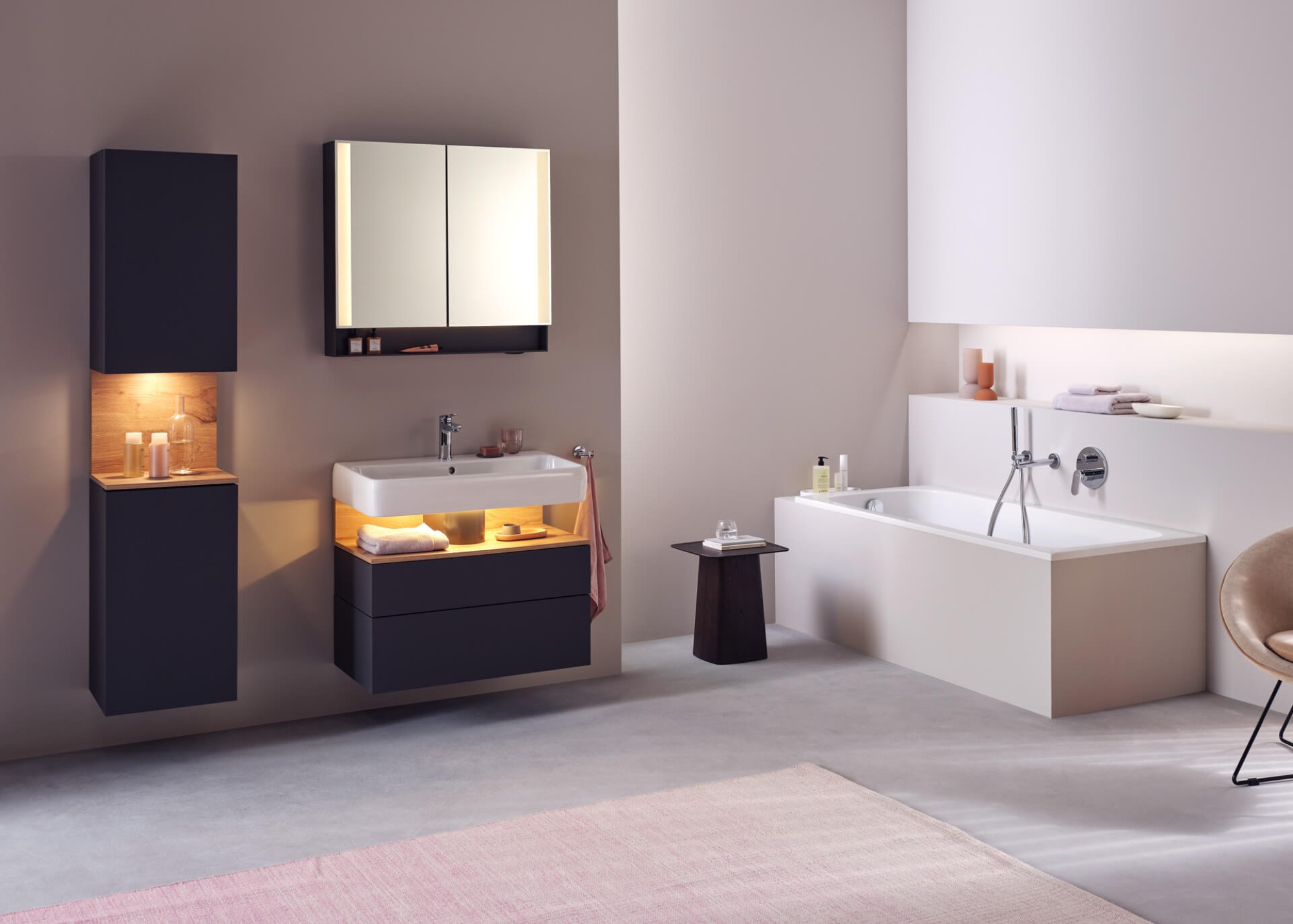
Studio F. A. Porsche Collection complete bathroom

Latex paint

Its washability and durability are good reasons to paint your bathroom with latex paint. However, it is not 100% waterproof, which means it is not completely resistant to mold and requires good and regular ventilation. From an aesthetic point of view, it is also important to note the slight sheen that even matte versions of this paint often have.

Painting the bathroom: The right preparation

Even if you have found the right color, you should not start painting the bathroom straight away. Depending on the condition of the walls, certain preparations may need to be made:

Bento Starck Box bathtub with enough space for two people

Clear out and cover ceramics

Anything in the bathroom that is not permanently fixed should first be removed from the room. Before painting the bathroom, it is also advisable to unscrew the faucets and sockets, provided this does not cause too much trouble. Everything that remains in the bathroom, such as the sink, toilet, and bathtub, should be thoroughly covered, for example with painter's fleece. Door handles, baseboards, and, of course, floor and wall tiles should also be covered.

Detailed view of the faucet on a Duravit D-Neo bathtub

Clean walls (and ceiling)

To ensure that the bathroom is clean when painting, the areas to be painted must be cleaned. Any paint or glue residue should be removed, as should any mold, of course. Any uneven areas on the wall can now be filled in. The wall should then be cleaned of dust or sand as necessary. In addition, the surface should be clean and free of grease. If necessary, the walls must first be wiped with a damp cloth and then dried before the bathroom can be painted.

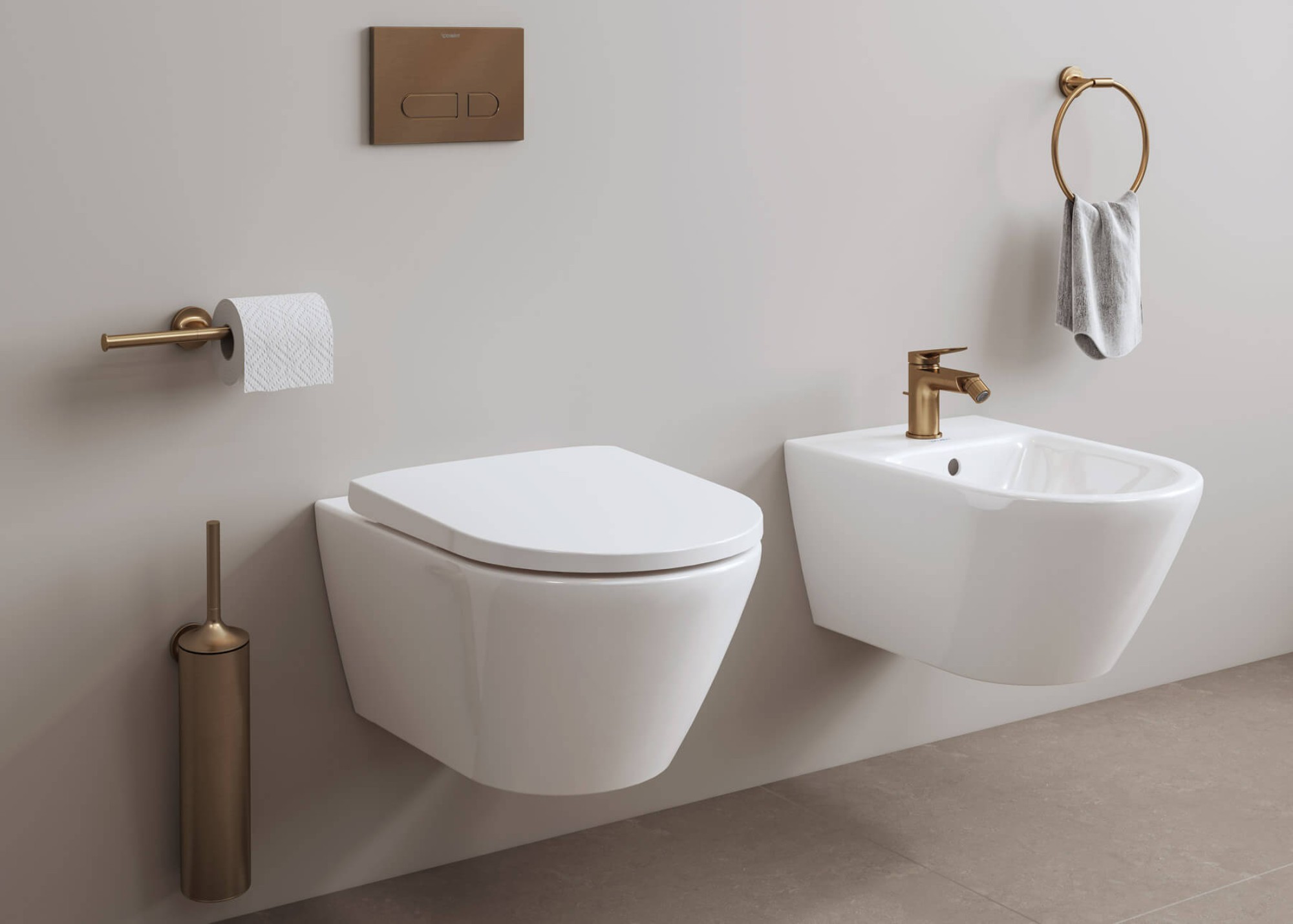
Wall-mounted bidet with Wave bidet faucet in gold

Primer

Before actually painting the bathroom, it is advisable to apply a primer. This helps the paint to adhere to the wall as desired and also prevents mold growth. The primer must then dry before the bathroom can be painted.

Painting the bathroom: How should you proceed?

When actually painting the bathroom, it is best to proceed in a specific order. We recommend the following sequence:

Bathroom with white ceiling and fixtures from the Duravit Luv series

1. Paint the bathroom ceiling (if desired)
If you want to paint the ceiling in the bathroom, this should be the first thing you do. Just like with the walls later on, two coats are usually recommended to ensure that the paint looks evenly applied at the end. In the first step, the paint is often diluted, but this is not necessarily the case in the second step – follow the manufacturer's instructions on the paint itself. After the first coat, the paint usually needs to dry for a few hours before the second coat can be applied. The respective coats should then be applied without a break to ensure an even color. It is best to always start with the edges and then move on to painting the inner part of the bathroom ceiling.

Bright complete bathroom with SensoWash® D-Neo shower toilet

2. Paint the frieze

A frieze is a small section below the ceiling – in a room with normal ceiling height, around 3 cm usually works very well. If you choose different colors for the ceiling and walls when painting your bathroom, you should keep the frieze the same color as the ceiling. This creates a more open look and makes the room appear larger. It can also make any sloping ceilings appear straighter to the eye. Once the frieze has been painted, it can also be masked off with painter's tape. This saves you the hassle of painting the corners with wall paint and ensures a clean edge between the ceiling and the wall.

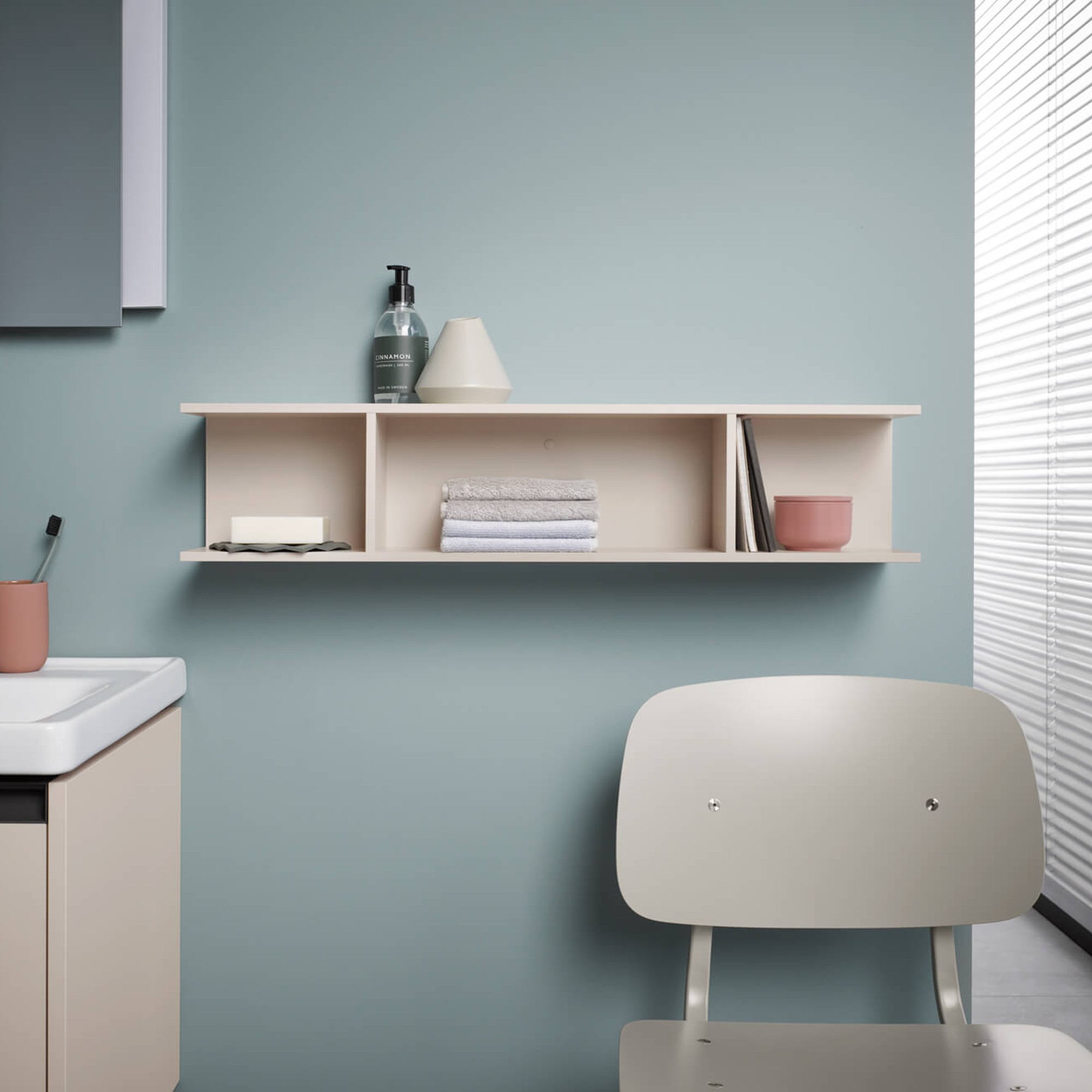
Horizontal Ketho.2 shelf unit on a wall

3. Paint bathroom walls

The next step is to paint the bathroom walls. Here, too, start with the corners and edges, preferably with a brush. You can then work on larger areas with wider rollers so that everything can dry at the same time. Work your way into the room starting from the window side, one wall at a time. As with the ceiling, two coats are usually necessary. Here, too, paint one area completely in one go.

Modern bathroom with Duravit No.1 bathroom vanity unit

4. Allow to dry

Once you have finished painting the bathroom, allow a few hours for it to dry, then remove any covers, etc., and reattach any faucets or similar items that you removed. Please note, however, that moisture-resistant paints often take a little longer to dry completely. It is best to wait one to two days before using the bathroom as normal again.

You might also be interested in: