Accessible bathroom
Accessible for seniors, wheelchair users, and people with disabilities
Key points at a glance:
- Accessibility requires careful planning: key factors include sufficient space for movement, low-threshold transitions, slip-resistant finishes, and a layout that ensures all important elements are easily accessible.
- Check funding options early on: Depending on the specific measures and your personal situation, grants or financial assistance may be available for accessible bathroom renovations—but only under certain conditions.
- Taking individual needs into account: Whether designed for seniors, wheelchair users, or people with disabilities—an accessible bathroom should always be tailored to personal needs and specific requirements for assistance.
How do I plan an accessible bathroom?
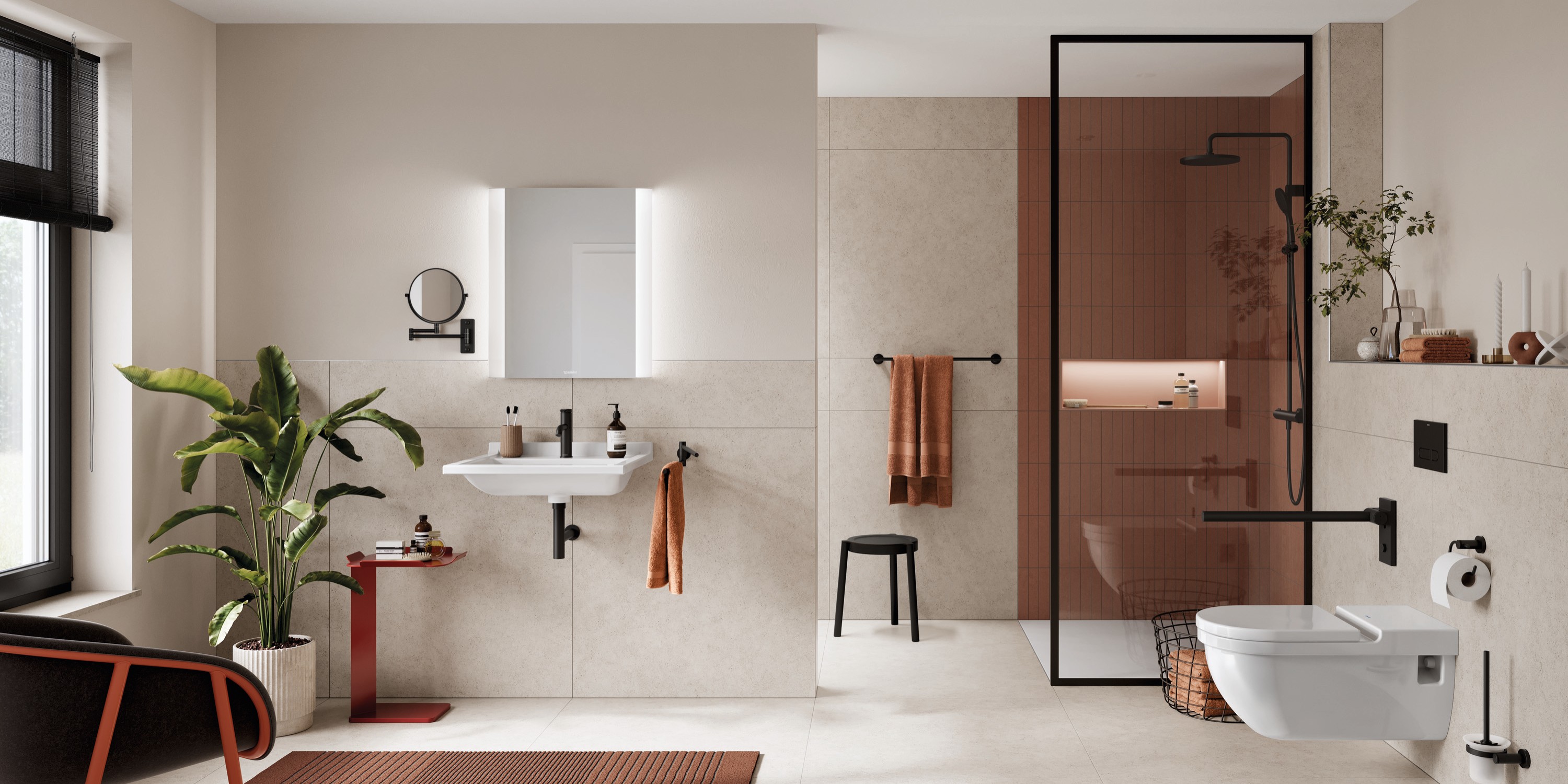
As is always the case when planning a bathroom, you should first consider what requirements the space needs to meet for you when designing an accessible bathroom. The first question to ask at this point is whether the accessible bathroom is being designed in accordance with established standards. This is a requirement for many government grants, as well as for bathrooms in restaurants, hotels, and public spaces that are to be designated as accessible.
If the bathroom is being designed solely to meet personal needs, this is of course not necessary. For example, there are age-appropriate bathrooms that are not necessarily accessible to people with disabilities, but may be perfectly adequate for one’s own needs.
General recommendations for an accessible bathroom
Although individual needs and preferences call for different solutions, there are always many common elements when designing an accessible bathroom. The following points offer general guidance and often make the bathroom more comfortable to use even for people who do not require an accessible bathroom.
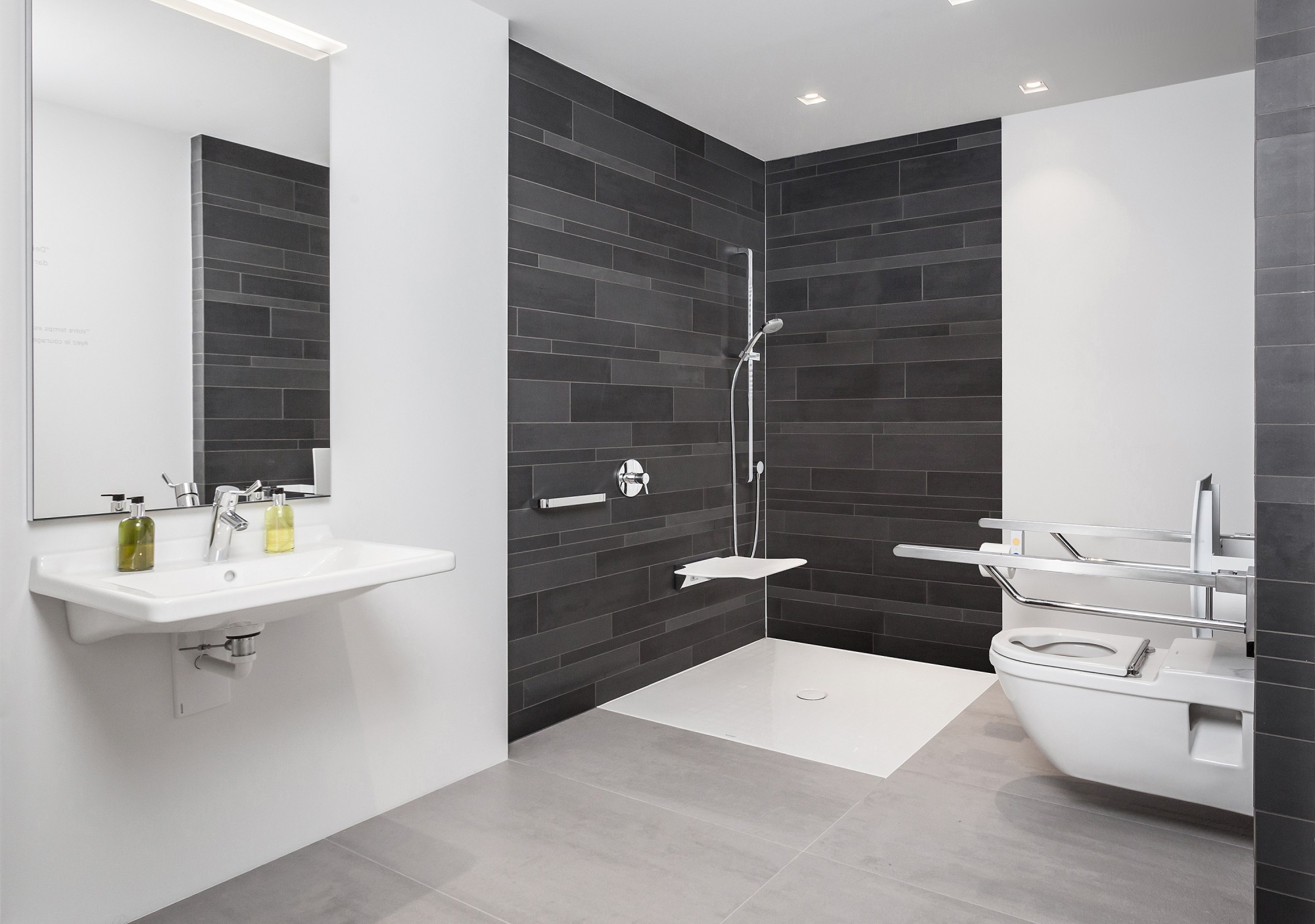
Plenty of space
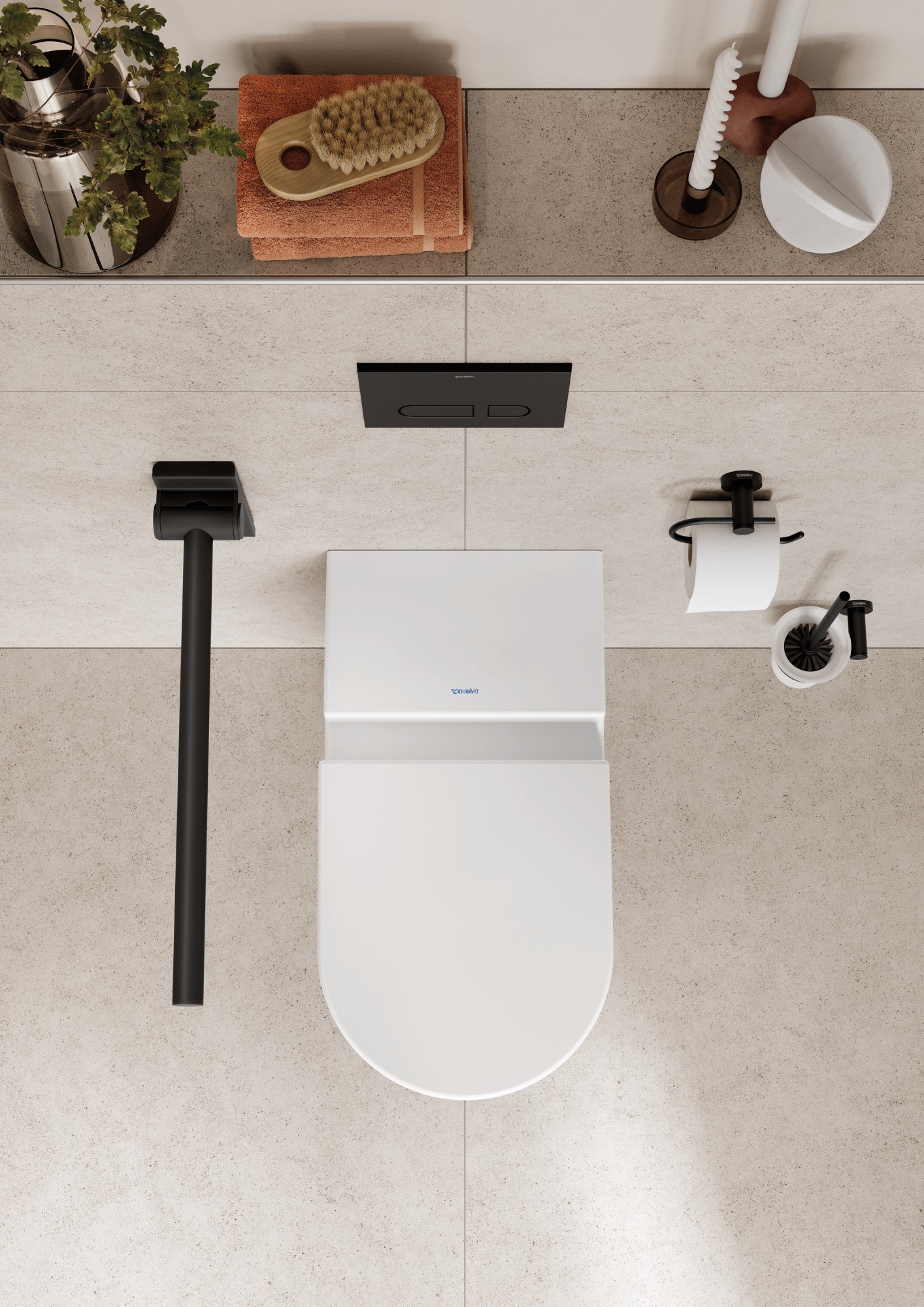
Handrails
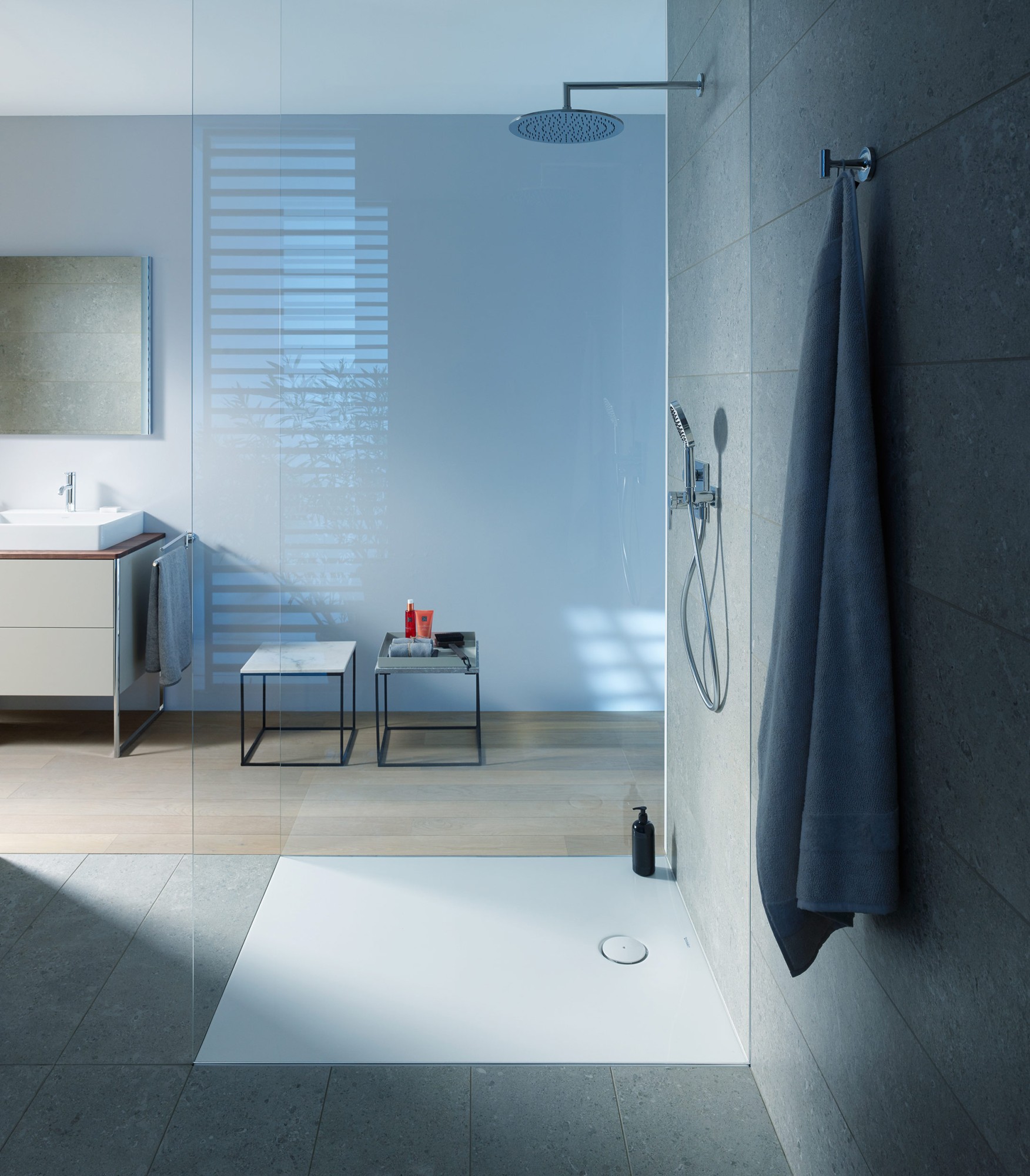
Remove or lower thresholds and steps

Non-slip flooring
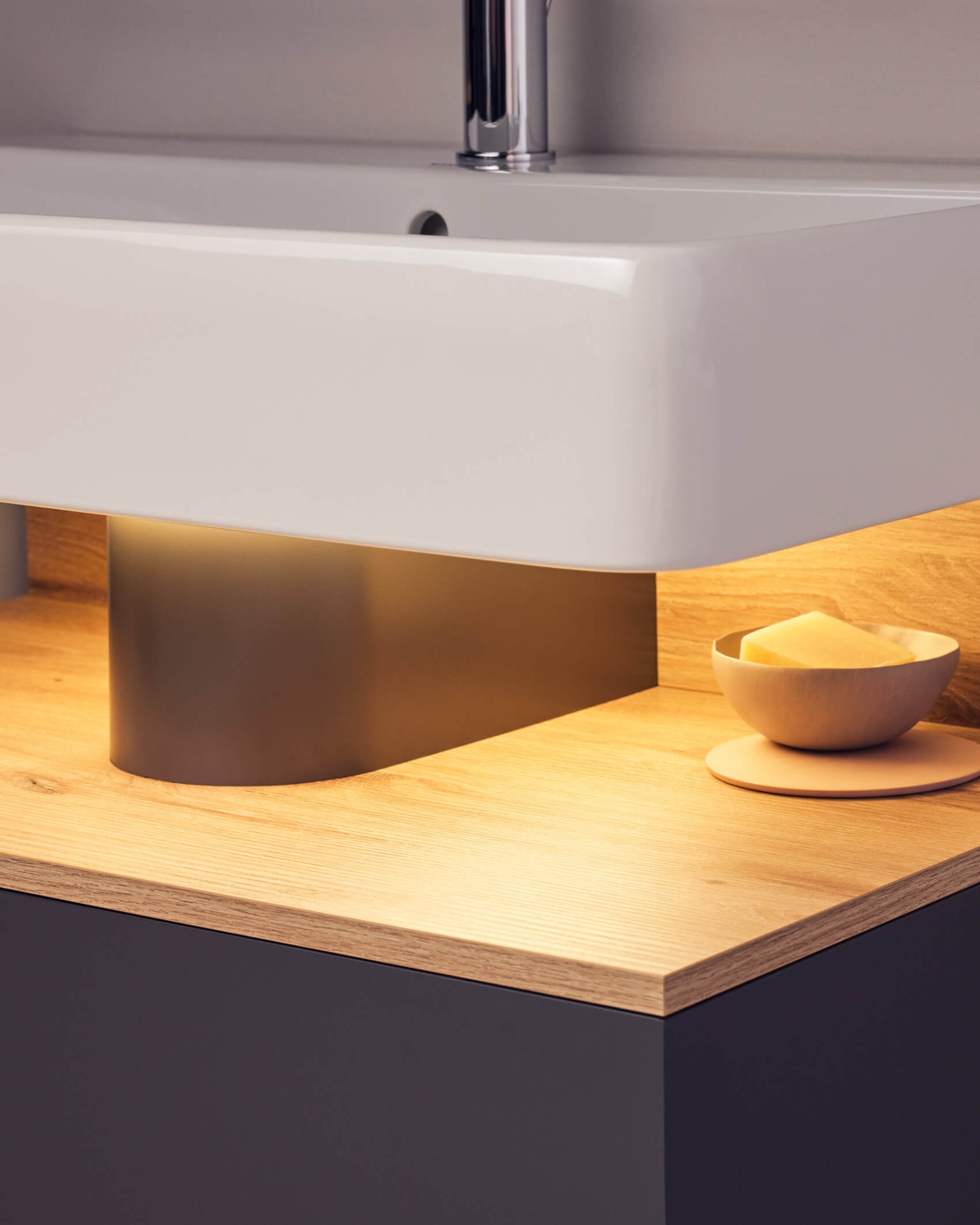
Bright lighting

Everything within reach

Matching doors & doorways
Bathroom designed for seniors, wheelchair users, and people with disabilities
When people talk about an accessible bathroom, they may mean different things. It therefore often makes sense to distinguish between a bathroom designed for seniors or older adults, a wheelchair-accessible bathroom, and a bathroom designed for people with disabilities. Of course, there is some overlap, and these requirements are by no means mutually exclusive.
Senior-friendly bathroom
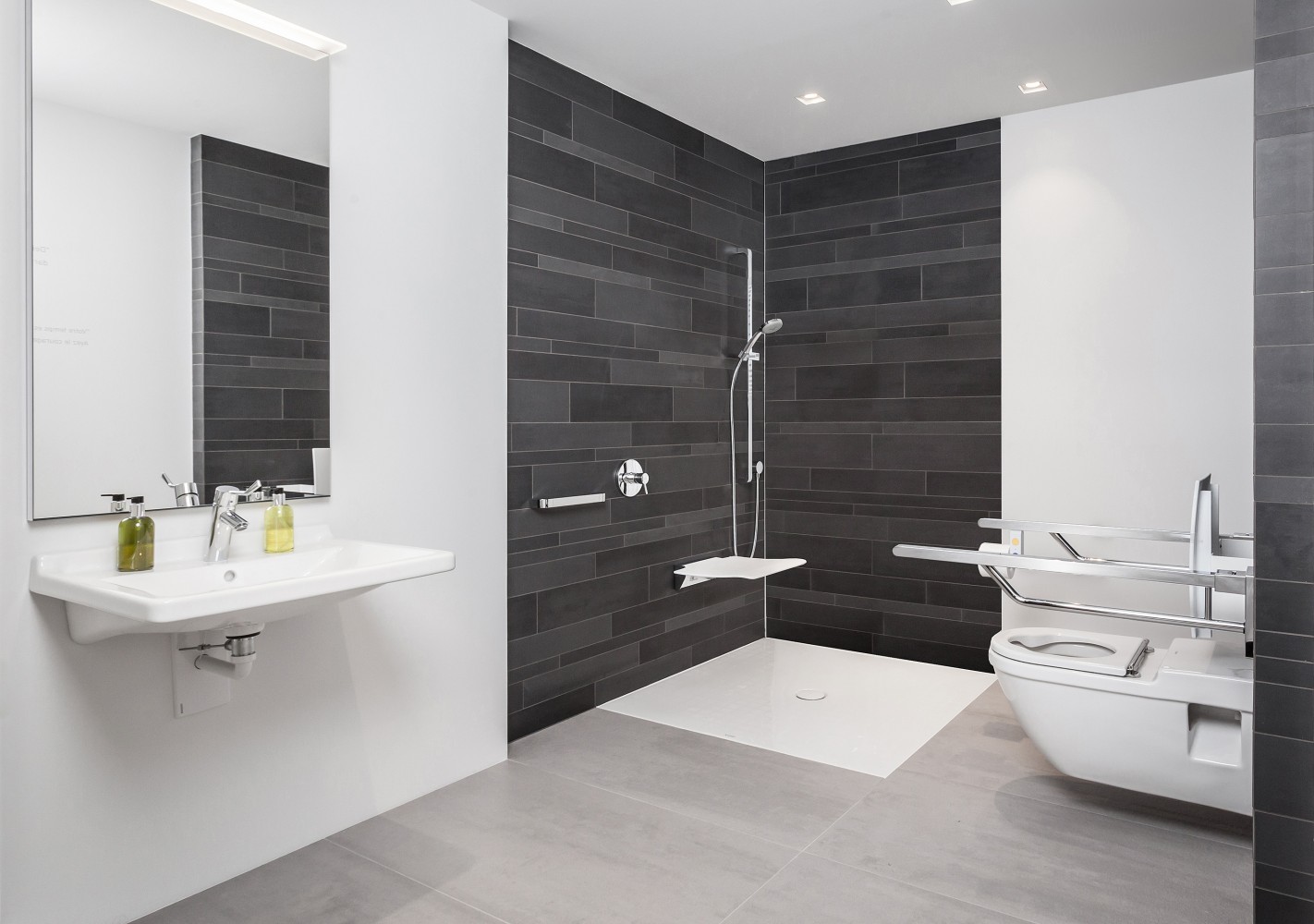
Many of the general tips are already the best way to create an age-appropriate bathroom. This is because the primary goal here is to prevent falls and ensure that assistance is available for standing up and sitting down. A walk-in shower with a floor-level entry is also helpful. If a walker is used, a wheelchair-accessible vanity is useful.
Wheelchair-accessible bathroom
If the accessible bathroom is to be wheelchair-friendly, a wheelchair-accessible vanity is a must. Of course, there also needs to be enough space throughout the bathroom. There are also special bath lifts available for the bathtub.
Accessible bathroom
A bathroom designed for people with disabilities can, of course, have different requirements. For a blind person, for example, easy navigation and minimizing obstacles such as thresholds are crucial, while others have different needs. In such cases, a call button may be particularly useful; depending on the circumstances, it can also be beneficial for a bathroom designed for seniors or wheelchair users.

Accessible showers

Accessible sink area
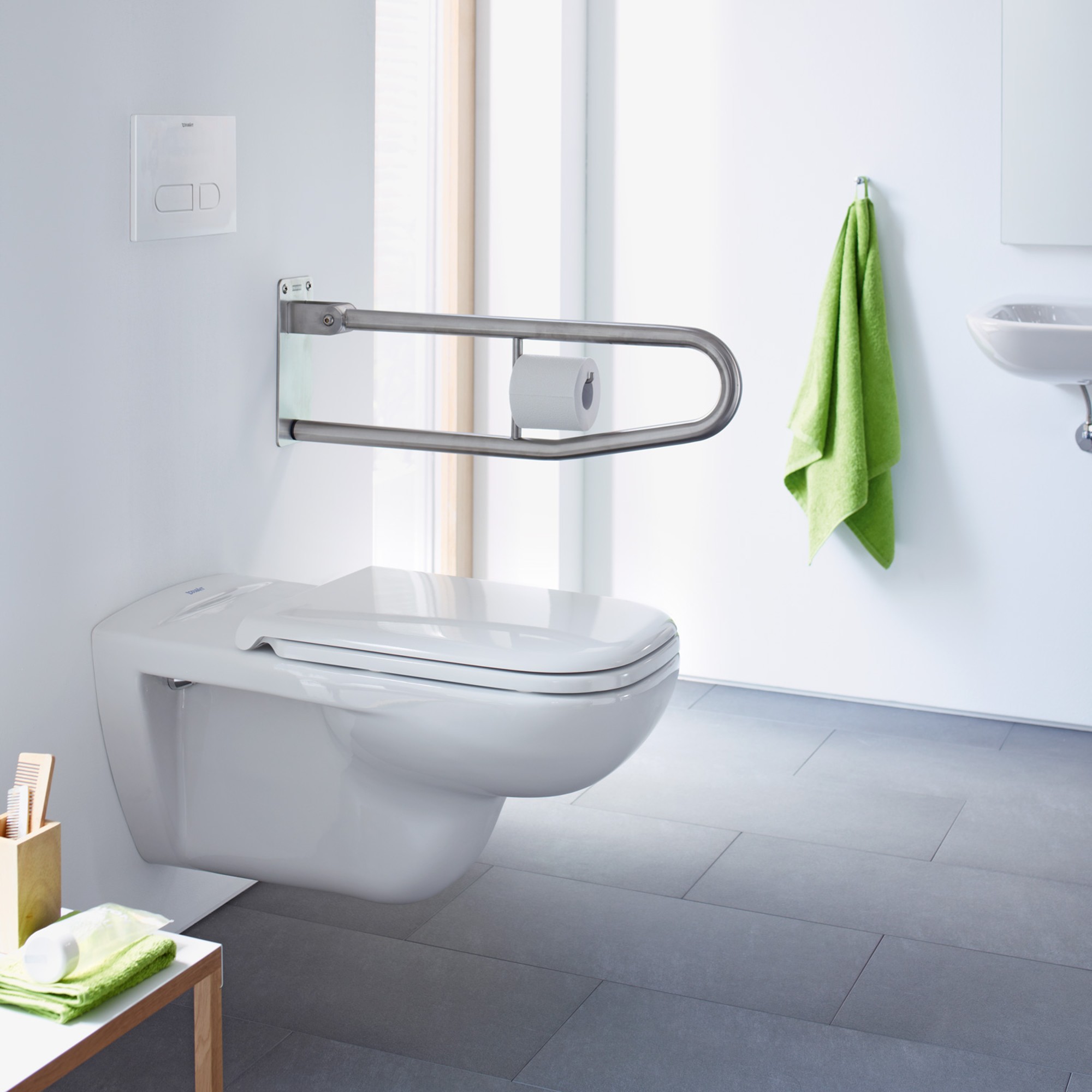
Accessible toilet
Tip
Shower toilets are particularly recommended for accessible bathrooms. Their ease of use helps prevent potential difficulties—such as those caused by limited mobility—when using the toilet, and their high standard of hygiene is an added bonus. Everyone else who uses the accessible bathroom also benefits from this high standard of hygiene as well as the overall comfort of a shower toilet.
Legal framework and funding for accessible bathrooms
Although the term "accessible bathroom" is often used in different ways in everyday language, it is clearly defined in legal terms. Accordingly, there are often specific requirements to be met when it comes to financing options.
Legal information
To ensure a bathroom is accessible from a legal standpoint, the dimensions specified in the DIN 18040-2 standard must be followed. This standard is available in a standard version and with the suffix "R," which includes additional requirements for a wheelchair-accessible bathroom. If you are designing a bathroom for the hospitality industry (for example, for a restaurant or a vacation rental), the bathroom must comply with this standard in order to be designated as accessible.
Financial
To qualify for government assistance, a barrier-free bathroom in accordance with DIN 18040-2 is usually required. However, there are also various options for subsidies, e.g., from health insurance providers, if you renovate your bathroom to make it accessible for people with disabilities. Health insurance may also provide (partial) funding for individual steps, such as converting a shower to be accessible for seniors at ground level, or for purchases like shower chairs. In most cases, however, a doctor’s prescription is required for this.