Nature in the bathroom
Spot on: natural materials in the bathroom
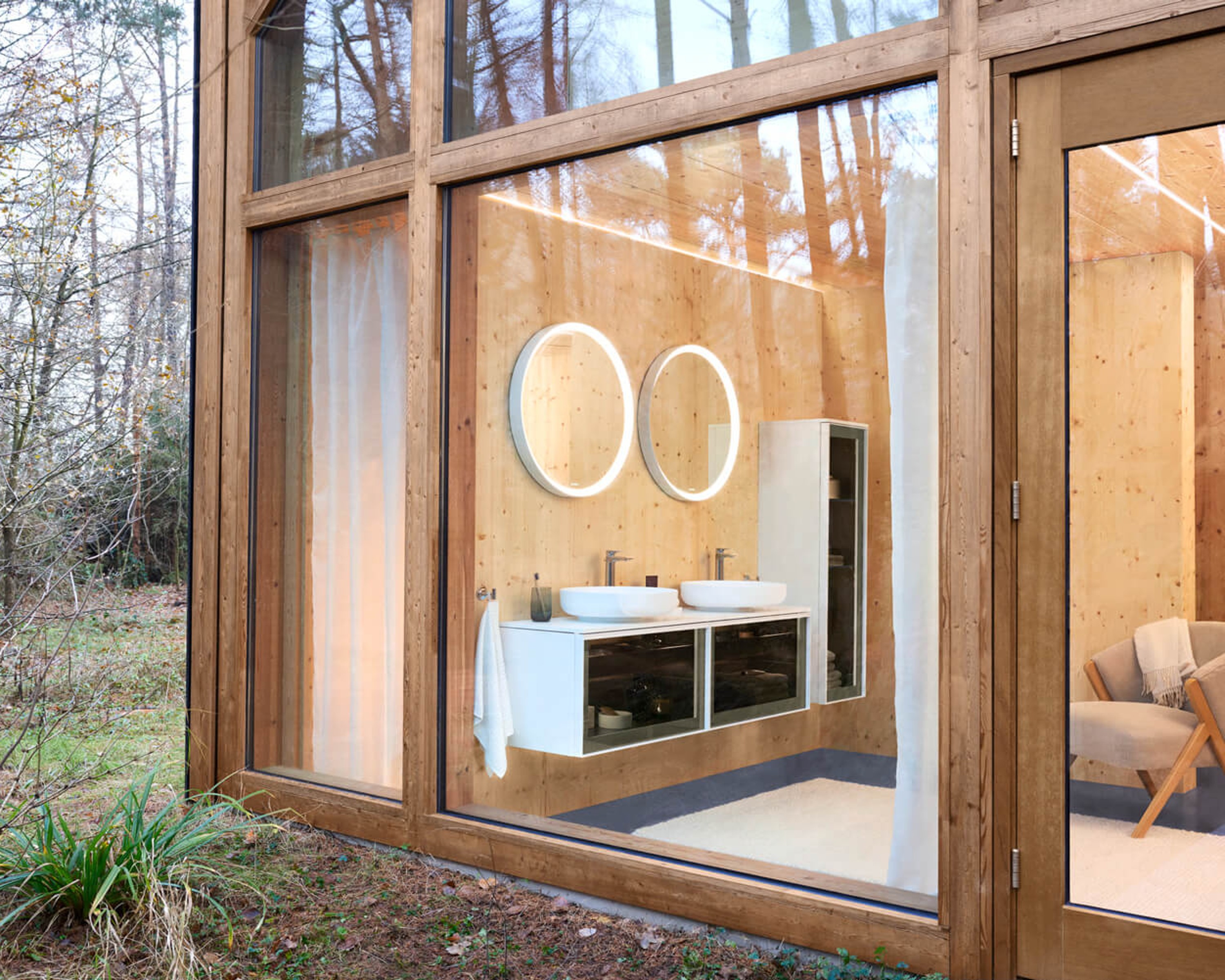
The bathroom has long since ceased to be a functional wet room where you quickly take care of your personal hygiene. In a contemporary bathroom, you can find peace and quiet and take care of your general well-being. Natural materials are ideal for this purpose, bringing a piece of nature into your own four walls.
Comfort through wood
Wood in particular has become the favorite material in architecture and interior design—including in bathrooms. This breaks with the habit of using mainly easy-to-clean, smooth finishes such as tiles and laminate. Wood in the bathroom creates a cozy atmosphere: it is warm, feels pleasant to the touch, and contributes to a healthy indoor climate. Bathroom furniture, wall coverings, window frames, and even floor coverings are increasingly made from this natural material.
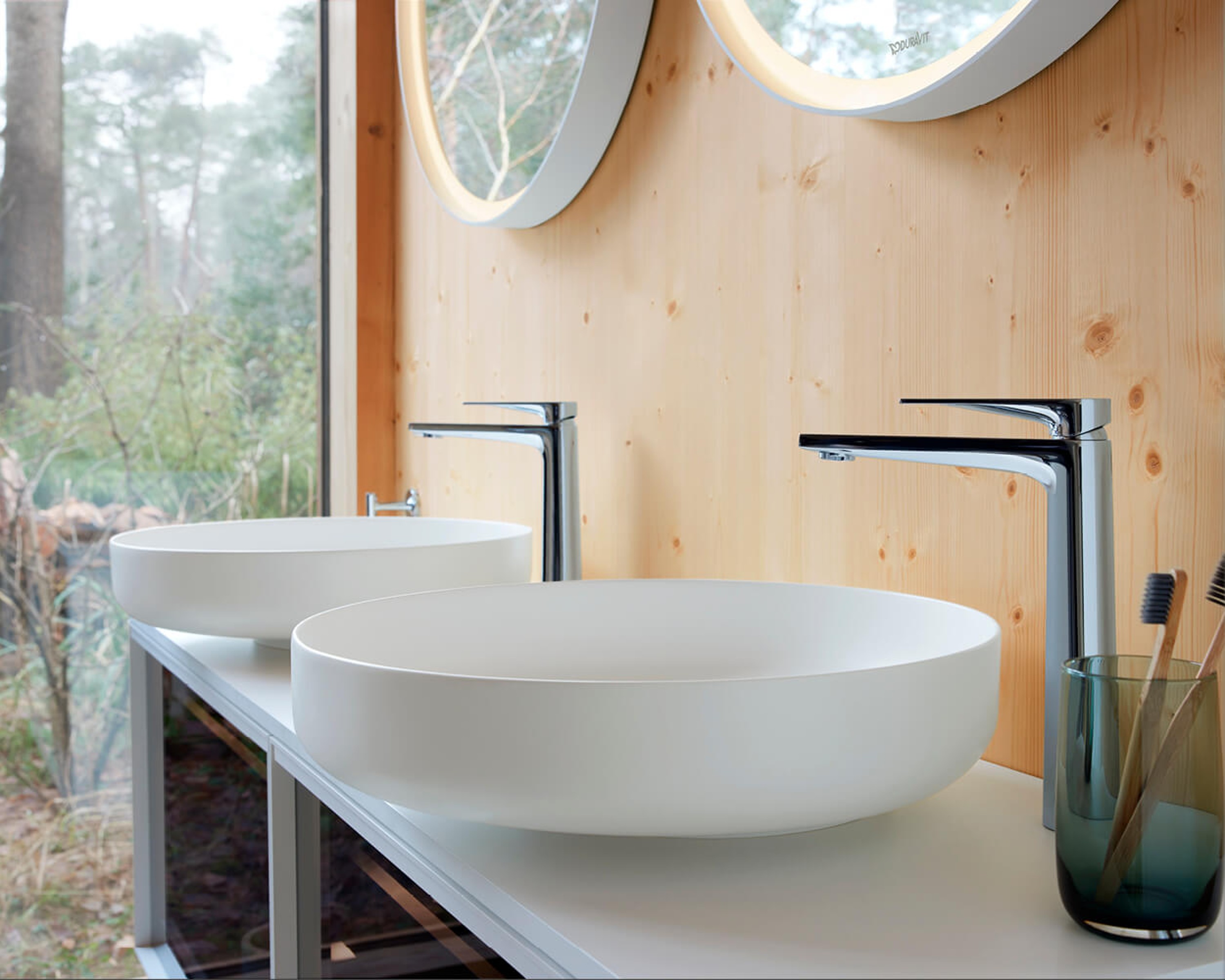
This is because wood is now available in a wide variety of types and with many different surface treatments. Of course, wood absorbs moisture because it is hygroscopic. However, there are types of wood that tolerate moisture better than others, such as maple, birch, beech, spruce, pine, mahogany, and teak. Bamboo in particular is ideal for bathrooms because it adapts well to humidity. Thermowood is also an interesting option, as it is treated with steam and heat, which compacts it and means it absorbs very little water. Wood can be used in bathrooms as flooring, wall paneling, or bathroom furniture. Duravit offers its high-quality bathroom furniture in a wide variety of real wood veneers and also in solid wood versions, such as walnut or oak.
Natural stone in vogue
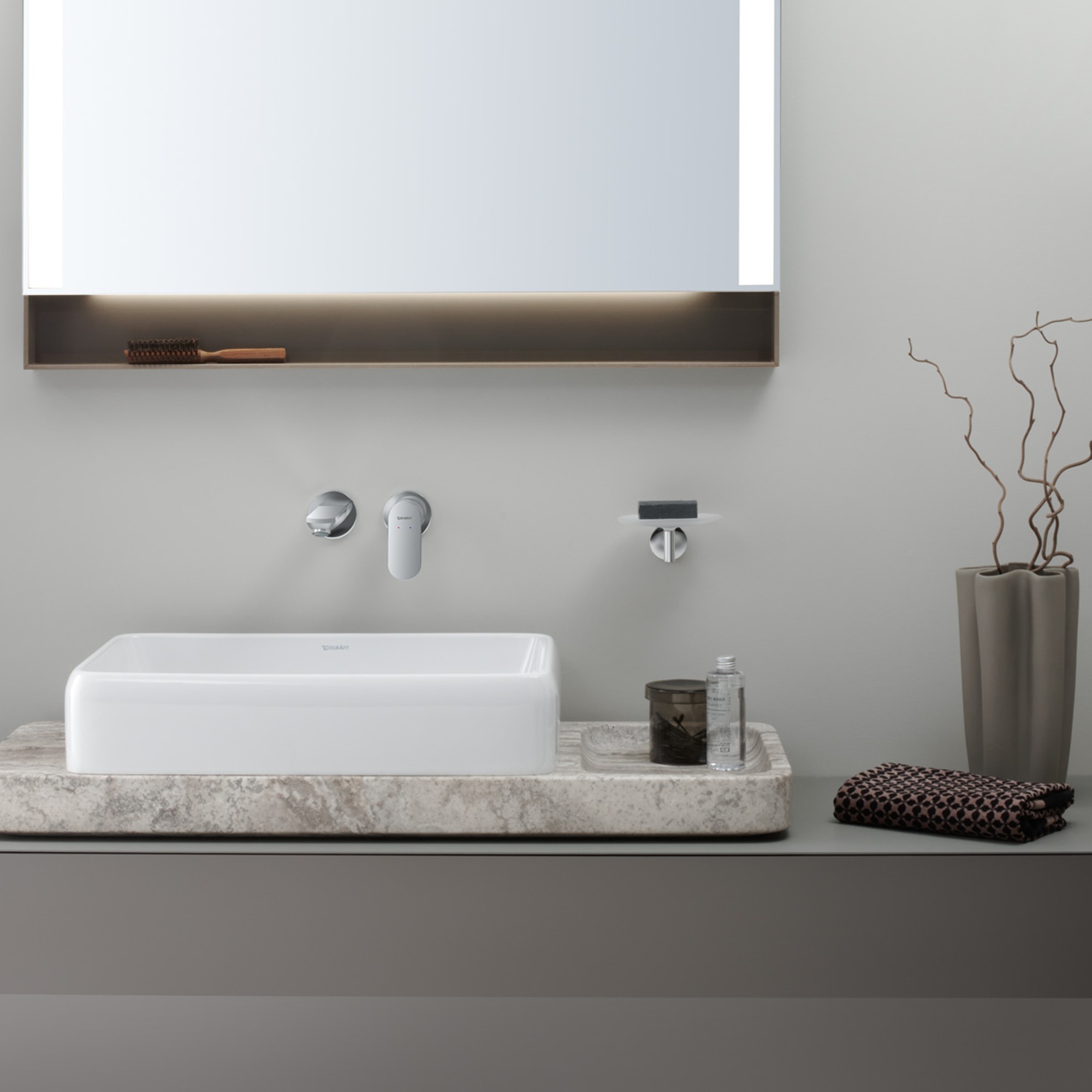
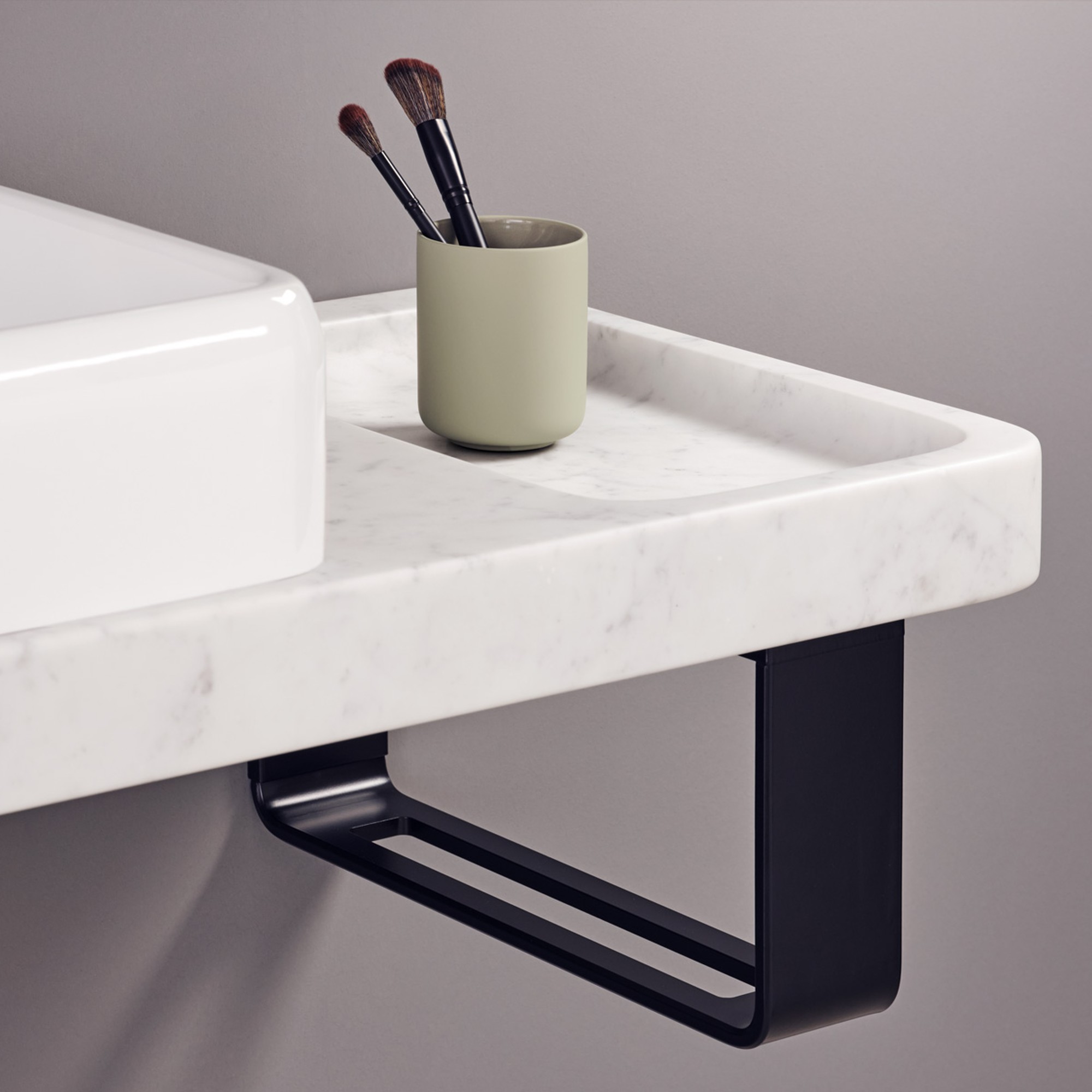
Natural stone is en vogue in upscale interior design and, thanks to its material properties, can be integrated perfectly into bathrooms. When natural stone and water come together, they create an authentic and sensual atmosphere. Anthracite-colored slate suits an urban and clean interior design style. Travertine, which disappeared from the scene for a long time and is now making a comeback, exudes a certain earthiness with its brown, porous finish. For particularly sophisticated requirements, marble is a good choice, with its typical grain creating fine structures. As a rule, the stones are robust and durable. Impregnation protects them from dirt. Natural stones can be used as tiles, wall or tub cladding, and also as flooring. A console made of natural stone on which a Countertop sink is placed is also an eye-catcher – as in the Qatego series, designed by Studio F.A. Porsche for Duravit. The three different versions made of Carrara marble, travertine, and Lavica stone are unique pieces, which is reflected in their colors and patterns. They thus provide the Qatego sinks with a particularly elegant and unique stage.
Climate-regulating clay plaster
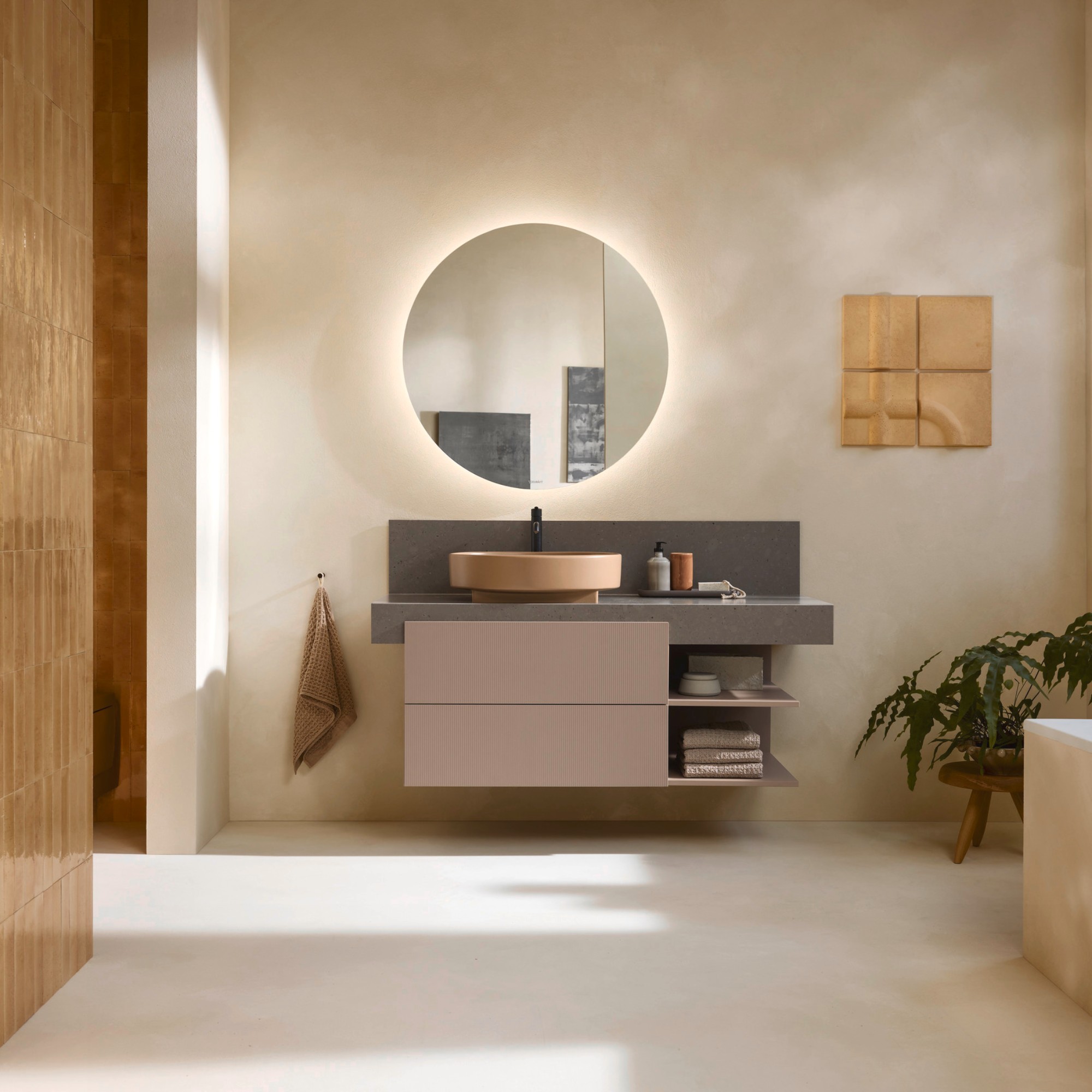
The longing for nature is also evident when it comes to clay. This traditional building material is used in architecture as an alternative to concrete—even for modern buildings. Not only is it extremely sustainable, as it is available everywhere, but it also creates a special indoor climate. If you don't want to build an entire house out of clay, you can consider applying clay plaster to the interior walls. Clay is particularly suitable for damp rooms, as its diffusion openness allows it to absorb water vapor and slowly release it back into the room air. The effect is visible: mirrors and windows do not fog up.
A striking example of clay in the bathroom is the Explora Valle Sagrado hotel designed by Chilean architect José Cruz Valle, located high in the mountains between Machu Picchu and Cusco in Peru. As in the rest of the hotel, the bathrooms are enclosed by clay walls, complemented by numerous wooden details and vanities from Duravit's DuraStyle series.

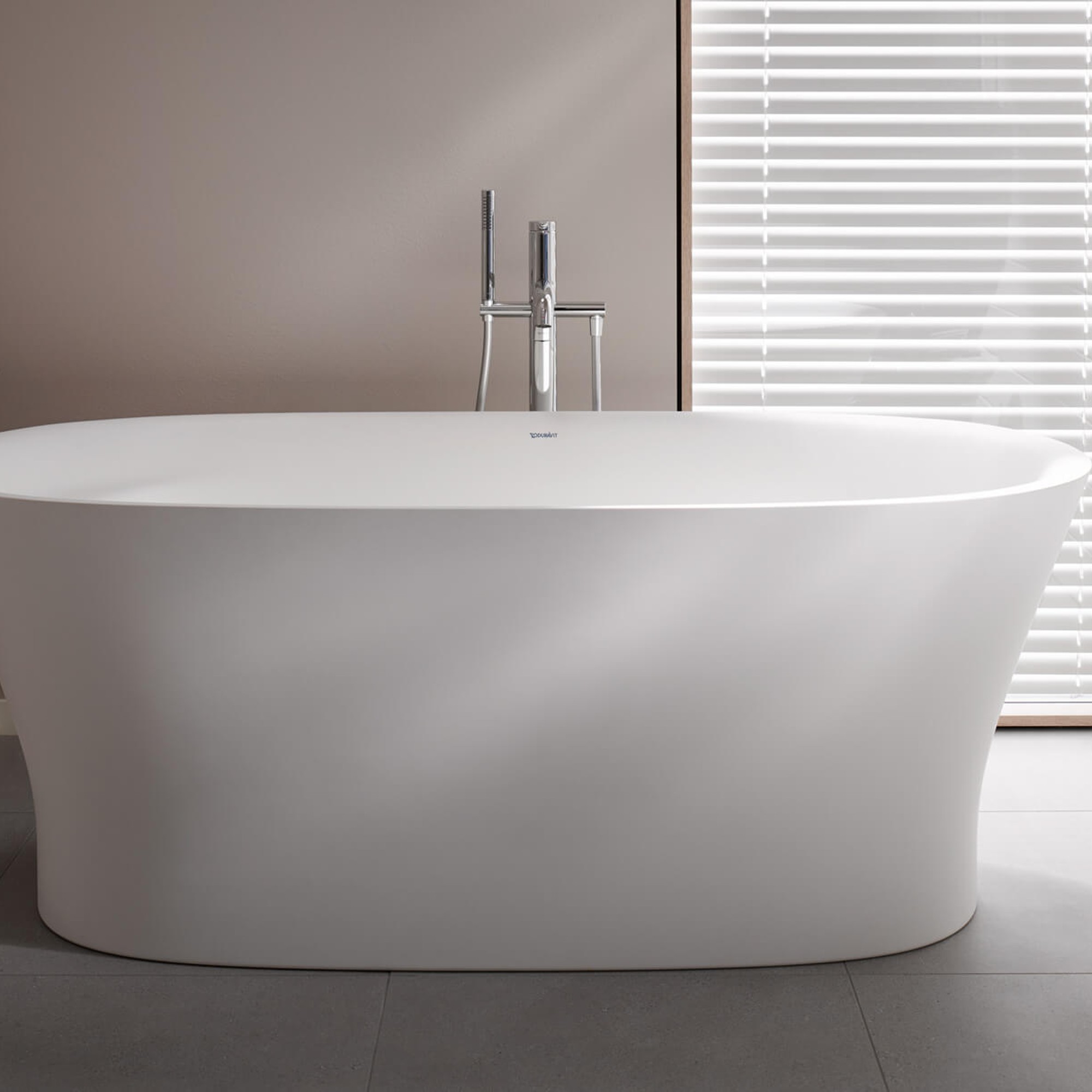
When you think of natural materials in the bathroom, ceramics may not be the first thing that comes to mind. But ceramics are natural too, as they are made purely from the raw materials clay, kaolin, quartz, and feldspar. The material is extremely robust and resistant to heat, moisture, light, and dirt, making it particularly durable and therefore sustainable. Ceramics are Duravit's main material and are mainly used for products such as sinks, toilets, and urinals.
-Mark-Seelen_1_1.jpg)