
Climate-neutral firing process in Canada
A milestone in ceramics production
Technological innovation
World's first roller kiln with fully electric firing technology
Sustainability
99.6% renewable energy from hydropower reduces CO2 emissions by up to 9,000 tons annually
Strategic expansion
Local for local manufacture with short supply chains
Investment & Growth
35,000 m² of space, up to 450,000 ceramic parts per year
Long-term corporate strategy
Timeless design and the highest quality for durable products
Partnership & Support
Supported by Economic Development Canada & Investissement Québec
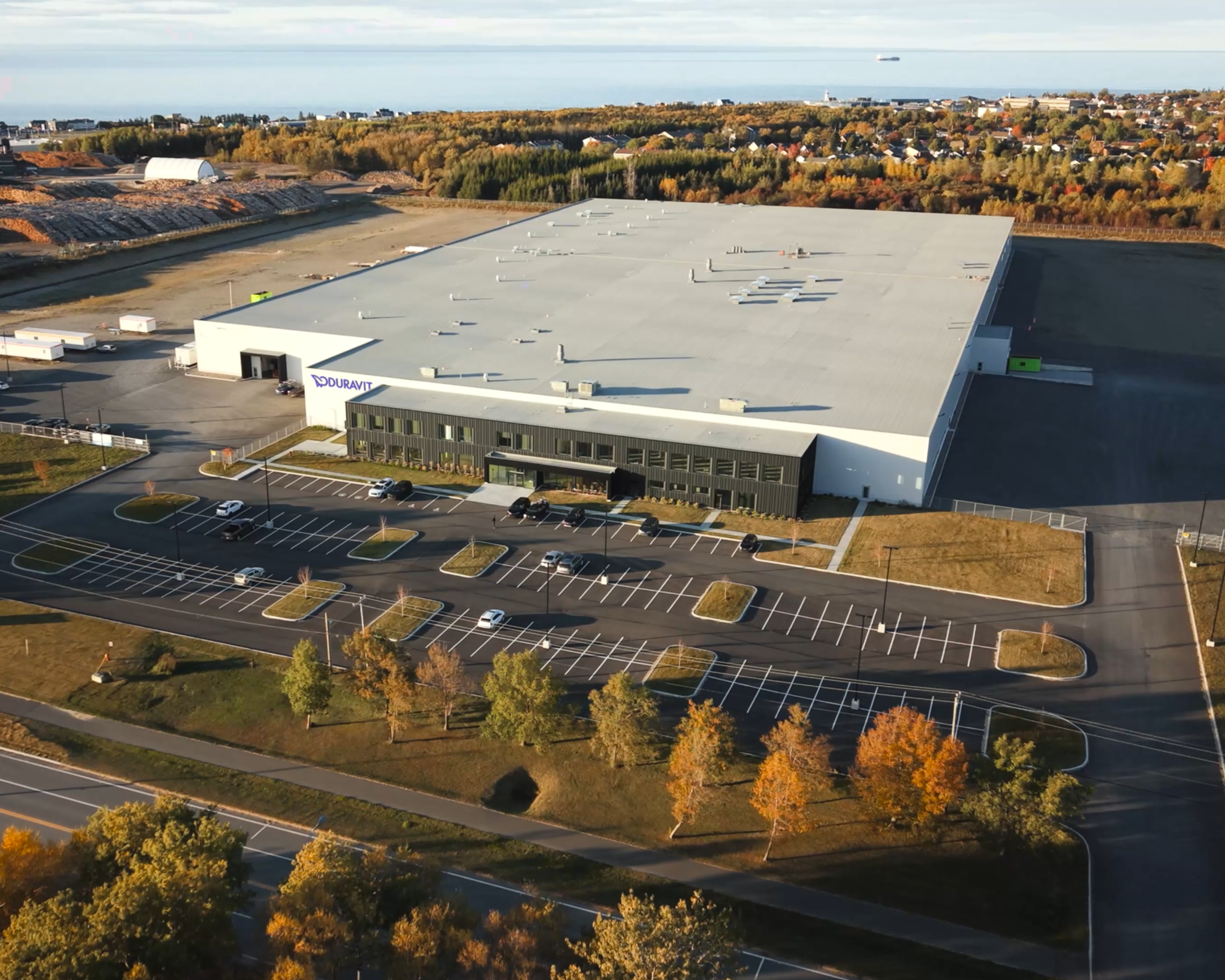
Investment in quality and growth
With an investment volume of over C$90 million, the factory forms a strategic cornerstone of the company’s global growth strategy. Manufacturing is already underway with 102 employees at present, a number that is set to rise to 240 by 2027. The factory will then produce up to 450,000 ceramic parts – washbasins and toilets – per year for the North American market. Manufacturing is carried out consistently in line with Duravit’s high quality standards which are renowned around the world for their durability and precision.
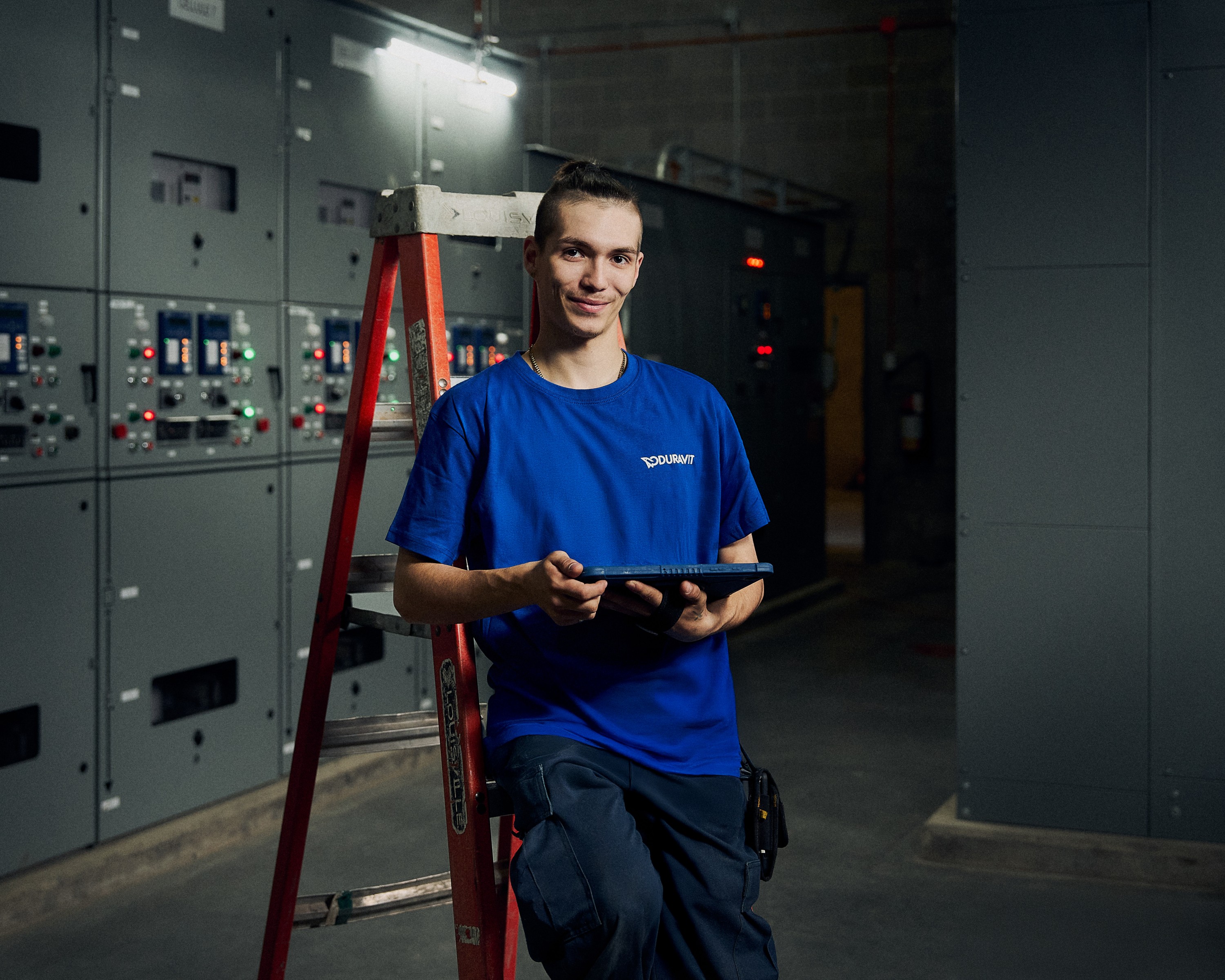
Technology for accountability in future
Ceramic production requires high temperatures and is traditionally energy-intensive. The energy Duravit uses in Matane comes almost entirely from renewable sources: hydroelectric power from Québec replaces fossil fuels and almost 99.6% of the power used in the electrical roller kilns comes is generated renewably. Along with the shorter transport routes, this reduces carbon emissions by some 9,000 tons annually.
Partnership with government and region
Economic Development Canada supported the construction with a repayable contribution of C$19 million, while Investissement Québec provided a loan of C$11 million via the ESSOR program. Similarly, the Matane regional municipality was a key player in the successful launch thanks to its warm welcome and close collaboration.
“The Matane region has shown us a huge amount of trust and support right from the start. For us, this factory is more than a manufacturing site: it’s a collaborative project with the local community. We want to create long-term jobs that offer prospects and actively contribute to economic development,” said Christian Gilles, head of production for Duravit Canada.
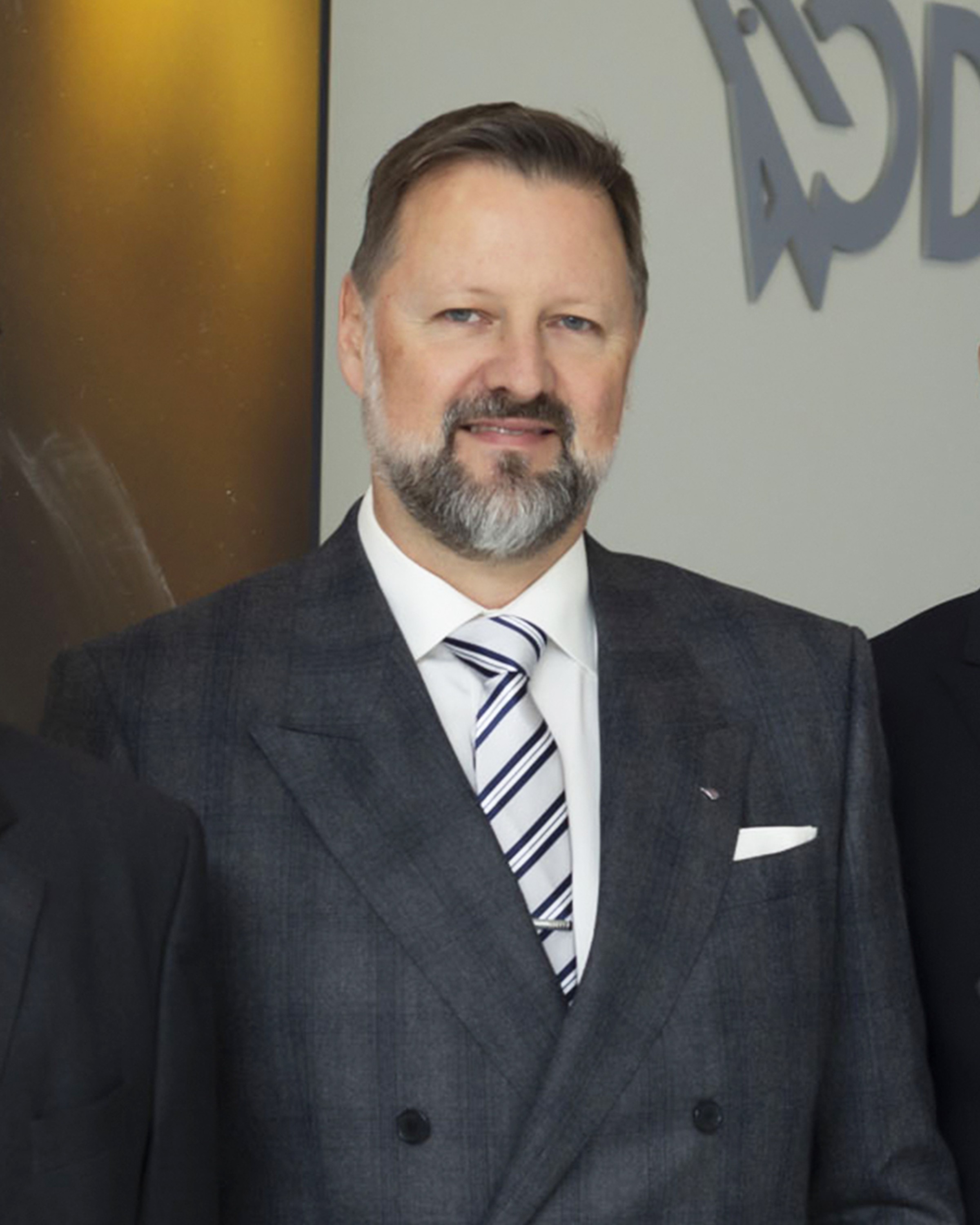
What had its origins in the Black Forest once upon a time is now a company with global operations, deep roots, and a broad vision. For us tradition doesn’t mean standing still, rather it’s the foundation upon which we build innovation – never forgetting our obligation to act with accountability and foresight.
Key facts
FAQ
What are the advantages of the new production facility in Canada?
The new location in Matane fits seamlessly into Duravit's local-for-local strategy. The location directly on the St. Lawrence River facilitates logistics and the transport of goods. This enables us to significantly reduce logistics costs and save additional energy from fossil sources. Compared to importing our products from Europe, we therefore expect a reduction of our CO2 emissions in the North American market of 1,500 tons per year.
What characterizes the new ceramic roller kiln? Can you explain the production method – electric kilns that run on green electricity – in more detail?
The innovative centerpiece of the durable production facility in Matane is the electric ceramic roller kiln. It enables a climate-neutral firing process. It is operated exclusively with electricity generated from renewable sources in the hydroelectric power plants of the Canadian energy supplier Hydro-Québec.
In the future, up to 600 ceramic toilets per day can be fired at a temperature of approx. 1260 °C over a length of approx. 100 meters. The entire firing process takes about 16 hours. The circulating air is recovered and used to heat drying chambers and the foundry.
The technology of the first electric roller kiln for the ceramics industry comes from the world's leading industrial furnace manufacturer Riedhammer in Nürnberg, a subsidiary of the multinational SACMI Group headquartered in Imola, Italy.
Duravit has set itself the goal of becoming carbon neutral by 2045. How is the Matane site contributing to this?
The new site is equipped with the world's first electric ceramic roller kiln. Instead of using natural gas, as is common in the energy-intensive ceramic production, the innovative production line works exclusively with sustainably generated electricity from hydropower. This, combined with reduced transport efforts, results in CO₂ savings of up to 9,000 tons per year.