
"We don't focus on short-term trends."
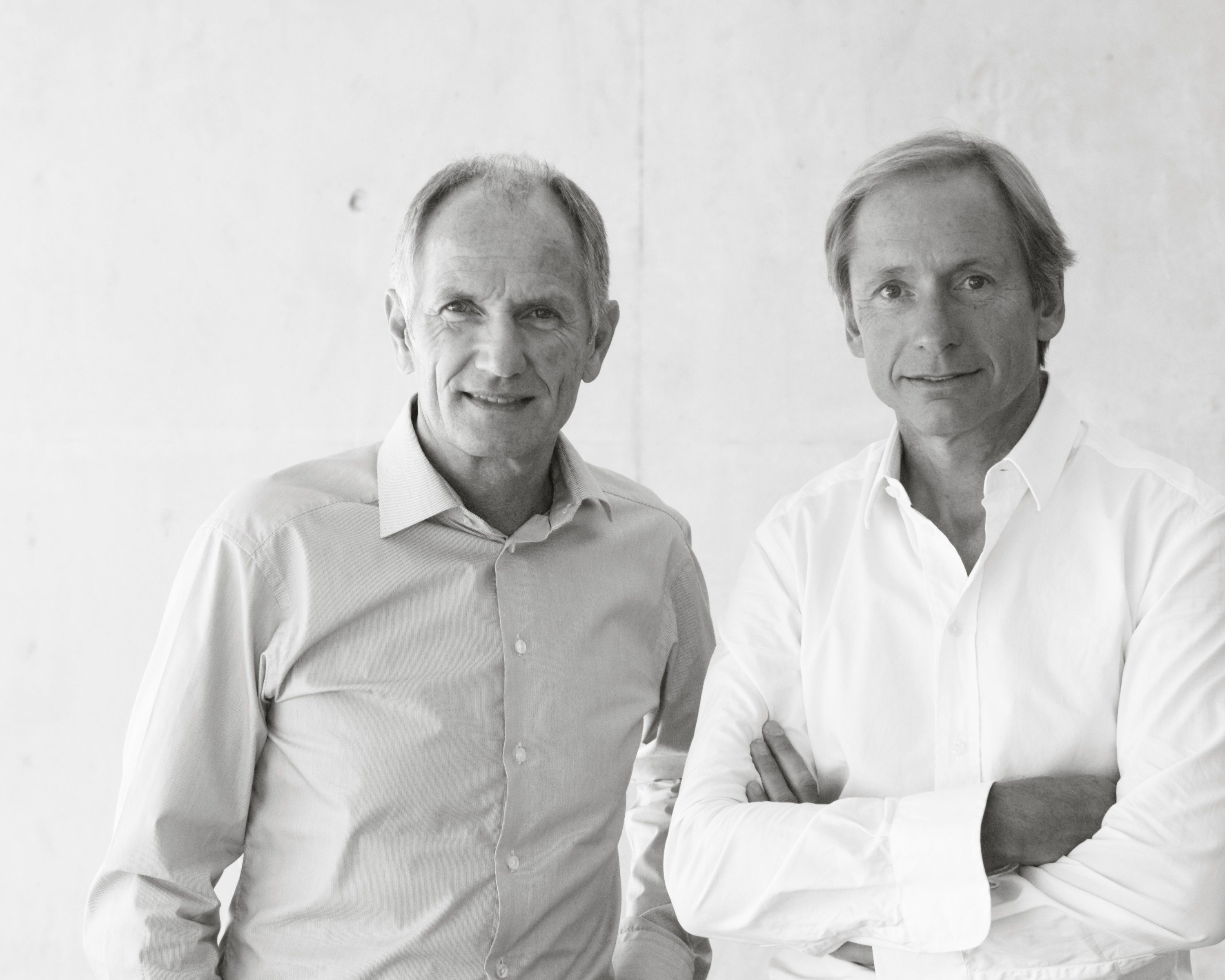
Phoenix design
When Andreas Haug, born in 1946 in Heidenheim, and Tom Schönherr, born in 1954 in Stuttgart, met through Hartmut Esslinger at Frog Design in 1982, they hit it off immediately without saying much. So the founding of their own design label Phoenix Design in 1987 was simply a logical consequence. Both completed their studies at the State Academy of Art and Design in Stuttgart. From the outset, they designed a wide range of products for the sanitary industry, including Hansgrohe, Laufen, Axor and Duravit. But their ideas have also been well received in other industries and by other brands. Many unique pieces have been created for Loewe, Zeiss, Huawei and Lamy. The Stuttgart design studio always relies on modern, clean lines and makes everyday objects desirable by adding an extra touch of emotion.
From the very beginning, a dedicated academy has been promoting young talent. The Phoenix Design Academy sees itself as a design laboratory for creative experiments and concepts in which – free of specifications and customer orders – non-commercial projects take shape and completely new aspects of design are developed. In this free space, experienced designers and young talents come together to shape the world of tomorrow.
Andreas Haug and Tom Schönherr have already been honored with the Lucky Strike Award for their lifetime achievement and with the German Design Award "Persönlichkeit" (Personality) for their complete works.
Interview
How do you approach the challenge of designing a new product?
It all starts with the analytical phase, then comes the creative process and finally the intuitive form-finding. The core of the work always lies in observing and sensing needs. In the end, a product never looks like the initial sketch. When designing, you have the opportunity to try out different variants and sometimes be surprised. This is very important for the creative process. For example, we like to work with polystyrene; the abstraction process is very high with such models. This approach helps us to find the big picture. Some things are not possible on paper.
Does good design require a willingness to take risks?
We experiment a lot. But our goal is always to create design classics: products that will last for years and reflect people's needs. Everything around us is getting more and more hectic and people are looking for a place of retreat, for security and peace. We try to keep that in mind when we design our products. I think it's unreasonable to follow short-term trends. I think we have a great responsibility as designers in many respects. Among other things, in terms of material resources, production utilization and solutions for our customers' serial product lines. Likewise, for the visual design approaches, which ultimately have to be presented in a wide variety of architectural scenarios – and should inspire many users. Short-term trends are not our focus.
Phoenix and Duravit have been working together successfully since 1993. How do you feel about the collaboration?
High standards and high quality as well as long-lasting product design have always been at the forefront of product development for Duravit. The developments are highly complex and always take place in teamwork; no one can do it alone. Particularly in the sanitary sector, great importance is attached to detail. Duravit always demands the highest standards of quality and function, which makes the collaboration very challenging. However, critical suggestions are welcome, because only in this way can high-quality and innovative bathroom solutions and products be created that meet the expectations of design juries and become bestsellers.
awards
- 1994Award for top design quality – Caro
- 1995Design Plus Award – Caro
- 2009red dot award – PuraVida
- 2009Good Design Award – PuraVida
- 2010Grand Designs Award – PuraVida
- 2010iF Product Design Award – PuraVida
- 2010Gold for Good Design (DDC) – PuraVida
- 2015iF Gold Product Design Award – P3 Comforts
- 2016iF Product Design Award – P3 Comforts