
Christian Werner

"We don't get up on stages as designers"
Christian Werner, born in 1959 in Berlin, has been a resident of Hanseatic city since 1984. He studied industrial design in Berlin and Hamburg from 1980-1986 and also learned from Dieter Rams – one of the German design icons of the post-war period. From 1987 to 1992 he worked as a designer, and since 1992 he has been self-employed, working for brands such as Rolf Benz, Ligne Roset, Garpa, Tobias Grau, as well as an interior designer for JAB Anstoetz, Bielefelder Werkstätten, Carpet Concept and many more. He is considered one of Germany's best interior designers and has won the red dot award and other prizes several times over for his designs. He specializes primarily in furniture design, exhibition stands and interior design for shops, agencies and restaurants.
Image: ©Stephan Abry
Interview
Interview with Christian Werner
Mr. Werner, what is the special appeal of not taking care of the living room for a change, but the bathroom?
Just a few years ago, people spent as little time as possible in the bathroom. Many viewed personal hygiene as a necessary function that should be completed as quickly and unnoticed as possible.
Today, we no longer have such an inhibited relationship. Personal hygiene has become the focus of pleasure, and with it the bathroom as a room for it. It has become a sensual and recreational space in which we enjoy spending time. Accordingly, the demands on this room are also increasing. So it's time to really think about the furniture in the bathroom.
Has your engagement with the bathroom changed your understanding of design?
It changed me in that it strengthened my belief in design. That's because my self-image is not that of an artist. Art is purposeless, whereas design serves a purpose – and beauty is a purpose, too, by the way.
As a designer, you are an integral part of an entire production chain; so you also have to take things like material limitations and manufacturing techniques into account. The positive thing about working for industry is that you are not working in a vacuum. Methodically, industry provides you with a kind of wind tunnel in which you, as a designer, think your way around. I find this positive and exciting for my work.
And yet you still hold on to something artistic: you still draw everything by hand?
That's right. I just love holding the pencil and filing until it starts to tingle in my stomach. That's when I realize that everything is suddenly falling into place – something new is emerging. It's an energetic process, not a rational, planned one.
I take pride in consistently coming up with a sophisticated design style that resonates so well that many people say, 'yes, I can relate to that'.
We don't stand on stages as designers, we don't fill concert halls, but our applause is the number of pieces. I sometimes also call it the 'mass appeal'. Industrial reproduction is part of our design.
Does universal validity also work worldwide?
In my opinion, there is indeed something like a global 'agreement' on what is beautiful today, thanks to the globally networked media. Nevertheless, we appreciate it when there is still a local 'touch' to it. But more interesting than the global axis seems to me the temporary axis.
Our job as designers is to find innovations that interpret our times. In my opinion, giving people a way of expressing their time is one of the main attractions of our work. This also implies that as a designer you should not be afraid of being consumerist.
How can 'consumer' be combined with 'design'?
Well, there are also many people who are afraid of too much design. Ultimately, they want a normal product at a reasonable price. This implies that as a designer you also have to be able to row back. We need products that don't constantly scream 'hello here' so that these people can identify with them. At some point, however, things become too simple, and at some point you can't remove anything without falling back on disdainful engineering.
As a designer, you are then caught between the poles of banality and subtlety. The trick is to boil down forms but to condense them in their subtlety and bring them to the point that they captivate with finely balanced proportions and unobtrusive beauty, like Ketho or L-Cube.
How long can you identify with a product at all?
Since the bathroom has an average lifespan of 15 to 20 years, the durability of the formal statement is even more important here than in the other rooms.
It is comparatively easy for them to replace a sofa or a container. But if the eye has become accustomed to a bathroom interior, it is not so quickly done. The effort is much greater.
Christian Werner and Duravit

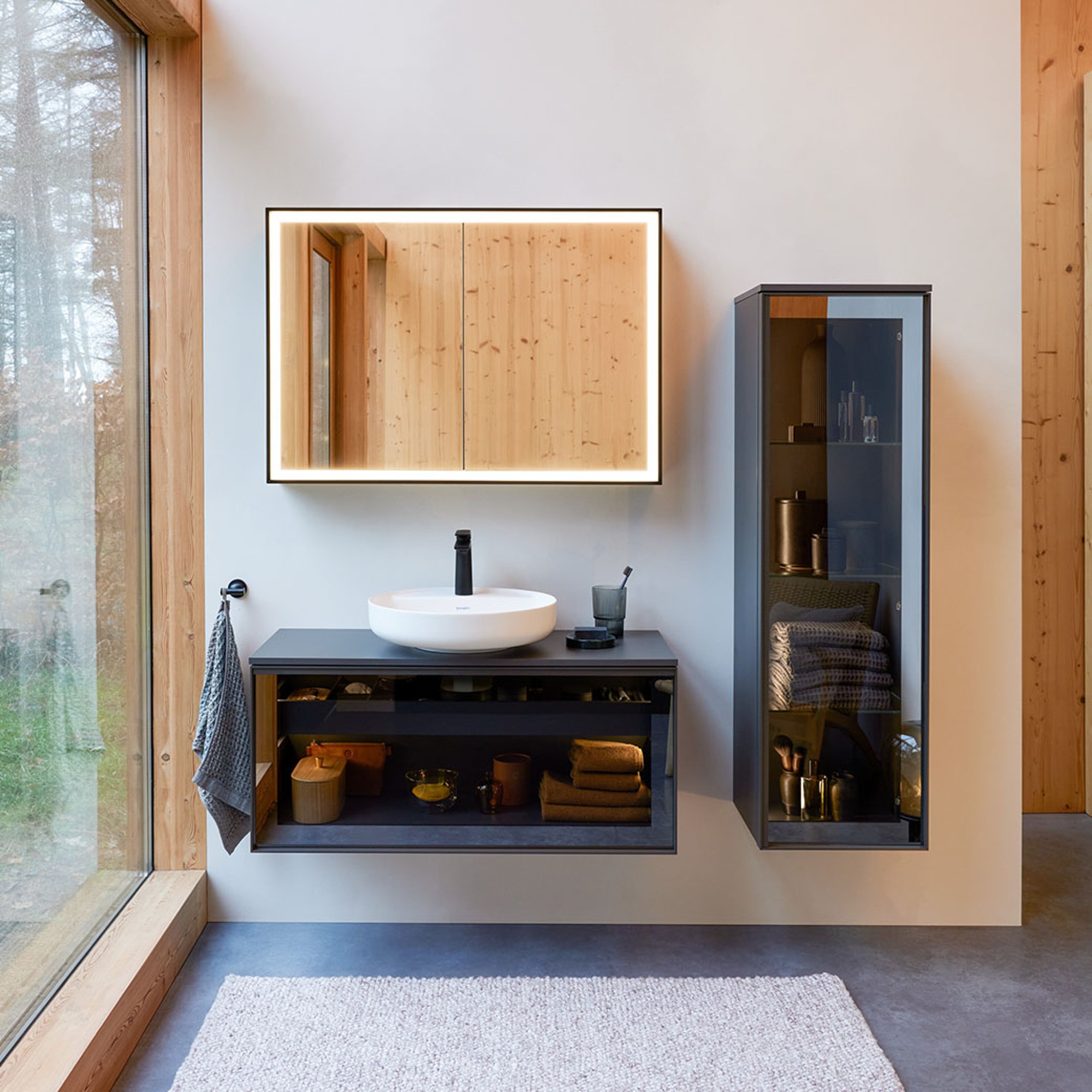
Christian Werner is a designer who has thoroughly internalized the subject of bathrooms and plumbing. For years he has been working with Duravit on innovative bathroom solutions. Christian Werner was the first furniture designer to work with Duravit, starting with the Ketho 2010 bathroom furniture series, continuing with L-Cube 2015 and presenting c-bonded in 2016, which features a completely new technology and a very clear, puristic design. After numerous furniture projects, he has now designed sinks for the first time with the Vitrium series – in combination with console base cabinets and vanity units. "My aim with Vitrium was to redefine bathroom design and the associated routines. For me, the bathroom is a comfortable place of retreat, just like the kitchen and living room," says Christian Werner, explaining his design idea.
All series by Christian Werner
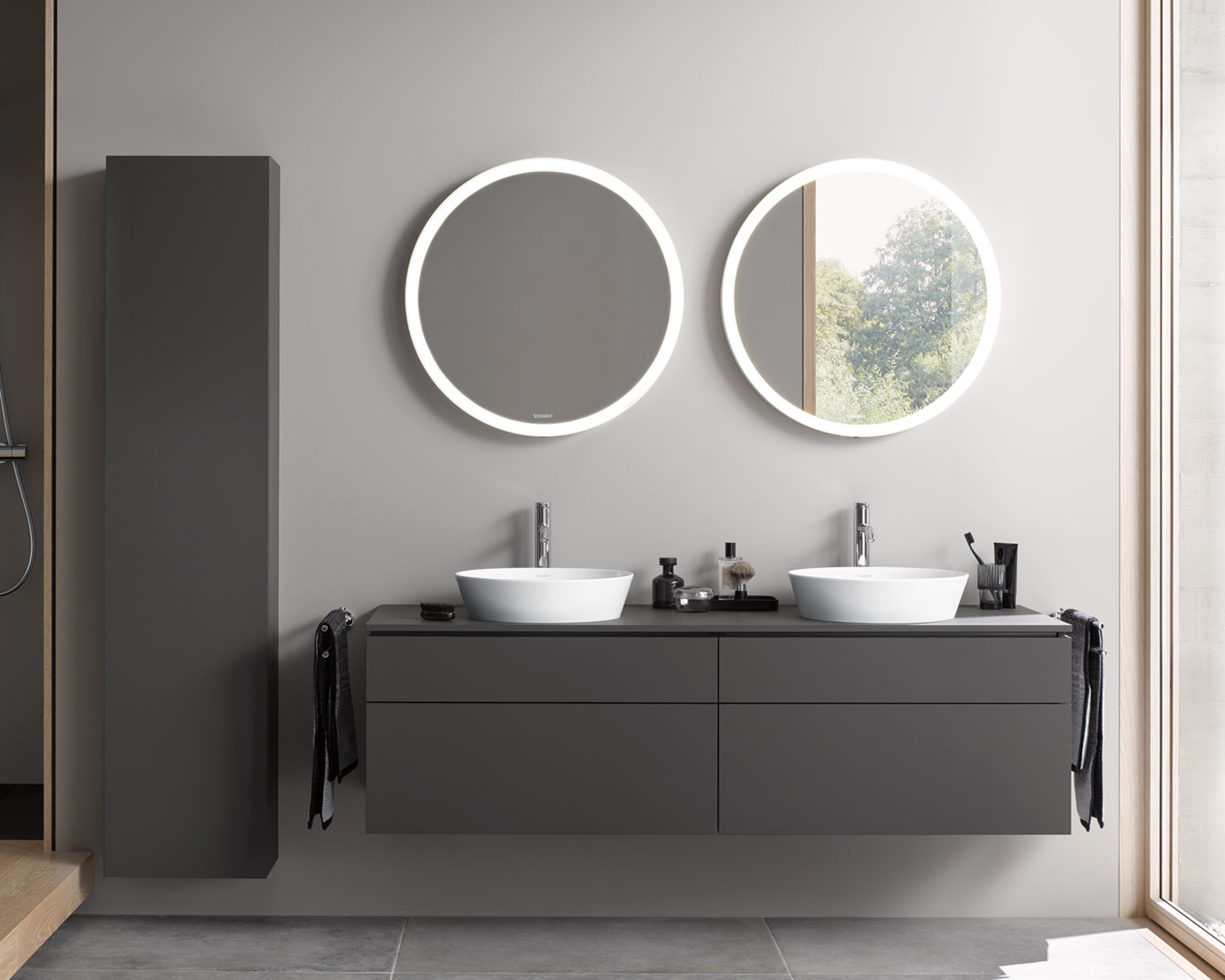
Design by Christian Werner
L-Cube

Design by Christian Werner
Ketho.2
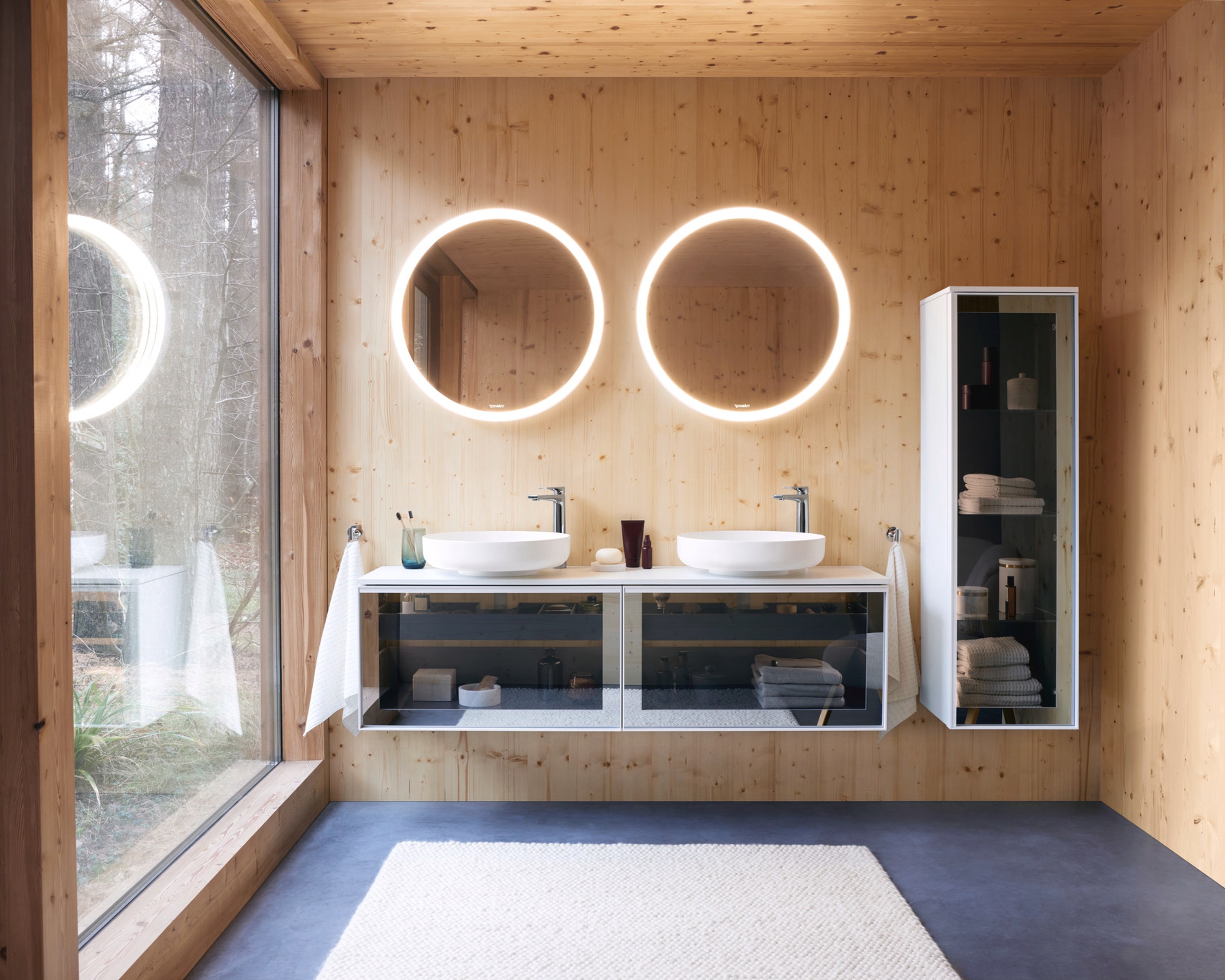
Design by Christian Werner