
Cecilie Manz
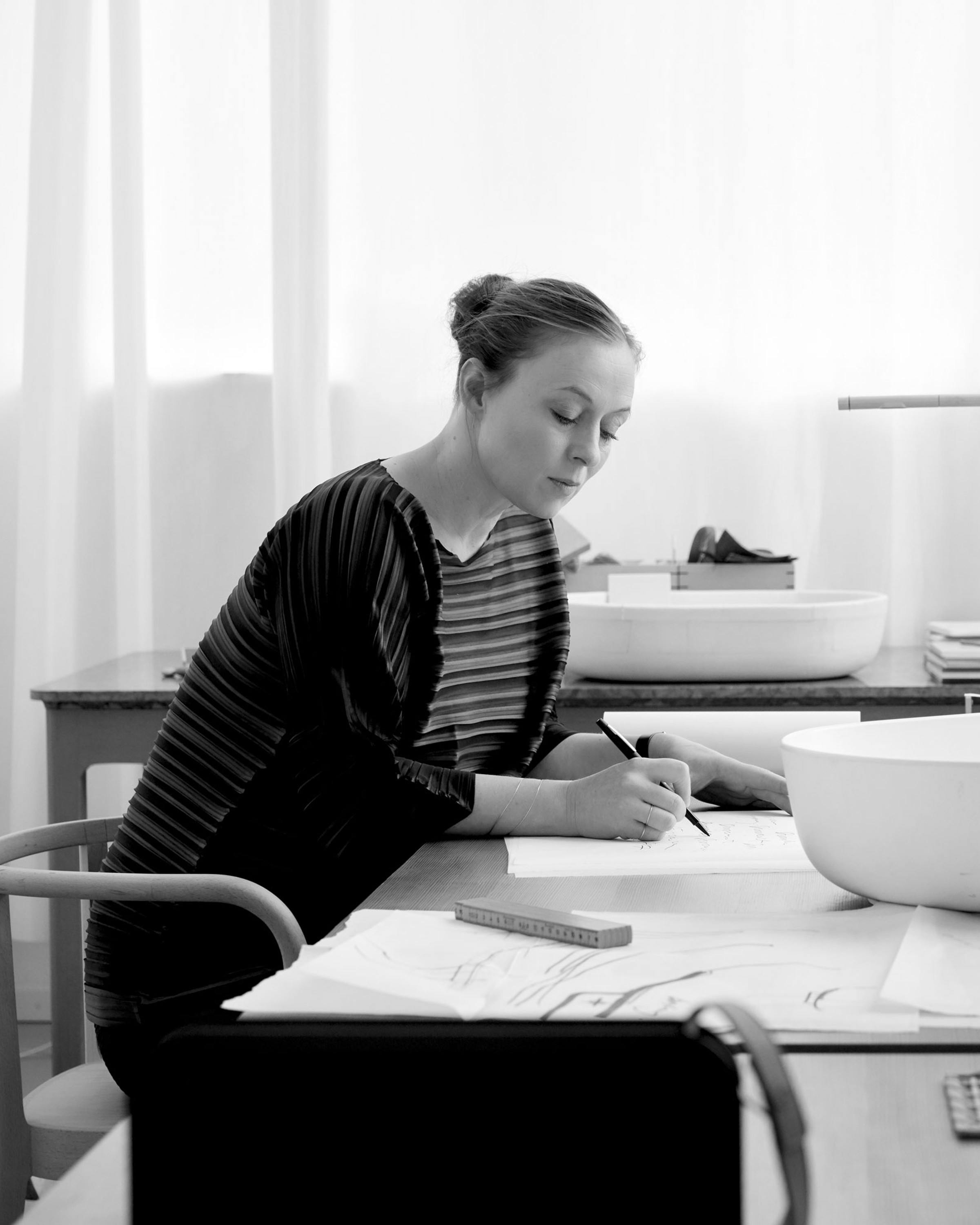
Nordic by nature!
Cecilie Manz was born in Odsherred, Denmark in 1972. She came into contact with design as a child in her parents' ceramics workshop, as both her parents worked with art and design. Her career began in 1992 with academic training at the Danish Design School, specializing in furniture and utensils. Cecilie Manz developed an interest in the functional and conceptual early on, which led her to the UIAH, University of Art and Design in Helsinki as an exchange student. As early as 1998, one year after graduating from the Danish Design School, Cecilie Manz founded her own company, which has been the framework for her work ever since. She designs lighting, furniture and home accessories with great success and works for renowned manufacturers such as Bang & Olufsens B&O Play, Fritz Hansen, Fredericia Furniture, Nils Holger Moormann, Lightyears, Georg Jensen Damask, Iittala and Muuto. Cecilie Manz's products are exhibited all over the world, and her works are represented in the permanent collections of, for example, the Museum of Modern Art (New York) and the Designmuseum Danmark. She has received major awards for her conceptual design.
Interview with Cecilie Manz
Interview with Cecilie Manz
Ms. Manz, originally you wanted to study painting. How did you come to design?
I actually wanted to study painting. I still love the smell of oil paint today. When I was preparing my portfolio for my art studies at the Royal Academy in Copenhagen, someone asked me why I wasn't also applying to the School of Design. At the time, I didn't see myself there at all, but I submitted my portfolio anyway. I was accepted for the design program and not for the Royal Academy. On the one hand, I was pleased, but of course I was also disappointed. Then I said to myself that I would give it a try for two or three months and if I liked it, I would stay; and if not, I could always leave. And I loved it – and stayed.
You opened your own studio just one year after graduating. How do you work?
I have always enjoyed working alone. Maybe because I never found the perfect partner, I don't know. A project can absorb me very strongly and that is precisely what I like about my work. I can't just hand over this intensive examination to another person. At the moment, my work situation is perfect: I have a small team. But I always have the last word.
Your designs are extremely reduced. Do you see your work in the context of your Danish background?
Absolutely. I believe that our origins are in our blood and our culture defines us. The people of the north tend towards sobriety and this is reflected in classic Danish design. I try to limit my objects to the essentials. This means that my work reflects my temperament very well.
What inspires you in your designs?
I think a lot. The thing about inspiration is that it happens mainly inside me. I am like a filter: everything I absorb in terms of textures, images and atmospheres passes through this filter. In the end, I can't say it was this or that painting or this or that piece of music that inspired me.
You yourself say that you shouldn't design anything that complicates life, that would be bad design. How can you be sure that your products meet this standard?
When I design a chair or a small spoon, I take it home and test it out: "hardcore testing". This is really important, because if it doesn't work for me, why should it work for you? And if it doesn't look good in my home, how can I expect it to look good in any other home?
How was working with Duravit?
The trips to Hornberg were special for me. In Denmark, we have a lot of coast and no mountains, the highest point is 200 meters. It felt like an adventure when I waited on the platform for the train, surrounded by all the mountains. I felt that Duravit is an integral part of this place and this very special atmosphere has also influenced my work with Duravit.
I soon realized how much expertise is behind Duravit, how much knowledge and years of craftsmanship experience!
I loved working with all of this and experiencing this commitment. To get to the meeting rooms, you literally have to make your way through mountains of kaolin and other raw materials for porcelain!
But that's exactly what it means to me: the connection with the material.
All series by Cecilie Manz
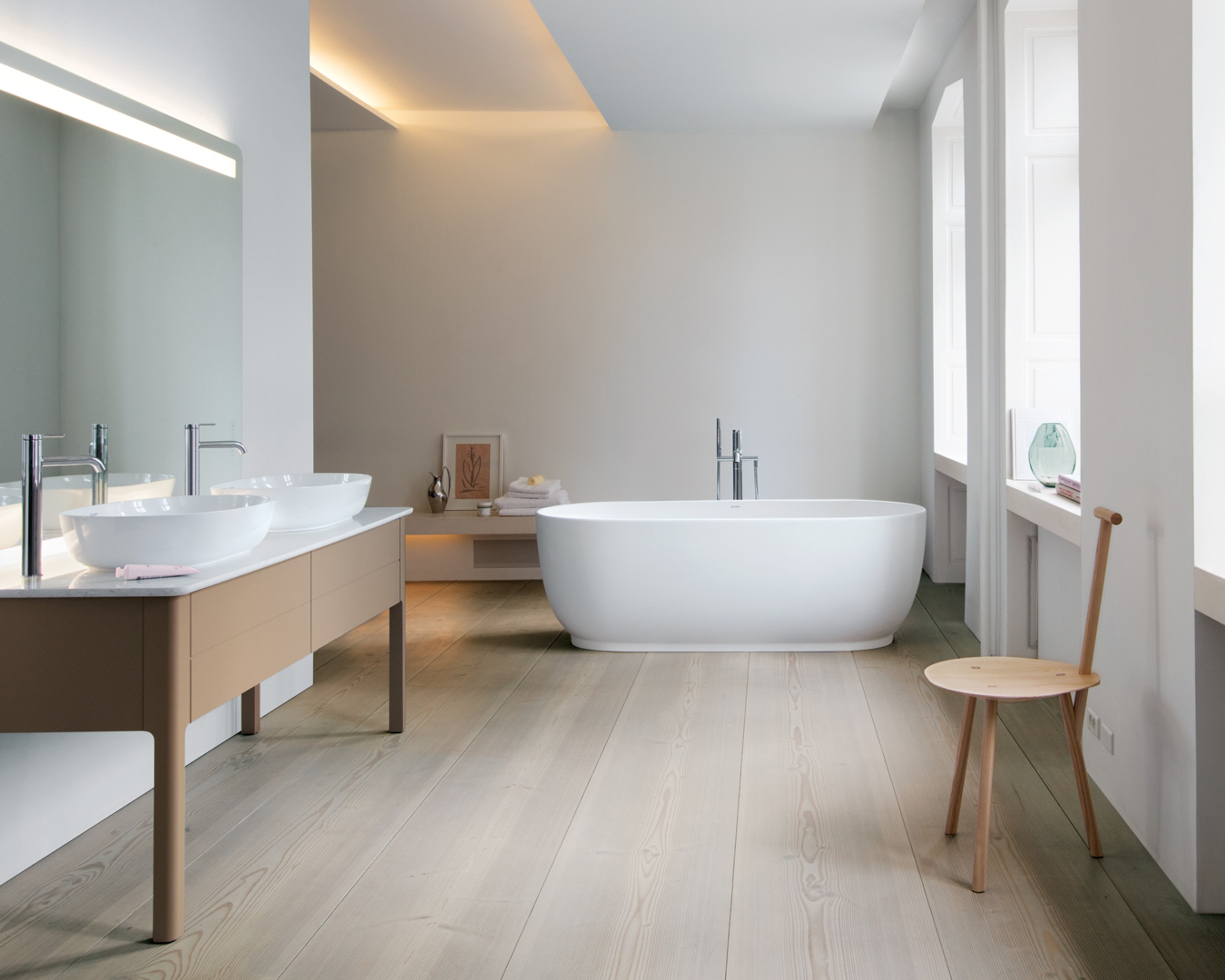
Design by Cecilie Manz